
How Much Do Barbers Make After Rent, Fees, and Taxes?

Key Points to Know About Barber Earnings

  • Use published wages as a starting reference: BLS places the median employee barber wage at $18.37 an hour for May 2025. At 2,080 hours, that translates to approximately $38,210 a year. Employee tips and commissions are included, while self-employed earnings are outside the wage survey.
  • Work out what remains after deductions: The amount customers spend is only the beginning of the calculation. Commission shares, chair rental, supplies, payment fees, and taxes affect the money available for personal use.
  • Compare rental costs with the commission you would give up: In an example where the barber keeps 60% of service sales and renting adds $400 in weekly expenses, both arrangements produce the same pretax amount at $1,000 in weekly service sales, assuming equal tips and otherwise comparable conditions.
  • Budget taxes from business profit: The standard self-employment tax rate is 15.3%, generally calculated on 92.35% of net self-employment earnings. The Social Security earnings cap and possible Additional Medicare Tax can change the final calculation.
  • Improve the economics of each working week: Repeat customers, pricing that accounts for appointment time, profitable product recommendations, and controlled expenses can support stronger earnings alongside a realistic workload.

Reading Barber Wage Statistics Without Overestimating Your Pay

Federal wage figures offer a useful reference when you are exploring barbering as a career. For anyone researching barber yearly salary, the U.S. Bureau of Labor Statistics Occupational Outlook Handbook reports a median wage of $18.37 per hour for barbers in May 2025. Applying that hourly figure to 40 hours a week over 52 weeks gives approximately $38,210 annually.

That annual calculation assumes 2,080 paid working hours. A part-time schedule, unpaid time away, or fewer hours during quieter periods will produce a different yearly total.

A median identifies the midpoint of the workers represented in the data: half earn above it and half below it. The arithmetic mean is a separate measure. Neither tells you the maximum income you could eventually earn.

Survey coverage also matters. The BLS explanation of its Occupational Employment and Wage Statistics survey states that wages include employee tips and commissions. However, the survey excludes self-employed workers and owners or partners in unincorporated firms. Barbers operating genuinely independent booth-rental businesses are therefore outside these employee wage estimates.

For a renter, customer payments are business receipts from which operating expenses must still be paid. For an employee, compensation is the wage or commission received from the shop, plus applicable tips. Comparing the renter’s total receipts with an employee’s paycheck would mix two different financial measures.

The exclusion of independent businesses also does not prove that self-employed barbers earn a particular percentage more than employees. Their results depend on customer demand, pricing, costs, and how consistently they fill appointments.

Use the government figures to understand employee pay, then prepare a separate budget for the arrangement you intend to pursue. To include education expenses in that plan, read our guide to barbering college tuition, tools, and the time needed to graduate.

Turning Appointment Prices Into a Realistic Revenue Estimate

Estimating income requires more than choosing a haircut price and multiplying it by a full calendar. You need to consider completed visits, spending per appointment, service duration, and the expenses associated with the work.

What a Higher Service Ticket Really Adds

When asking how much do barbers make per cut, distinguish the customer’s payment from the barber’s compensation. A $35 haircut creates $35 in service sales. Under commission, only the agreed share belongs to the barber. Under rental, the full payment enters the business, but rent and other expenses still have to come out.

Local competition, service complexity, and the type of shop influence pricing. Reviewing current menus from comparable nearby businesses provides a more useful planning reference than assuming one price applies nationwide.

An additional service can raise the average ticket, meaning the amount spent during a visit. For example, a hypothetical $30 haircut plus a $15 beard trim produces a $45 ticket. The extra revenue is useful only when considered alongside the additional time and cost.

A 30-minute haircut priced at $30 generates $60 per service hour before expenses. A haircut-and-beard appointment priced at $45 and lasting 45 minutes also generates $60 per service hour. Although the second client spends more, the hourly service revenue remains unchanged.

Evaluate each service by its price, duration, supplies, and contribution to profit. A larger ticket alone does not establish that an appointment is more profitable.

Estimating the Number of Visits You Can Complete

There is no universal answer to how many cuts does a barber do a day. Detailed styles, consultations, cleaning and disinfection, breaks, and booking demand all affect capacity.

Imagine an eight-hour shift with one hour allocated to breaks, cleaning, and administrative work. The remaining seven hours provide 420 minutes for appointments. At 45 minutes per visit, that allows approximately nine completed appointments.

This is a scheduling example rather than a daily production standard. Shorter services may create more openings, while more involved work may require a smaller appointment count. Make sure the schedule also allows appropriate cleaning and disinfection between clients.

Available slots and paid visits are different numbers. No-shows, cancellations, and unbooked periods reduce actual sales, so base your budget on the appointments you reasonably expect to complete.

Calculating Daily Receipts Across Your Full Shift
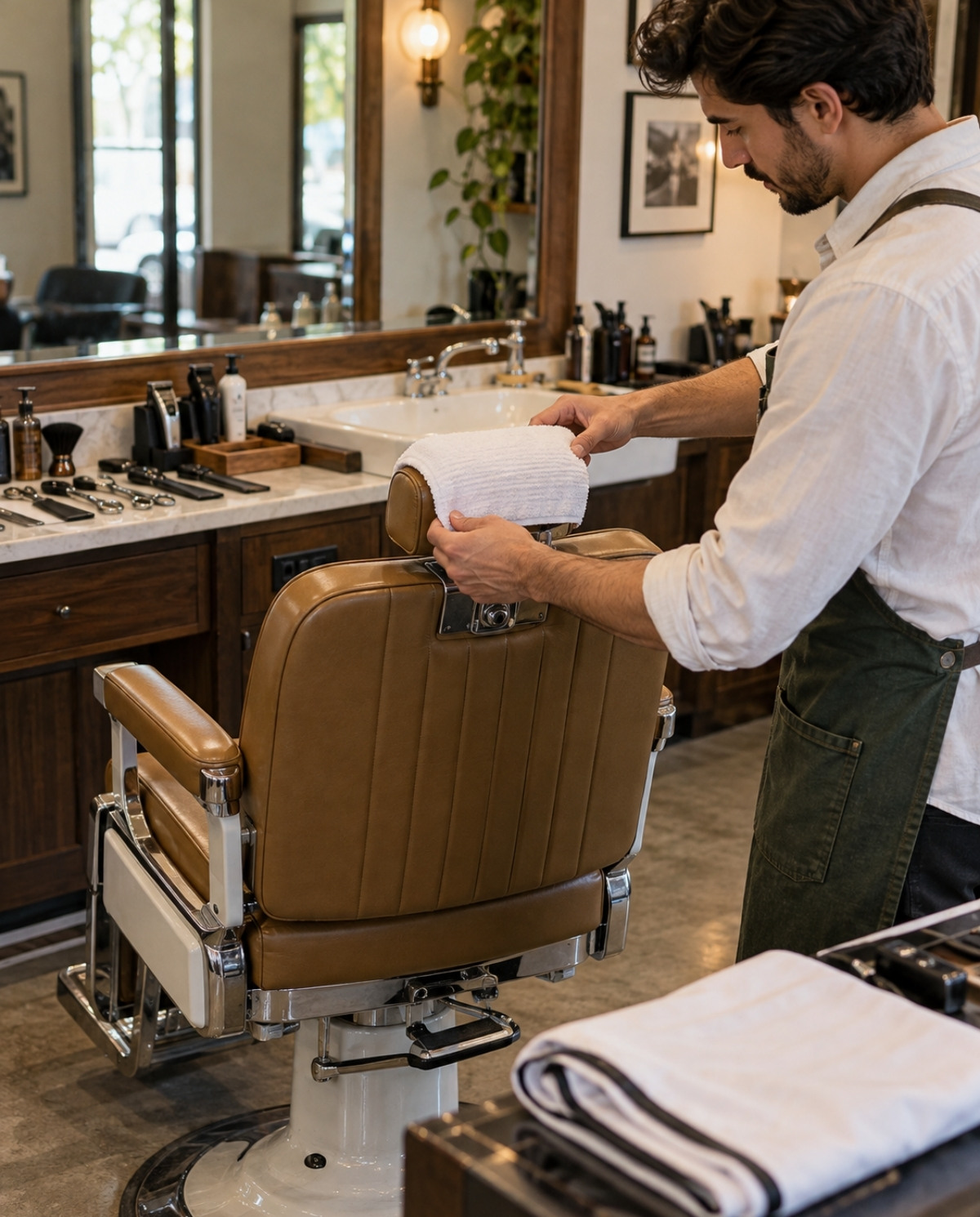
Barber fitting a fresh white covering over a tan chair’s headrest, with organized tools and a folded cape nearby.

To illustrate how much does a barber make a day, assume ten completed appointments with an average service ticket of $35. Those visits generate $350 in service revenue.

If tips total a hypothetical 15% to 20% of service sales, they add $52.50 to $70. Combined daily receipts would be $402.50 to $420 before commission deductions, operating expenses, and taxes. The tip percentage is a planning assumption, not a verified amount that every barber or client follows.

For anyone calculating how much do barbers make an hour, include the entire working shift. Over eight hours, the example produces approximately $50.31 to $52.50 an hour in gross receipts. It does not represent an hourly take-home wage.

Recording paid visits, average spending, and total working hours helps you measure what your schedule actually produces.

Finding the Income Left After Business Expenses

Service sales and product revenue show how much money enters the business. They do not show how much is available for your personal spending.

A self-employed barber starts with service receipts, tips, and retail sales, then deducts business expenses. These may include chair rental, supplies, payment processing, booking software, insurance, and equipment costs. The result is business profit before applicable personal taxes, including self-employment tax.

An employee starts with the compensation paid by the employer, whether that is hourly pay, commission, or another agreed structure, along with applicable tips. The shop’s total customer receipts are not the employee’s income.

These separate calculations make it easier to compare offers. A rental chair bringing in more customer payments can still leave less money after expenses than an employee role with dependable bookings.

Comparing Commission Work With an Independent Rental Chair

Commission compensation and chair rental are two possible arrangements. Other shops may provide hourly wages, salaries, or a combination of payment methods.

  1. Commission arrangement: In an example 60/40 service split, the barber receives $60 from each $100 in service sales, with $40 going to the shop. The agreement should identify how tips are treated and which costs the shop pays, such as products, towels, booking systems, and advertising.
  2. Independent chair rental: The barber pays an agreed fee for space and generally operates a separate business. Service payments and tips belong to that business, while responsibility for supplies, software, processing fees, insurance, and other costs depends on the rental agreement.

Receiving commission does not, by itself, establish whether someone is an employee or an independent contractor. Likewise, calling an arrangement “rental” does not settle worker classification. The IRS guidance on employee and independent-contractor status considers behavioral control, financial control, and the nature of the relationship.

Before accepting an arrangement, clarify who controls prices and schedules, which expenses are included, how clients are assigned, and how tips are handled. For the licensing steps needed before professional practice, see our guide to barbering license requirements and state board preparation.

Working Out Your Rental Crossover Point

A rental payment remains due during a slow week. Moving into that arrangement before sales become dependable can therefore reduce the amount you keep.

Start by identifying the expenses renting would add compared with the commission role. Under an example where the barber keeps 60% of service revenue, the shop’s 40% share is the amount available to offset those additional rental costs.

If the additional expenses are fixed, divide them by 0.40 to estimate the sales level where both arrangements produce the same pretax result. With an illustrative $400 in added weekly costs:

$400 ÷ 0.40 = $1,000 in weekly service sales.

At $600 in service sales, renting leaves $200 after those costs, while the 60% commission share produces $360. At $1,500 in sales, renting leaves $1,100, compared with $900 under commission.

These figures assume identical service sales and tips under both arrangements, with the $400 covering all additional rental expenses. They exclude personal taxes and other differences between the roles.

If processing fees or supply costs rise with sales, account for those variable expenses separately. Employee benefits, different tax obligations, and access to customers supplied by the shop may also affect the comparison.

There is no single sales target that makes renting the right choice for every barber. Build the decision around dependable revenue and the actual terms offered to you.

Keeping Tax Money and Operating Money Separate

Barber and shop manager reviewing an agreement at a wooden table with a calculator and an empty workstation behind them.

Self-employed barbers generally owe self-employment tax alongside applicable federal and state income taxes. According to the IRS explanation of self-employment tax, the standard rate combines 12.4% for Social Security and 2.9% for Medicare, totaling 15.3%.

Generally, 92.35% of net self-employment earnings is subject to the calculation. Net earnings are determined after subtracting ordinary and necessary business expenses, rather than applying the rate directly to total customer payments.

The Social Security portion has an annual earnings cap, while Additional Medicare Tax may apply above specified income thresholds. One-half of self-employment tax is generally deductible when calculating adjusted gross income.

Maintain records of service income, product sales, cash payments, tips, and business expenses. The IRS publication for the cosmetology and barbering industry discusses independent rental businesses, income reporting, and recordkeeping. Use current IRS guidance for applicable tax-year rules and filing requirements.

Setting money aside for taxes and future equipment purchases helps prevent business funds from being mistaken for disposable income.

Expanding Earnings Through Products and Market Awareness

More appointments are one route to additional sales, but they are not the only option. Suitable product recommendations, carefully priced specialty services, and an understanding of local demand can also improve business results.

Specialty services may require additional appointment time. Evaluate their hourly revenue and costs before assuming they increase earnings without extending the working day.

Measuring Your Return From Product Recommendations

Pomades, beard oils, and shampoos can help customers maintain their results at home. Selling an appropriate product can add revenue without scheduling another full haircut appointment.

The amount sold is still different from the amount you earn. Four products priced at $20 each generate $80 in retail sales. With a hypothetical 10% retail commission, the barber receives $8. Repeating that sales level across 20 working days produces $160 in commission.

For barbers who buy and resell their own stock, profit depends on wholesale prices, processing fees, and other selling expenses. Products that remain unsold or become damaged can reduce the return.

The Grand View Research report on men’s grooming products projects a global market value of $506.7 billion by 2033. Its coverage extends across multiple product categories and retail channels, so the forecast does not measure barbershop service income or establish what an individual barber will earn.

For practical planning, track the commission or margin from your own sales and recommend products suited to each customer’s needs.

Assessing a Location Beyond Its Haircut Prices

Higher menu prices can create an opportunity for stronger revenue, but local rent, competition, and customer demand influence how much remains. Living costs also affect the purchasing power of your personal income.

The Best Cosmetology Programs barber salary guide lists May 2025 median annual employee wages of $61,150 in Washington, $30,750 in Georgia, and $25,640 in Arkansas. Those figures refer to employed barbers, rather than the sales or profits of independent businesses.

The BLS wage tables for states and metropolitan areas provide a direct starting point for local comparisons. Keep the occupation, survey year, and wage measure consistent. A statewide median does not predict the earnings of a beginner or a particular neighborhood shop.

Before choosing where to work, examine:

  • Comparable service menus: What nearby businesses charge for similar appointments.
  • Expected paid visits: Likely customer demand after allowing for quiet periods and cancellations.
  • Expenses attached to the chair: Rental charges, supplies, payment fees, insurance, software, and marketing.
  • Convenience for returning customers: Whether clients can reach the shop easily and maintain their appointment routine.

Experience and a strong reputation may support higher prices. The useful financial measure, however, is the profit those prices produce after accounting for time and expenses.

Choosing Training That Prepares You for Shop Work

Technical skill supports the financial side of barbering. Consistent results, safe practices, effective consultations, and good time management help create the service experience customers return for.

When comparing programs, look beyond the completion date. Ask how students practice client interactions, prepare for licensing, and learn about professional responsibilities.

Our guide to becoming a barber and entering the profession explains the broader path from initial interest to career preparation.

Training areas worth reviewing include:

  • Reliable practical skills: Accurate cutting, safe equipment use, and organized work habits that allow appropriate consultations and disinfection.
  • Relationships with returning clients: Understanding preferences, producing repeatable results, and discussing suitable maintenance schedules.
  • Preparation for business decisions: Service pricing, product recommendations, work arrangements, expense records, and the boundaries of licensed practice.

Licenses do not permit identical services in every state. As one example, Georgia’s barber training regulations provide separate curricula for Master Barber and Barber II training, with chemical services included in the Master Barber curriculum.

For Georgia-specific requirements, consult the Georgia State Board of Cosmetology and Barbers licensing guide. If you plan to work elsewhere, verify the permitted services and qualifications with that state’s licensing authority.

Education provides a foundation. Your subsequent earnings will also reflect experience, local demand, returning customers, and the decisions you make about costs and working arrangements.

Questions About Income and Everyday Barbering Work
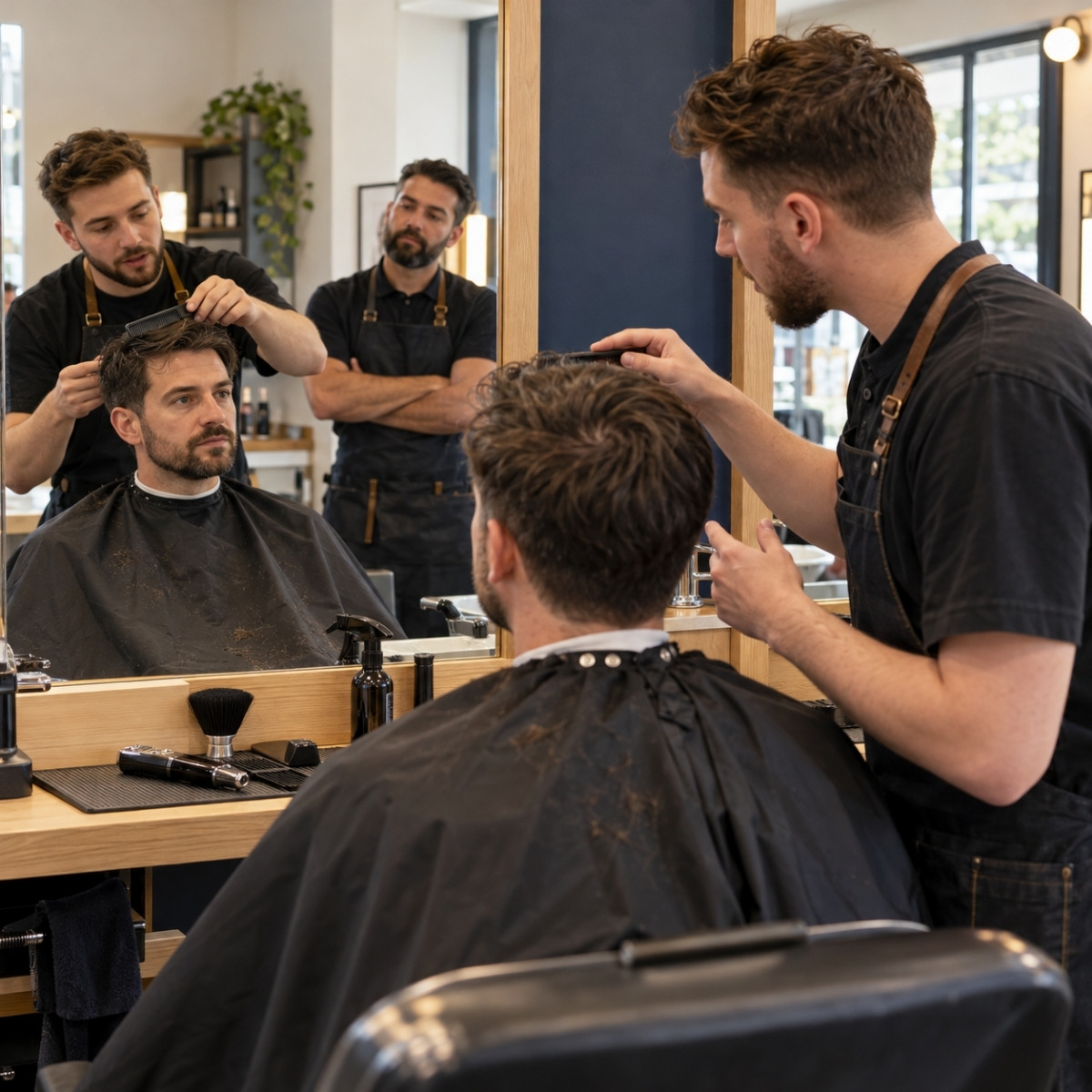
Barber trainee discussing a client’s hair length with a comb beside a mirror while an instructor observes the consultation.

How much can tips contribute to a barber’s earnings?

Tip income varies between customers and appointments. As a hypothetical example, a 15% to 20% gratuity on a $30 haircut adds $4.50 to $6. Ten appointments would generate $45 to $60 in tips if every customer tipped within that range.

Do not assume that result will repeat every day. Record tips separately, and remember that BLS employee wage figures already include them. Adding another tip percentage to those published wages would double-count that component.

What size client base supports a regularly booked schedule?

There is no dependable timetable for building a full roster. Location, access to walk-ins, availability, service quality, and repeat visits all influence progress.

A numerical target can still help with planning. Ten appointments a day over five days requires 50 weekly visits. If each regular customer returns every two weeks, approximately 100 active clients would support that volume. With four-week return intervals, the comparable roster is approximately 200 clients.

Those calculations assume appointments are distributed evenly and nobody cancels. Monitor actual return intervals, rebooking, and completed visits to see whether your client base supports the schedule you want.

What physical demands should a future barber expect?

Long periods on your feet and repeated movements of the hands, wrists, and arms are part of the work. The BLS description of the occupation identifies physical stamina as an important quality because much of the shift is spent standing.

Appropriate chair height, suitable equipment, changes in posture, and breaks can help manage strain. Persistent pain or numbness should be evaluated rather than accepted as an unavoidable part of the profession.

How do barbering and cosmetology licenses differ?

Barbering generally concentrates on haircuts, beard and mustache grooming, and shaving. Cosmetology usually includes a wider combination of hair, skincare, and nail services.

However, those general descriptions do not define the legal scope of every license. Some barber licenses permit chemical hair services, and the boundaries vary by state and license category. Check the relevant board’s rules before selecting a program or offering a new service.

Explore Your Barbering Education at Aiken

A professional barbering career begins with practice, instruction, and preparation for working with clients. At Aiken School of Cosmetology and Barbering, the school’s focus on developing “Salon Ready” graduates connects hands-on education with career preparation.

The barbering program offers practical training in haircutting, trimming, shaving, grooming, and styling. Its listed learning areas also include salon business and client retention, helping students explore responsibilities beyond performing a service.

Visit our Enrollment page to learn about the next steps and request a campus tour. You can also use the contact form below to arrange a visit, meet the team, and ask how the program fits your professional goals.


Opening a Barbershop? What to Know Before You Commit Your Money

What to Know Before Opening Your Shop

  • Business Ownership Does Not Authorize Barbering: Many states allow investors to own barbershops without a personal barber credential. The premises still need the appropriate establishment license, practitioners must be properly licensed, and any professional management requirements must be satisfied.
  • Evaluate the Numbers Before Leasing: A former salon or barbershop may lower renovation expenses, provided its infrastructure remains suitable. Get contractor bids, forecast early cash flow, and work out the revenue needed to cover your costs before committing.
  • Check Your State’s Operating Rules: Georgia requires salon/shop owners to complete an approved health, safety, and sanitation course. Arkansas requires professional supervision and management by a registered barber.
  • Contracts Alone Do Not Determine Worker Status: Independent chair renters need genuine business independence. Setting their prices, assigning shifts, or directing their service methods can create employee-classification risks.
  • Measure What Booking Software Delivers: Digital scheduling, reminders, and payment policies can support shop operations. Use completed appointments, cancellations, occupied working hours, and revenue to evaluate their actual value.

Taking the leap into commercial real estate is one of the biggest moves you can make when launching a beauty or grooming business. Too many aspiring shop owners jump straight into signing a lease without mapping out the practical and legal groundwork first. If you are also thinking about picking up the shears yourself alongside building a new business, exploring how to become a barber gives you a clear look at what training and professional milestones lie ahead.

Can You Own the Business Without Working as a Barber?

If you do not have hands-on haircutting experience, you might feel a bit out of place entering the grooming field. However, running a business and providing regulated services are two different responsibilities. The key first step is checking how your state licenses the physical location, its working barbers, and whoever is responsible for professional oversight.

Separate the Shop License From Permission to Provide Services

To build a legally compliant business, you need to understand the distinction between an establishment license and an individual practitioner license.

An establishment license authorizes operation of the shop under state rules. An individual practitioner credential authorizes a person to perform specific services within that credential’s scope of practice.

When people research how to set up a barbering shop, they often confuse these two frameworks. The New York State Division of Licensing Services explains that a Barber Shop Owner’s license does not permit its holder to practice barbering. Each person performing barbering services must hold the appropriate operator credential. New York also specifically prohibits apprentice barbers from owning a shop or renting space.

For an owner who does not provide services, responsibilities can include brand development, finance, marketing, and business administration. However, running a shop without a personal license does not remove your obligation to maintain a properly licensed facility, satisfy health and sanitation rules, and arrange any professional supervision required by state law.

If you are wondering whether you can open a barber shop without being a barber, keep in mind that ownership does not authorize you to offer regulated services such as haircutting, shaving, or line-ups. You must hold the appropriate credential for the services you provide. The legal line comes down to the actual services you perform, rather than whether you touch a tool. Understanding scope of practice, which defines the services a credential legally permits, helps protect both your clients and your venture.

If you want to know how your prospective staff earns their credentials, our guide on how to get your barbering license breaks down the training, examination, and state board process.

What Georgia and Arkansas Require of Shop Operators

State regulations vary across the country, so looking at concrete examples helps clarify what to expect:

  • Georgia Requirements: Georgia’s establishment application rules allow a person or group to apply to operate a salon or shop without requiring every owner to hold a practitioner credential. Under Georgia Board Rule 240-12-.01, the salon/shop owner must complete a board-approved health, safety, and sanitation course. The business name must include “Salon” or “Shop,” and the location must be licensed before conducting business.
  • Arkansas Requirements: Under Arkansas Code §17-20-301, published by the State Board of Barber Examiners, a barbershop must operate under the personal supervision and management of a registered barber. The statute also prohibits allowing an unlicensed person to serve as a barber manager. A non-barber investor must therefore separate business ownership from the licensed management needed to operate the shop.

These examples show why a general answer is never enough. Before signing a lease, confirm whether your state demands a designated licensed manager, which credential qualifies, and what supervision rules apply. Do not assume titles or staffing rules are identical everywhere.

Assess the Property and Financial Commitments Together

A commercial lease binds you to ongoing expenses long before your shop builds a steady client flow. Start by reviewing potential locations and comparing a former salon or barbershop against a raw retail shell. From there, figure out whether the space can satisfy licensing and building standards, estimate construction costs, and verify that the business can handle the overhead.

Making the right site selection requires balancing construction feasibility, realistic income projections, and solid lease negotiations.

Account for More Than Chairs and Interior Finishes

Setting up a retail storefront can require substantial plumbing, mechanical, and electrical work. Many new entrepreneurs budget for mirrors, waiting chairs, and wall paint while forgetting about hot water capacity, drainage, electrical upgrades, and other basic infrastructure.

Plumbing costs can climb fast if the space needs new lines or if concrete floors have to be broken open for drainage. Because no universal percentage fits every layout, get quotes based on your specific floor plan and service list.

As a rough reference, Menubly’s barbershop startup-cost guide estimates that a complete build-out can run from $15,000 to $50,000 or more, with barber chairs and station equipment budgeted separately. Treat these numbers as general guide estimates rather than fixed benchmarks or substitutes for local contractor bids.

To preserve capital, look for second-generation spaces that used to be salons or barbershops. Menubly notes that existing plumbing and electrical setups may save between $10,000 and $20,000. Actual savings will depend on whether those systems are still usable and meet the requirements for your shop.

A former pet grooming location might also look interesting, but existing sinks and drains do not automatically make it legal or functional for human grooming services. Have qualified professionals assess the layout and infrastructure before counting any savings in your budget.

Keep build-out costs separate from other startup expenses like security deposits, licensing fees, equipment, initial supplies, signage, insurance, and launch marketing. Prepare an early-stage cash-flow forecast showing when payments are due and when revenue is expected to arrive. Then budget a reserve for the period when expenses may exceed incoming revenue while your clientele develops.

Translate Monthly Expenses Into a Realistic Sales Target

Plumber crouches beside an open cabinet to inspect the supply connections and drain beneath a barbershop shampoo basin while the owner watches.

A space can be cheap to renovate and still cost too much to run month after month. Before signing on the dotted line, calculate how much client volume you need to cover your operating costs.

The U.S. Small Business Administration’s break-even calculator applies a calculation that can be expressed for a service business as:

Services needed to break even = monthly fixed expenses ÷ contribution earned per service

For an employee-based business model, contribution per service equals your average service price minus the variable costs connected to that service. Depending on how you pay staff, variable costs might include commissions, disposable supplies, and credit card processing fees.

For instance, if your shop has $6,000 in monthly fixed costs and a $20 contribution per completed service, you would need 300 services each month to reach break-even. Over 25 working days, that comes out to 12 services a day. These numbers are purely illustrative rather than industry benchmarks.

Check whether your staffed chairs and available barber working hours can realistically deliver that volume. Consider appointment lengths, opening hours, and local demand; an installed chair contributes no service capacity when nobody is available to work at it. Remember to factor owner compensation and loan payments into your broader cash-flow projections, and never count employee tips as shop revenue.

If you run a booth-rental shop, compare your total overhead against expected rental payments from occupied chairs. Test what happens to your cash flow if a chair sits empty for a month or two. Weekly chair rent can make income more predictable, but only when stations stay filled and renters pay on time.

Investigate the Space Before Accepting the Lease Terms

When looking at candidate properties, go beyond counting foot traffic. Review these practical factors before committing:

  1. Plumbing and Electrical Capacity: Have qualified professionals evaluate water supply lines, drainage, water-heating capacity, and electrical capacity for your planned equipment. Existing hookups may require repairs or upgrades.
  2. Facility and Occupancy Requirements: Confirm that your intended business use is allowed and that the floor plan can meet accessibility, building, fire, and board requirements. A previous salon layout does not guarantee automatic approval.
  3. Parking and Customer Access: Check how clients will drive or walk to the building, where they can park, and whether the entrance works well for your intended clientele.
  4. Approval Contingencies: Negotiate lease provisions covering necessary approvals, application deadlines, and exit rights if those approvals cannot be obtained. Specify how security deposits and prepaid rent are handled instead of assuming payments are refundable.
  5. Construction and Operating Terms: Spell out responsibility for code compliance upgrades, landlord build-out allowances, rent start dates, common-area charges, ongoing repairs, and any rules regarding subleasing or chair rental.

If you are looking at a Georgia location, the Board’s facility rules set out standards for physical separation, equipment condition, hot and cold running water, restroom access, and mandatory posting of licenses and inspection reports.

Go through these items while comparing properties. Discovering layout problems after signing your lease can quickly wipe out any savings you expected from an existing space.

Decide Whether to Collect Chair Rent or Employ Your Barbers

Your chosen staffing structure shapes your revenue streams, daily management tasks, and tax obligations. In a true booth-rental setup, barbers run independent businesses and pay rent for their station. In an employee-based business, the shop manages staff and pays hourly wages, commissions, or a mix of both.

Neither structure is inherently more profitable. Compare the projected income of each option against the management duties and financial liabilities that come with it.

Provide Space for Genuinely Independent Businesses

Booth renters pay a weekly or monthly fee to use a chair and designated workspace. Key markers of an independent operator include setting their own service prices, managing their own calendar, buying their own products, and handling their own business costs.

The IRS guide for the cosmetology and barber industry highlights these factors when evaluating chair renters. Its classification examples are helpful, though you should verify current tax filing rules separately.

Renting chairs can reduce payroll administration for a barber shop owner and create rental revenue. However, exercising employee-style control over a renter’s schedule, pricing, or service techniques can undermine the arrangement’s independence. Facility sanitation responsibilities and appropriate premises policies still need to be addressed.

A clear written rental agreement should detail the rented space, rent amount, included utilities or supplies, building access, insurance obligations, and termination terms. Your daily operations must align with the actual independent relationship described in the agreement.

Understand the Responsibilities That Come With Employees

Employees work for your business. That means your shop can set service prices, schedule shifts, establish lawful workplace policies, process client payments, and pay workers through hourly pay, commission, or a combined structure.

This approach gives you direct control over the client experience, but it brings payroll processing, employment taxes, detailed recordkeeping, and wage compliance duties. Generating higher service sales does not automatically equal higher profits once labor and overhead expenses are factored in.

Paying on commission does not automatically exempt employees from minimum wage or overtime protections. The U.S. Department of Labor’s guidance on commissioned retail and service employees outlines the conditions required to qualify for the federal retail-service overtime exemption. State wage laws may impose additional rules.

Always record working hours accurately and review your total compensation setup before relying on any overtime exemption.

Make Worker Classification Match Everyday Practice

Barbershop owner reviews paper records beside a laptop in a back office while a barber provides a haircut through the adjoining doorway.

A business can house both regular employees and booth renters, but every worker relationship must be structured and handled correctly. Problems arise when someone is labeled an independent contractor while the owner exercises control associated with employment.

According to IRS worker-classification guidance, the entire relationship must be evaluated. Behavioral control, financial control, and the underlying nature of the arrangement all play a role, and no single factor determines the outcome.

Setting a renter’s prices, requiring specific work shifts, or mandating how haircuts are performed can weigh toward employee status. Calling someone a 1099 contractor or having them sign a rental form does not resolve the classification question.

Misclassifying workers can trigger employment-tax liability and other obligations under wage, unemployment, and workers’ compensation laws. Additionally, renting a chair does not automatically mean you need to issue a contractor-payment tax form to the renter, as reporting depends on the payments and arrangement.

Create the Systems Your Professionals Need to Work Well

Managing licensed barbers when you do not work behind the chair yourself requires a clear focus on leadership. Concentrate on building administrative systems that keep the shop running smoothly, while ensuring any legally required professional supervision is in place.

Solid facility management, clear agreements, and useful technology help you support the team without attempting to direct technical work outside your experience.

Focus Your Leadership on Business Operations

When learning how to own a barbershop without a barber license, focus your energy on eliminating operational hiccups that slow down business:

  • Clarify Supply Responsibilities: In an employee-based shop, maintain the sanitation supplies, towels, neck strips, and other products the business provides. In a rental shop, state clearly in writing what the business supplies versus what renters purchase independently.
  • Maintain the Facility: Keep station equipment and building systems in good condition, schedule routine cleaning, and address maintenance issues promptly.
  • Support Customer Acquisition: Establish a local presence through marketing, community involvement, and accurate online listings. Coordinate shared promotions with renters according to their agreements and independent business arrangements.
  • Arrange Professional Management: Where state rules require licensed supervision or management, provide appropriate coverage and plan for the designated professional’s absence or departure.

Your administrative duties should support your core business model. Centralized scheduling and shared supplies may suit an employee shop, while booth renters may maintain their own products and appointment systems.

Pair Digital Booking With Enforceable Payment Policies

Booking and point-of-sale software can help organize appointments, client transactions, and business reports. Upmetrics’ article on barber business trends discusses digital booking, cashless payments, reminders, and shop management tools. These features do not establish a guaranteed improvement in occupancy or profit.

Choose technology that fits your specific setup. An employee shop may benefit from integrated team scheduling and commission tracking, whereas a booth-rental business should assess how shared software preserves each renter’s independence.

Cancellation protection involves more than toggling a setting in an app. Square’s cancellation and prepayment documentation distinguishes between requiring full prepayment and holding a payment card for a single appointment’s no-show protection. That appointment-specific protection does not automatically save the card for future payments; saving a card is a separate option. Square also explains that cards are charged when the business chooses to enforce its cancellation policy.

Define clear cancellation windows and fee terms, check how clients receive the policy during booking, and understand how your software handles declined cards and refunds. Holding card details for no-show protection does not mean a deposit has been collected, and neither arrangement guarantees that every cancellation will produce recoverable revenue.

Monitor completed appointments, no-shows, late cancellations, booked working hours, and revenue per available barber hour. These measures help you determine whether the system improves results for your particular shop.

Develop Commercial Skills Along With Knowledge of the Trade

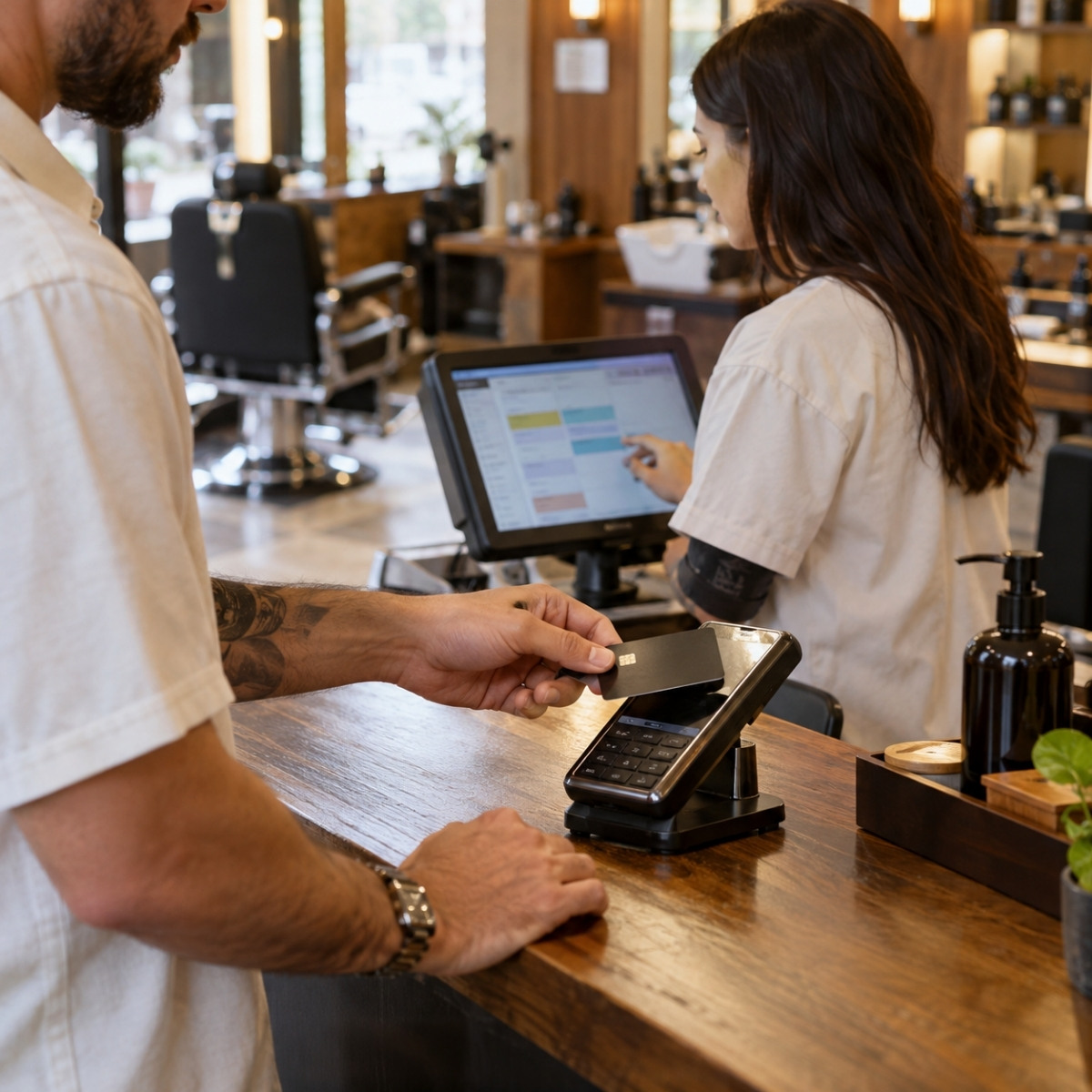
Customer holds a payment card near a terminal while a receptionist checks an appointment calendar behind the barbershop counter.

Running a successful shop comes down to understanding state regulations, managing financial liabilities, and supporting the team members who take care of your clients.

While barbers need technical skills behind the chair, an owner also needs to understand budgeting, agreements, marketing, and daily business operations. Formal training can offer exposure to the industry, but it cannot replace a location-specific financial plan or verification of establishment requirements.

A report by Fortune Business Insights on the salon services market identifies growing interest in men’s grooming as a contributor to demand. Broad trends like this can inform service ideas, but local market research and realistic pricing assumptions should shape your actual business plan.

If you are looking at training options for yourself or helping a team member choose a path, checking details on the real cost of barbering college gives you a view of tuition, tool kits, and program length. Ask each school about its actual class schedules, hands-on training, state board preparation, and business-related instruction.

Answers to Common Questions From Future Owners

Which professional credential must the shop’s manager hold?

The answer depends on your state. A master barber title is not a nationwide management requirement. Arkansas requires personal supervision and management by a registered barber. Check the credential your state accepts for professional management and the supervision arrangements required for your establishment.

What determines how soon a new shop can open?

Preparing a shop can take several months, with the schedule shaped by lease negotiations, permits, construction, establishment licensing, and hiring. A second-generation space needing limited work may allow a shorter timeline than a raw shell, but its condition and required approvals still matter. Build your opening schedule around the steps necessary for the specific property.

Can an owner train as a barber while managing the shop?

You can pursue education alongside business ownership if the program schedule and your management arrangements make that practical. Ask whether part-time or evening attendance is available, how training hours are recorded, and who will oversee the shop while you attend classes.

Enrollment alone does not authorize you to offer barbering services independently. Any practice during training must follow the applicable permit and supervision requirements. South Carolina’s Board of Barber Examiners licensing guidance describes student permits and approved training pathways, including supervised on-the-job training.

Which insurance policies should a prospective owner discuss?

Common options include general liability, commercial property, and professional liability coverage. General liability generally addresses covered third-party bodily injury and property damage claims, while professional liability addresses covered claims arising from services. Coverage depends on the policy’s terms, limits, and exclusions.

A starting point for discussing your needs is Wexford Insurance’s barbershop licensing and insurance overview. Your commercial landlord may also require particular policies or coverage limits.

Workers’ compensation rules depend on state law and your workforce. According to the Georgia State Board of Workers’ Compensation, most employers with three or more regular full-time, part-time, or seasonal employees must carry coverage. Corporate officers and LLC members count toward that total even when they exempt themselves from coverage.

Take Your Next Step Toward Training and Ownership

Building a successful shop requires capital, preparation, and an understanding of the grooming trade. Before entering a commercial lease, verify the applicable licensing requirements, test your financial assumptions, and establish how the business and its team will operate.

To learn about training at Aiken School of Cosmetology and Barbering, visit our Enrollment page. You can request information about our programs, connect with admissions, and arrange a campus tour to explore your next steps.