How to Get a Cosmetology License: A Step-by-Step Guide (With or Without School)

I know the feeling of looking at a perfectly blended balayage or a flawless set of acrylics and realizing that a hobby could actually be a lifelong career. But then the research starts, and suddenly I’m looking at dozens of browser tabs about hours, exams, and state boards. It can be a lot to take in at once.

I’ve found that the secret to becoming a licensed pro isn’t just about having the talent; it’s about understanding the logistics behind the license. Every state handles things differently, so the path I took might look a little different from yours depending on where you live. I want to break down how to get a cosmetology license in a way that actually makes sense, whether you choose the classroom or a more hands-on route.

One thing I have to mention upfront is that beauty regulation happens at the state level. While the general process follows a similar pattern, the exact cosmetology license requirements—like how many hours you need or which fees you’ll pay—will depend entirely on your specific state board.

Confirm What Your State Actually Requires (Don’t Guess)

When people start looking up cosmetology requirements or cosmetology license requirements by state, they are usually looking for one thing: certainty. Nobody wants to spend months in a program only to realize they are short on hours or missed a specific filing deadline.

To get the right answers, I always recommend going straight to your state’s board website (often listed under the Board of Cosmetology or Department of Labor). You want to look for:

  • The total training hours required for your license type.
  • The type of exam you’ll need to pass (written, practical, or both).
  • Application steps and current fees.
  • Rules for keeping your license active once you have it.

For example, in California, you are currently looking at a minimum of 1,000 hours for a cosmetology program. Over in Virginia, a similar 1,000-hour requirement recently went into effect as of late 2025. If you don’t verify these numbers first, you might find that the “standard” has changed since the last time you checked.

Choose Your Path (School Route vs. Apprenticeship Route)

This is where you decide how you want to spend your training time. There are usually two main roads you can take.

Path A: Traditional Cosmetology School

This is the route most of us take. You enroll in a state-approved cosmetology school, put in your required hours, and then apply for your exams. When you’re looking for a school, I suggest checking that they are approved by your state board. If you’re hoping to use federal student aid, you’ll also want to make sure the school is accredited.

Path B: Apprenticeship (How to Get a License Without School)

I see a lot of people searching for how to get cosmetology license without school, and there is often a bit of a misunderstanding there. In most states, “without school” doesn’t mean skipping training; it means choosing an apprenticeship for cosmetology.

At the federal level, a Registered Apprenticeship is a formal path that includes paid work, mentoring, and some classroom instruction. States like California have long offered this as an alternative to the traditional school model. If you’re interested in this path, your first stop should be your state board or Apprenticeship.gov to see if your state actually allows it.

Plan Your Timeline (How Long It Takes)

When people ask how long does it take to get a cosmetology license, they are usually trying to plan their life. You have to account for more than just the hours you spend in the chair.

Your timeline generally looks like this:

  • Total training hours (determined by your state).
  • Your schedule (are you attending full-time or part-time?).
  • Wait times for your exam date.
  • The time it takes the board to process your paperwork.

In California, for instance, the board notes that mailed applications can take up to 8 weeks to process. I always suggest using online portals whenever possible to speed things up.

Understand Cost (And How People Actually Pay)

I won’t sugarcoat it—investing in your education is a big step. You aren’t just paying for tuition; you’re also buying your professional kit, textbooks, and paying for your exams and license applications.

Paying For School With FAFSA

If you’re worried about the cost, check if your chosen school is eligible for federal student aid. You can search for a school’s code on the Federal Student Aid website. If you can’t find a code, Federal Student Aid explains that the school might not participate in federal programs.

Taxes: Can You Claim Beauty School?

According to the IRS, you might be able to claim qualified education expenses if you attend an eligible educational institution. This generally includes trade schools that are eligible for federal student aid programs.

Apply For Permission To Test

Once you’ve finished your hours, you have to tackle the paperwork. This is usually the part people dread, but if you stay organized, it’s just a few forms. Most states follow a standard flow: Finish your training, submit your how to apply for cosmetology license paperwork, get approval, and then schedule your exam.

In California, for example, the board provides detailed checklists to make sure you don’t miss any documents. They also use an online portal called BreEZe for applications and license management.

Schedule The Cosmetology State Board Exam

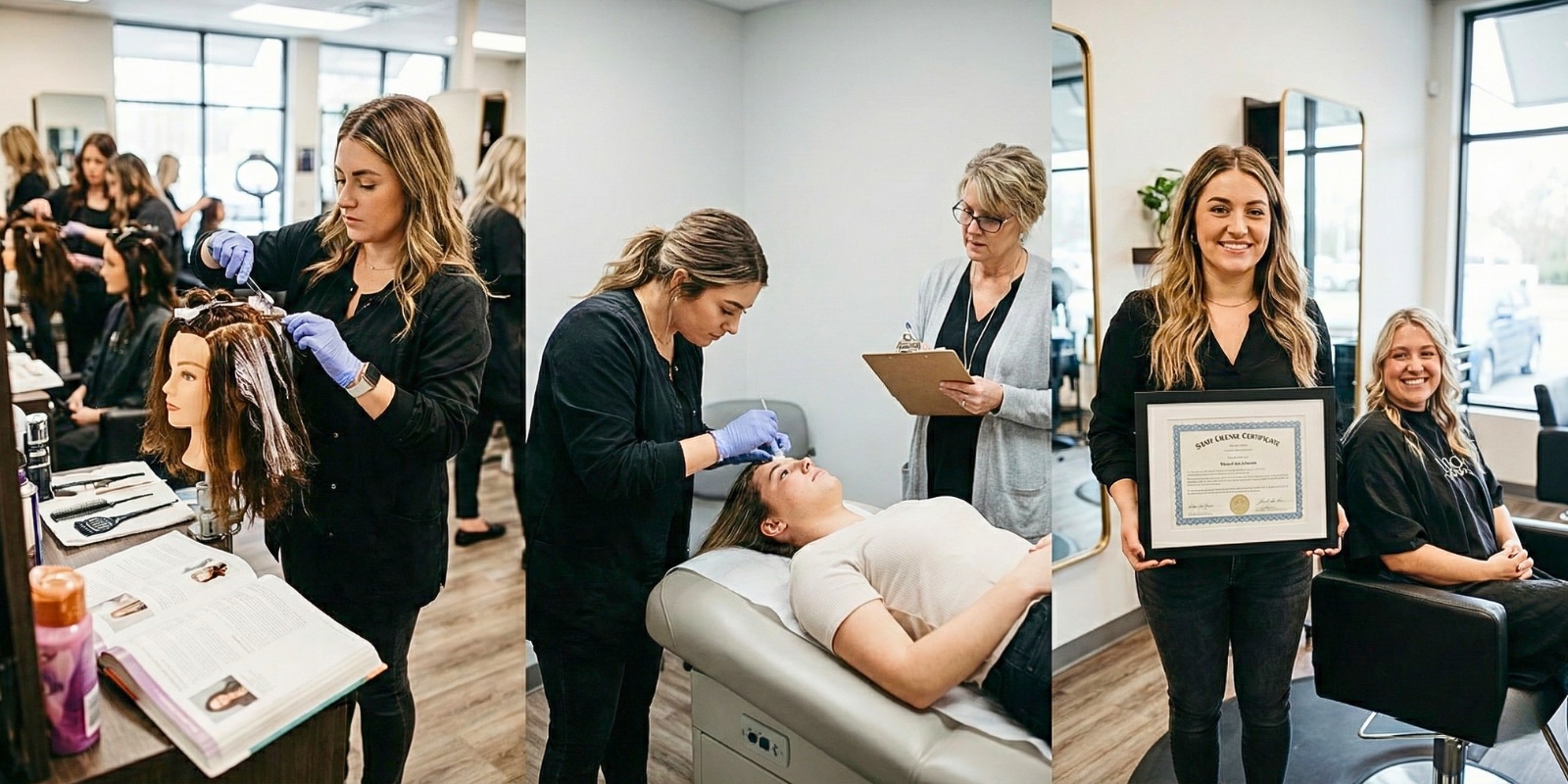
I’ve seen very talented stylists get nervous about the cosmetology state board exam, but I believe it’s all about preparation. Most states use exams developed by the National Interstate Council of State Boards of Cosmetology (NIC).

The best way to prepare is to download the Candidate Information Bulletins from the NIC. These bulletins tell you exactly what will be on the test. Other vendors, like Prometric, offer similar guides for the states they serve.

How to Pass the Exam (The Pro Reality)

When students ask me how to pass cosmetology state board exam, I tell them to treat it like a performance. In the practical portion, the examiners aren’t just looking at the hair; they are watching your sanitation, how you label your bottles, and how you dispose of waste. If you mess up the safety steps, it doesn’t matter how good the haircut looks.

Verify Your License (And Keep It Safe)

Once you pass, your license number becomes your professional identity. You’ll need it for job applications, renting a booth, or getting insurance. Most states allow the public to verify a license online through systems like BreEZe, which also helps you manage your address and personal info.

Renew On Time (And Avoid the Lapsed License Stress)

Renewal is something you want to stay on top of. In New York, a license is valid for four years. In Texas, you can manage your cosmetology license renewal through an online flow that even handles name changes. If you let it go too long, states like Pennsylvania might require you to retake the exam after five years of being expired.

Florida’s Reinstatement Rules

Florida has very specific rules for licenses that have become “null and void,” which often requires proving a hardship or illness to get reinstated. Don’t let it get to that point—set a reminder on your phone the day you get licensed!

Transfer Your Cosmetology License To Another State

If you move, you’ll need to look into a cosmetology license transfer from state to state. This is usually called reciprocity or endorsement. The new state will look at your training hours and exam history. Some boards, like California, will send an official verification letter directly to your new state board.

There is also a licensure compact being developed, which states like Virginia are working to implement by 2026. This should make moving between states much easier in the near future.

Handle Special Situations (GED, SSN, Background)

I hear a lot of concerns about “special cases,” but there is usually a path forward.

  • Education: Most schools want a high school diploma or GED, but check your board’s rules.
  • SSN Issues: The California Board actually allows you to use an ITIN if you don’t have a Social Security Number.
  • Background History: States like Texas review criminal history on a case-by-case basis. Transparency is always better than a surprise later.

A Simple “Do This Next” Checklist

  1. Find your state board website and write down the hour requirements.
  2. Choose between an approved school or an apprenticeship path.
  3. Create a budget and check for financial aid options.
  4. Complete your training hours.
  5. Submit your exam application online.
  6. Study the official candidate bulletins for your state.
  7. Pass your exam and verify your license online.
  8. Set a renewal reminder immediately.

How We Help You Reach Your Career Goals

I love seeing people transition from being fans of beauty to being the ones behind the chair. At Aiken Beauty & Barber School, I’ve seen how a structured environment makes all the difference in getting licensed. We focus on making sure you’re ready for the reality of the salon, from technical skill to business management.

Ready to Take the Next Step?

If you’re feeling clear about the path ahead, the next move is easy. You can learn everything you need to know about our specific requirements and how we walk you through the process by visiting our Enrollment page.

We’re here to make sure your journey from student to professional is as smooth as possible. If you have questions or you’re ready to get started, please fill out the contact form right below this article. Tell us what you’re interested in, and we’ll reach out to help you map out your best path forward.


Can Anyone Get Into Cosmetology School? My Honest Guide to the Requirements

If you have been sitting at home wondering, “Can I actually get into cosmetology school?” you are definitely not alone. I see this question all the time, usually from people who are stressed about having a GED, not having a high school diploma yet, or being under 18. You aren’t just looking for a pep talk; you need to know the rules so you don’t waste your time or money.

I want to explain how this works from the perspective of someone who has been in the industry for a long time. I’m going to keep it simple and skip the confusing jargon so you can figure out your next move.

Why the Requirements Seem to Change Depending on Who You Ask

The biggest reason people get frustrated is that they think there is just one “yes” or “no” answer. In reality, there are three different “gatekeepers” that decide if you can start your career. These rules don’t always match up, which is where the confusion starts.

1. Individual School Admissions

This is simply what a specific school requires to let you through their doors. While most schools prefer a high school diploma or a GED, some might have different options or conditional paths depending on their own policies.

2. State Licensing Rules

This is the big one. Even if a school lets you in, you eventually have to answer to the state. After you finish your training hours, you have to meet the requirements of the South Carolina Board of Cosmetology to actually get your license. They set the bar for age and education level.

3. Federal Financial Aid (FAFSA)

If you are planning to use federal grants or loans to pay for school, the rules get much stricter. The government usually requires a high school diploma or GED. If you don’t have those, you might have to look into “Ability-to-Benefit” pathways, which are specific programs designed to help students without a traditional diploma qualify for aid.

Once you realize these are three separate things, it becomes much easier to find the right path for your specific situation.

The Truth About GEDs and High School Diplomas

I get asked “do you need a ged for cosmetology school” almost every single day. Here is the breakdown of what your education status usually means for your enrollment.

If You Have a GED

If you have already earned your GED, you are usually in great shape. In the eyes of most admissions offices and state boards, a GED is treated the same as a high school diploma. If you’ve been searching for “can I get into cosmetology school with a ged,” the answer is almost always a solid yes.

If You Don’t Have a Diploma or a GED

This is a bit more complicated, but it doesn’t always mean you’re stuck. You might find schools that offer:

  • Conditional enrollment, where you start your beauty training while finishing your GED.
  • Entrance exams that prove you have the “ability to benefit” from the education.
  • Specific career pathways that combine adult education with vocational training.

Just remember: being allowed to sit in a classroom is not the same thing as being eligible for federal money or a state license. I always tell people to check the licensing rules first so they don’t end up with a certificate they can’t actually use.

Starting Young: Can You Go to Cosmetology School at 16?

I love seeing teenagers who are already focused on their future. Many people want to know how old to go to cosmetology school or if there are cosmetology programs for high school students.

In many areas, you can actually start your training at 16 or 17. However, if you are under 18, a parent or guardian will have to sign your paperwork. Some high schools even have partnerships with local programs so you can earn hours while you finish your regular classes. Just keep in mind that even if you finish your hours at 17, the state might require you to be 18 before you can sit for your actual licensing exam.

Is Cosmetology School Hard to Get Into?

People often worry that they won’t get accepted because they aren’t “artistic” enough yet. I want to clear that up right now: cosmetology school is not a talent competition. It is a place where you go to learn those talents.

When someone is blocked from enrolling, it’s usually because of one of these boring, non-personal reasons:

  • Missing Paperwork: Things like your ID, birth certificate, or official transcripts aren’t ready.
  • Financial Timing: Their funding or aid hasn’t cleared by the time the class starts.
  • Class Capacity: Schools have strict limits on how many students one instructor can teach. If a class is full, you just have to wait for the next start date.

So, if you’re asking “does everyone get into cosmetology school,” the answer is that most people can, provided they have their paperwork and finances in order.

How to Get a “Yes” Without the Stress

If you want to stop guessing and start learning, follow these three steps:

1) Check the State Board first. Look at your state’s licensing website to see exactly what they require. This is your ultimate baseline.

2) Ask the right questions. When you call a school, don’t just ask “can I join?” Ask them: “Does your program qualify me for a license in this state, and what are your specific requirements for someone with my education background?”

3) Review the Catalog. Any professional school will have a student catalog that lists every requirement in black and white. If they won’t show it to you, that’s a red flag.

Who is Beauty School Really For?

I truly believe beauty school is for anyone with a strong work ethic and a desire to help people feel good about themselves. You don’t need to be a “pro” on day one.

The students who succeed are the ones who show up every day, take feedback without getting discouraged, and aren’t afraid to practice the same haircut fifty times until it’s perfect. If you have had a tough time in traditional school, don’t let that stop you. The hands-on environment of a beauty school is a totally different world.

Starting Your Journey at Aiken Beauty & Barber School

At Aiken Beauty & Barber School, we focus on making sure you are ready for the real world, not just a test. We know that the enrollment process can feel like a lot, but we are here to help you navigate it. Whether you are looking for a career in hair, skin, or nails, we provide a structured environment to help you get there.

Our Professional Programs

We offer several paths depending on where you want your career to go:

  • Cosmetology
  • Barbering
  • Esthetician
  • Nail Technology
  • Instructor Training

Next Steps

I highly recommend looking over our admission requirements so you can start gathering your documents. Being prepared makes the whole process feel much smoother.

If you’re ready to stop wondering and start doing, fill out the contact form below. I’d love to see you on campus for a tour so we can talk about your goals and find the program that fits you best.

Jobs Without a Cosmetology License: What You Can (and Can’t) Legally Do

If you have been looking for ways to jump into the beauty industry without a license, I know exactly where you are coming from. Most people asking these questions aren’t trying to be reckless – they are just trying to be practical.

Maybe you are in a spot where you need to start making money right now, or maybe the idea of committing to months of school feels overwhelming before you’ve even tried the job. I also know how frustrating it is to get five different answers from five different “experts” online and wonder which one could actually get you in legal trouble.

I want to help you cut through the noise. In this post, I will break down what a license actually allows you to do, where the legal boundaries usually sit, and which cosmetology jobs without license requirements you can actually pursue today while staying safe.

Making Sense of the Labels: License vs Certification vs Business Permits

One of the biggest reasons people get confused is that we use these words interchangeably, but legally, they are worlds apart. Let me break it down for you the way I explain it to my friends in the industry.

The Professional License

Think of this as your legal permission from the state to perform services on other people. States require a license because many beauty treatments involve chemicals, sharp tools, or sanitation protocols that, if handled wrong, could cause real injury or infection. This is the foundation for most careers with a cosmetology license.

A Certification

I see people get these confused all the time. A certification shows you took a specific class – like for a specific brand of lashes or a certain facial technique. While it builds trust with clients, it does not automatically give you the legal right to practice cosmetology without a license if the state regulates that service.

The Business License

This has nothing to do with your talent and everything to do with operating a business legally. Even if you aren’t doing hair or skin services, if you are selling products or charging for consulting, you likely need local permits and tax registrations to charge money or sell items.

A quick rule of thumb I use: license = permission to perform, certification = proof of skill, and business license = permission to operate.

Where the Law Usually Draws the Line

Most state boards focus on risk rather than how good you are at your craft. Usually, you are going to need a license if you want to practice cosmetology in a way that involves:

  • Cutting or altering hair
  • Applying strong chemicals (like permanent color, relaxers, or chemical peels)
  • Using tools that require strict medical-grade sanitation
  • Anything that involves breaking the skin or potential blood exposure
  • Procedures that can cause burns or long-term damage

If you are just working on the “surface,” things are often less restricted. However, keep in mind that every state has its own quirks. That is why one person might tell you that you can do makeup without a cosmetology license while someone in another state says it is a huge no-go.

Real Career Paths You Can Start Right Now

If you want to get your foot in the door without waiting for a diploma, there are actually plenty of ways to build a brand and an income that don’t require performing regulated services.

Non-Service Beauty Jobs

These roles are fantastic for networking and building your brand without putting you at legal risk.

  • Beauty retail and product sales roles
  • Brand ambassador work and event support
  • Salon front desk, booking coordinator, or client concierge
  • Social media content creation (reviews, tutorials, or education)
  • Beauty photography and videography
  • Beauty writing for blogs, product pages, or newsletters
  • Product consulting (helping people pick out the right routines without doing the treatments)

Selling Beauty Products

This is a huge lane that often gets overlooked. If you want independence without hands-on services, product income is a smart path:

  • Creating a press-on nail brand
  • Selling beauty accessories or tool kits
  • Reselling professional products (with the right permits)
  • Digital products like beauty planners, checklists, or mini-guides

This lane usually requires a strong business setup, not a personal cosmetology without a license focus.

Can You Own a Salon Without a License?

This is a question I get a lot. People wonder: “can I own a salon without a cosmetology license?” or even “can I open a salon without a cosmetology license?”

The short answer is usually yes. In most places, you can be the business owner, the visionary, and the boss without ever having picked up a pair of shears yourself.

However, there is a catch. The key is how you structure it:

  • Licensed professionals must be the ones performing regulated services
  • The facility itself needs an establishment or salon license
  • Local permits (business, zoning, health, and safety) still apply
  • You must keep the business compliant, even if you aren’t the one doing the hair or skin

So yes, you can own a salon without a cosmetology license – just know that ownership is a management path, not a service path.

Breaking Down Specific Services: What’s Usually Regulated?

When people ask me “can I be a nail tech without a cosmetology license?” or “can I do lashes without a cosmetology license?”, they are usually looking for a legal line to stay on the right side of. Here is the pattern that shows up again and again:

High-Regulation Services (The Risk Tends to Rise)

These get regulated more often because the potential for harm or infection is higher.

  • Lashes: Can I do lashes without a cosmetology license? Usually, no. Since you are working so close to the eyes with adhesives and strong hygiene needs, most states require a license. This also means you generally cannot be a lash tech without a cosmetology license in a professional salon setting.
  • Nails: Can I do nails without a cosmetology license? If you are using tools on cuticles or applying gels, the answer is usually no. You typically cannot be a nail tech without a cosmetology license legally.
  • Hair: Can you be a barber without a cosmetology license? Not if you are cutting or shaving. Generally, any hair without a cosmetology license that involves altering the hair structure is a no-go.
  • Skin: Can you be an esthetician without a cosmetology license? In most states, skin treatments require a specific esthetics license.
  • Microblading: Can you do microblading without a cosmetology license? This is often treated as permanent cosmetics or body art, which has its own strict rules.

The “Grey” Areas

Makeup is often the most flexible. In many cases, you can do makeup without a cosmetology license for things like film sets or weddings. However, the second you start doing skin treatments (like a facial before the makeup), you might be crossing into territory where you can’t legally practice cosmetology without a license.

How to Check the Rules Without Overwhelm

If you want a clean plan to get started, do this:

1) Name the exact service
Details matter. “Lashes” could mean applying strips (low risk) or semi-permanent extensions (high risk).

2) Check the right authority

  • Look up your state cosmetology or barbering boards
  • Check health departments for things like permanent makeup or body art

3) Confirm three requirements

  • Does the person need a license?
  • Does the building need a license?
  • Do you need local business permits?

4) Choose a legal lane while you train
Build your income through products, content, or admin roles until you are fully licensed.

Can I Work as an Esthetician or Barber with a Cosmetology License?

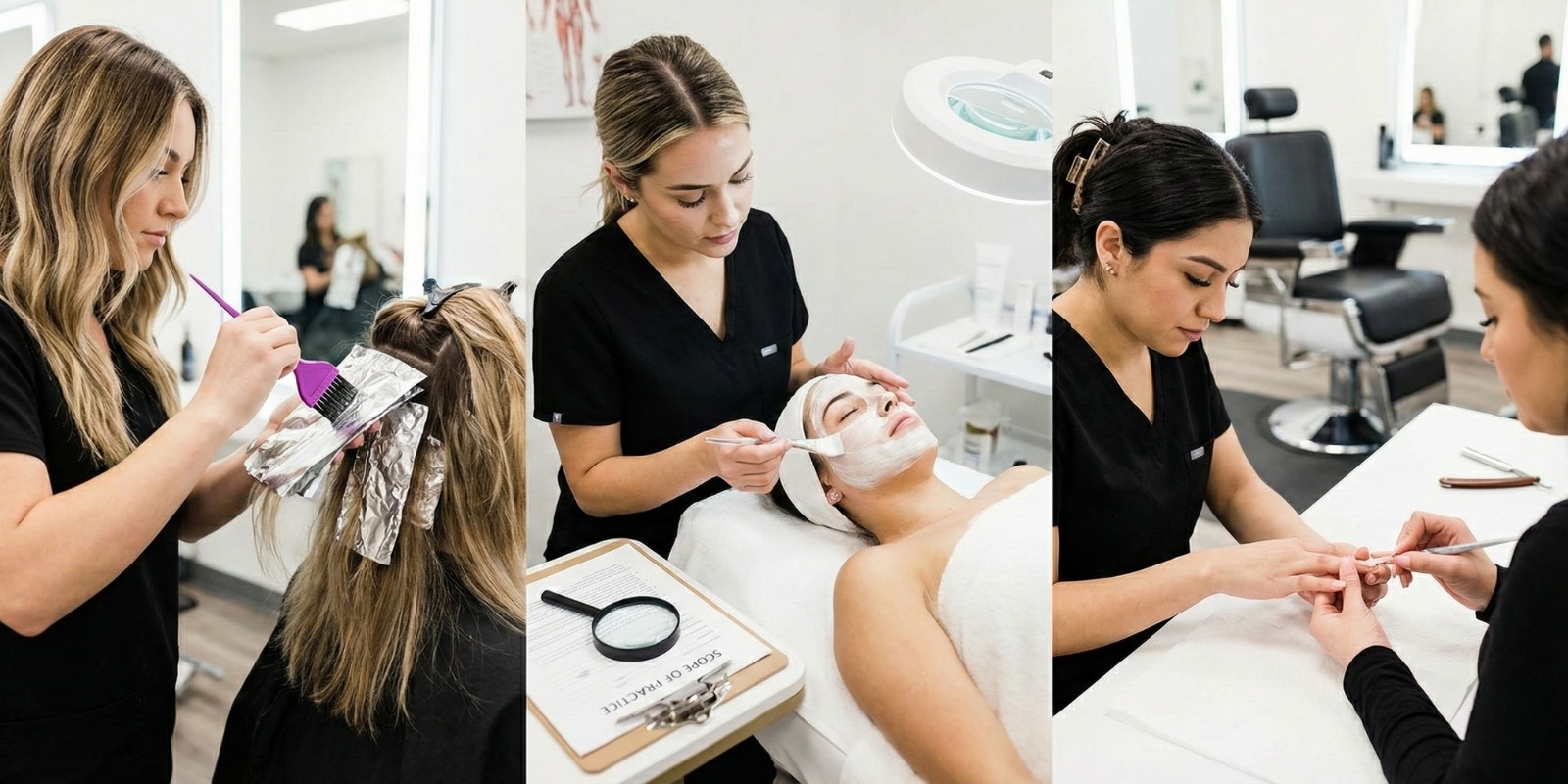
If you have just finished school or are looking at your cosmetology license on the wall, you might be asking yourself: “What am I actually allowed to do with this?” I see this question pop up constantly in beauty forums and among my students. People want to know if they can pivot into doing lashes full-time, offering advanced facials, or jumping over to a barbershop without starting from scratch.

The truth is that a cosmetology license is incredibly versatile, but it isn’t a “get out of jail free” card for every service under the sun. The confusion usually stems from the fact that cosmetology is defined differently depending on which state line you cross.

What your instructor said or what the salon down the street allows doesn’t actually matter. What matters is your legal scope of practice as defined by your state board.

Why Your License Isn’t a “One-Size-Fits-All” Tool

In the United States, every state board creates its own set of rules. For example, New York includes things like waxing, nails, and even some barbering services under the cosmetology umbrella.

Then you have a state like Texas, which is very specific about what a “Cosmetology Operator” can do. They can’t perform or advertise straight-razor shaving – only safety razors are allowed for that service under their scope.

When people ask me, “Can I work as a lash tech with a cosmetology license?” my answer is always: You can do exactly what your specific state says you can do. No more, no less.

The Quick Verification Method I Recommend

Before I add a new service to a menu or advise anyone on a career change, I use a simple 4-step check to stay safe:

  1. Go to your state’s licensing board website (in our case, the South Carolina Board of Cosmetology).
  2. Search for terms like “scope of practice” or “statutes and regulations.”
  3. Look for the specific service you want to offer: microdermabrasion, straight razor shaving, eyelash extensions, or chemical peels.
  4. If the language is blurry, call or email the board. Save that response! Having it in writing is your best insurance policy.

States like California often release “Industry Bulletins” to clarify new trends like microneedling, which helps pros stay on the right side of the law.

Can a Cosmetologist Work as an Esthetician?

In most states, the answer is a “qualified yes.” Most cosmetology licenses include basic skin care. This usually covers things like cleansing, masks, and surface-level exfoliation.

For example, Florida explicitly lists skin care and waxing as part of cosmetology. However, you have to be careful with the “Esthetician” title. According to the National Coalition of Estheticians Association, some states let you do the work but won’t let you call yourself an “Esthetician” unless you hold that specific license.

The Danger Zone: Advanced Procedures

This is where I see people get into trouble. There is a big difference between a relaxing facial and a medical-grade treatment. Illinois, for instance, is very clear that cosmetologists cannot perform procedures intended to affect the living layers of the skin.

Similarly, California has banned microneedling and derma-rolling for anyone under the barbering and cosmetology board, regardless of their license type. Always check the “prohibited practices” list before you buy expensive equipment.

Can a Cosmetologist Work as a Nail Tech?

This is usually the most straightforward path. In many states, including Texas and Florida, the cosmetology license covers manicures, pedicures, and artificial nail applications.

Even though you are legally allowed to do it, I always suggest getting extra training if your school program was hair-heavy. Real-world success in nails depends on your knowledge of sanitation and chemistry, which keeps your clients safe and your license valid.

The Lash Tech Confusion: Training vs. Licensing

I see a lot of people take a two-day “Lash Certification” course and think they are ready to go. But a certificate from a private company is not a license.

In California, you must be a licensed cosmetologist or esthetician to apply extensions. Texas actually has a specific “Eyelash Extension Specialist” license, but they also allow full Cosmetology Operators to perform the service.

One thing I always tell people to check is their insurance. On forums like SalonGeek, pros often discuss how adding new services – like moving from lash tints to extensions – can change your liability coverage. Even if the state says “yes,” make sure your insurance provider says “yes” too.

Can a Cosmetologist Work as a Barber?

This is where the line gets thin. While cosmetologists are pros at cutting and coloring hair, the “Barber” title usually involves the use of a straight razor on the face.

In Texas, a cosmetologist can do almost everything a barber does except straight-razor shaving. New York is a bit more flexible, but in most places, if you want to offer that classic hot towel shave, you need a barbering license or a crossover certification, so always check your state’s definitions/scope.

The Risk of Working Unlicensed

I know it’s tempting to start working “under the table” while you’re still in school or waiting for your test date. But the risks are massive, for example, Texas makes the line clear in its scope guides: licensed practitioners may perform or advertise only the services allowed under their license, and prohibited services (like straight-razor shaving for Cosmetology Operators) can’t be performed or advertised for compensation.

Doing so can lead to heavy fines or even being banned from getting your license in the future. It’s just not worth the shortcut.

How Aiken School of Cosmetology Helps You Master These Paths

If you’re in the South Carolina area and you want to make sure you’re “Salon Ready” for any of these lanes, the school you choose is your foundation. At Aiken School of Cosmetology and Barbering, the focus is on giving you the actual skills you need to get hired, not just the hours needed to pass a test.

Here is how we break down the programs to fit your goals:

Master Cosmetology: The Ultimate Flexibility

If you want to be able to do hair, skin, and nails, the Master Cosmetology (1,500 hours) program is your best bet. It’s designed to give you that broad scope so you can work in a full-service salon and offer a variety of treatments. We use high-quality products like CHI to ensure you’re learning with the best tools.

Focused Licenses for Specialists

If you already know you only want to focus on one niche, we offer specialized tracks that get you into the workforce faster:

  • Esthetics (600 hours): Perfect if you want to skip the hair and focus entirely on skin health, facials, and makeup.
  • Nail Technology (300 hours): The quickest path to a license if your passion is exclusively for manicures, pedicures, and nail art.
  • Master Barber (1,500 hours): For those who want to master the art of the straight razor shave and traditional men’s grooming.

The “Aiken Advantage”

One thing I love about this school is the “Salon Ready” philosophy. You don’t just sit in a classroom; you get business training, resume help, and real-world experience on the salon floor.

If you’re still confused about which license is right for your career goals, the easiest thing to do is see it for yourself. You can book a 30-minute campus tour to talk to the admissions team and get your specific questions answered about schedules and programs. It’s a great way to see the energy of the school and decide which path feels right for you.

The Many Paths You Can Take with a Cosmetology License (Offline & Remote)

Most people assume that getting a cosmetology license means you’re signing up for one specific life: standing behind a styling chair for forty hours a week. While that is a classic and rewarding path, I’ve seen firsthand how a license can actually be a passport to dozens of different careers. It is less of a “job description” and more of a launchpad into the beauty industry – from high-end salons and medical settings to brand education and even remote consulting.

If you have been wondering what else you can do with your training (and which of those paths actually provide a stable paycheck), I want to break it down for you. Here is a realistic look at where this career can take you.

Let’s start with the part most people skip.

Understanding Your Scope: The “Fine Print”

Before you dive into a specific niche, I always tell people to check their local regulations. Your license is a powerful tool, but what you are legally allowed to do depends heavily on your state’s board. For example, a cosmetologist in one state might have different rules for certain medical-grade skin treatments than one in another.

To see how specific these rules can get, you can look at the official scope guides from states like Texas, which clearly define what is allowed under each license type. Also, if you ever dream of opening a home-based business, keep in mind that many states treat home setups as regulated establishments. California’s guidance on home salons is a great example of the safety and licensing standards you would need to meet.

My best advice: confirm your scope with your state board before you spend a dime on specialized kits or extra certifications. It will save you a lot of headache later.

Traditional Offline Career Paths (In-Person)

The Salon and Studio Environment

This is the heart of the industry, but it isn’t just “doing hair.” Many pros choose to specialize in one area to increase their income and demand. This includes:

  • Precision cutting and styling
  • Advanced color services and corrections
  • Extension application
  • Texture-specific services (like curls and coils)
  • Bridal and high-end event styling

If you’re looking for a reality check on the numbers, the Bureau of Labor Statistics reports that the median pay for hairdressers and cosmetologists was approximately $16.95 per hour as of May 2024, with roughly 84,200 job openings expected annually over the next decade. While that is just a baseline, it shows that the demand for skilled hands is very real.

Specialized Skin and Nail Care

If you prefer detail-oriented work and a steady, repeating schedule, moving toward skin or nails is a smart move.

The BLS notes median pay for skincare specialists is around $19.98 per hour, while manicurists and pedicurists sit at roughly $16.66 per hour (May 2024). I find that these paths are excellent for building long-term client loyalty because the services are often part of a client’s regular monthly routine.

Healthcare and Senior Living Beauty

One of the most overlooked and stable paths is working within senior living communities. Many companies, such as Resident Salon Services, specialize in this model. It often provides:

  • More predictable hours
  • A built-in client base that appreciates your care
  • Much lower pressure to stay on top of passing trends

Creative and Niche Industries

Stage, Screen, and Events

For those who love the idea of storytelling and fast-paced environments, you might look into:

  • Film and television production
  • Fashion editorial shoots
  • Theatrical and live performances

The BLS tracks makeup artists in the theatrical and performance space as a specific category. Interestingly, for high-level broadcast work, the IATSE Local 706 guidance often notes that a valid cosmetology license is a requirement for hair stylists on set.

Medical Support and Wig Specialist

This is a deeply meaningful niche. Many professionals focus on wig customization and styling for clients experiencing medical hair loss.

The American Cancer Society provides resources on how these services are often categorized as “cranial prosthetics” for insurance purposes, and the National Alopecia Areata Foundation explains how to navigate reimbursement. It is a path that combines technical skill with genuine empathy.

Mortuary Cosmetology (A Specialized Niche)

It is definitely not for everyone, but some cosmetologists work with funeral homes to help families say goodbye by preparing hair and makeup for viewings. It is highly personal work that requires a specific temperament and an understanding of local standards before you commit.

The Corporate and Educational Side

If you want a career with more “traditional” structure – like a 9-to-5 schedule and benefits – look toward brands.

  • Education: You can become a brand educator, school instructor, or a platform artist performing demos at trade shows.
  • Sales and Support: You could work as a professional sales representative or an account manager for a major beauty brand.

If you understand products and enjoy talking to people, you can build a very lucrative lane here.

Can You Really Work Remotely?

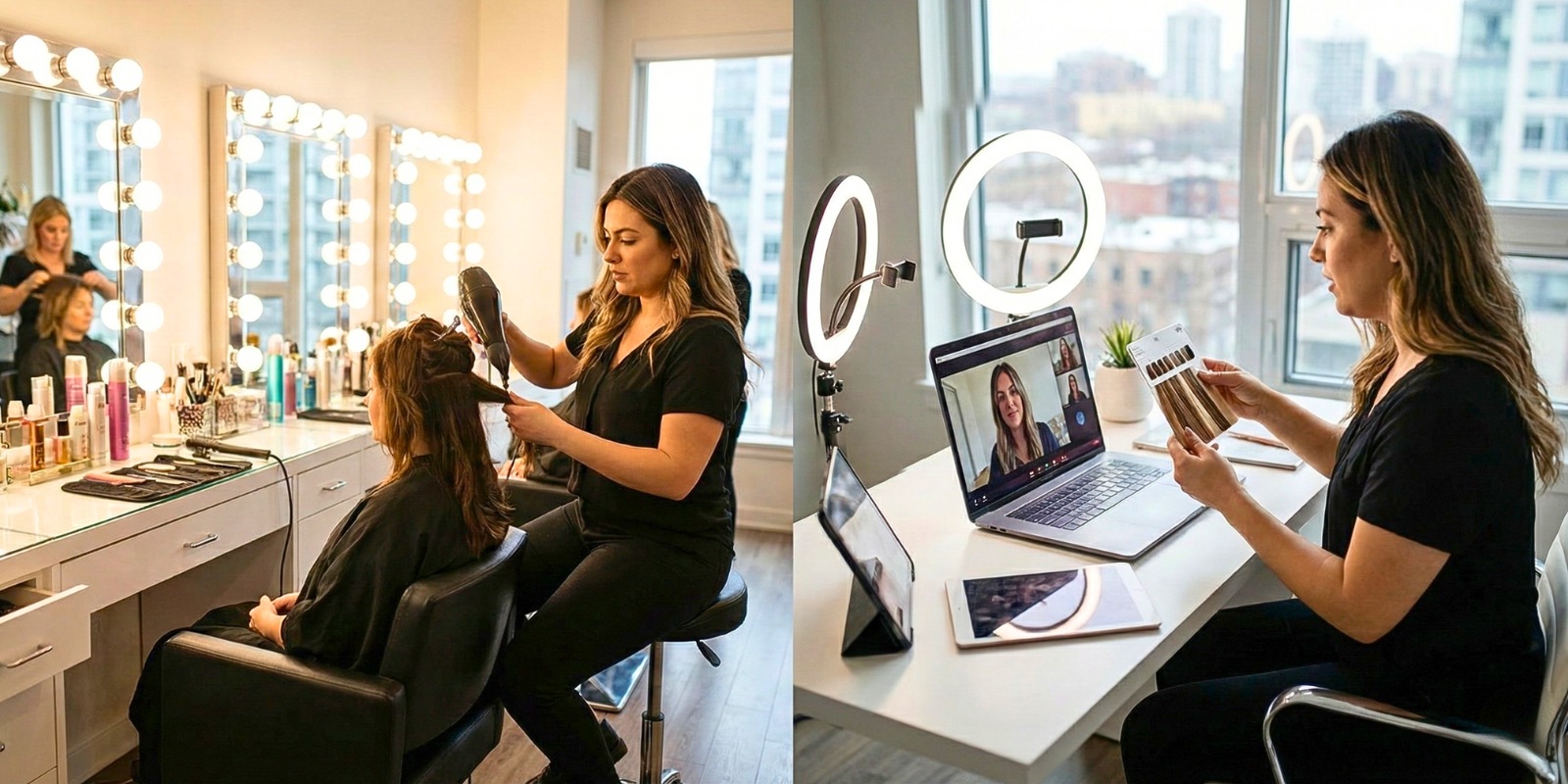
I’ll be honest: most “remote” work in this field isn’t hands-on. It’s about sharing your expertise through support and consulting.

Online Color Consulting

This is one of the most legitimate remote paths I have seen. Brands like eSalon have hired licensed cosmetologists to consult with clients digitally. If you love the science of color but want less physical strain, this is worth looking into.

Digital Content and Education

You don’t have to be a “celebrity influencer” to make this work. This lane is about:

  • Creating tutorials for other pros
  • Writing for beauty publications
  • Developing training resources for salon owners

Your license gives you the authority that a random hobbyist just doesn’t have.

Launching Your Career at Aiken School of Cosmetology and Barbering

If you are reading this, you are probably past the curiosity phase and ready to figure out how to actually get started. I believe the school you choose shouldn’t just help you pass a test; it should prepare you for the reality of the industry.

At Aiken School of Cosmetology and Barbering, the focus is on creating “Salon Ready” graduates. Whether you are looking into the Master Cosmetologist or Master Barber programs, both require 1,500 hours of training to meet South Carolina’s licensure standards.

A Curriculum That Covers Every Angle

What I appreciate about the Aiken campus is the emphasis on high-quality professional products – like CHI – and the fact that they don’t just teach you how to cut hair. Their curriculum includes essential business skills like:

  • Client retention strategies
  • Salon business management
  • Resume writing and job seeking skills

The school also offers specialized training in Esthetics and Nail Technology if you want to focus on skin or nails specifically. Having these different departments under one roof means you get a much broader view of the industry.

Taking the Next Step

The best way to see if this environment fits your goals is to see it for yourself. I always suggest visiting the campus to see the energy of the clinic floor.

The enrollment page offers a 30-minute, no-obligation campus tour where you can meet the instructors, see the tools you’ll be using, and ask specific questions about scheduling and financial aid.