


Should I Go Into Cosmetology? What to Know Before Beauty School
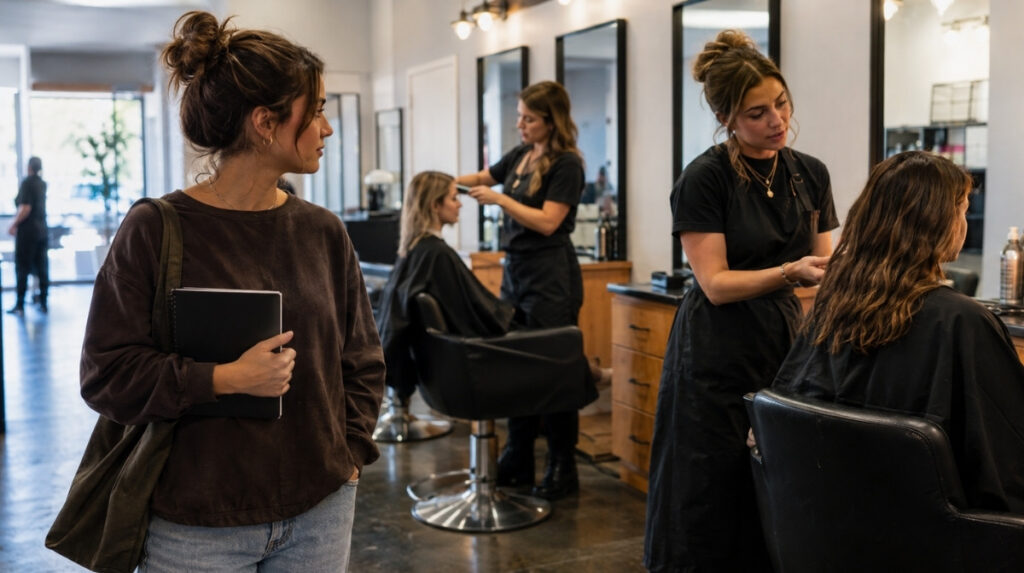
What to Know Before Choosing Cosmetology
- Ongoing Career Demand: The U.S. Bureau of Labor Statistics projects about 84,200 openings for barbers, hairstylists, and cosmetologists each year from 2024 through 2034. Employment specifically for hairdressers, hairstylists, and cosmetologists is projected to increase 6% during that period.
- Room to Build Higher-Value Services: Hair coloring represented approximately 28% of worldwide hair salon service revenue in 2025, while advanced coloring techniques have been associated with higher average service tickets.
- Multiple Ways to Work: Licensed professionals may pursue employee salon roles, booth or suite rental, business ownership, mobile work where permitted, and beauty-brand education. About 48% of U.S. hairdressers, hairstylists, and cosmetologists were self-employed in 2024.
- Licensing Rules Are State-Specific: Training requirements differ across the country. Georgia, for example, requires a 1,500-hour Master Cosmetology school curriculum, so students should confirm the rules for the state where they plan to become licensed.
- Safety Is Part of the Profession: Approved cosmetology education includes topics such as sanitation, infection prevention, chemistry, safe product use, and professional service procedures.
Choosing a new career can be exciting, but it also comes with practical questions. You may like the creativity and independence associated with cosmetology while still wondering whether the training commitment, earning potential, and daily working conditions fit the future you want.
The best way to make that decision is to look beyond promotional claims and understand what the profession actually requires. The sections below examine training, employment prospects, income structures, workplace realities, and career options so you can judge whether cosmetology makes sense for your own goals.
What Cosmetology Training Looks Like in Practice
Cosmetology school is not simply a place to practice hairstyles. Approved programs combine technical theory with structured practical instruction so students can learn how to perform services consistently, work safely, communicate with clients, and operate within professional standards.
If you are unsure whether you need previous salon experience before enrolling, this guide to who can get into beauty school explains why students can begin training without already being experienced beauty professionals.
Skills and Subjects Covered During Training
Required coursework depends on the licensing jurisdiction, but cosmetology programs generally cover several connected areas of theory and practical work. Georgia's official Master Cosmetology curriculum, for example, includes chemistry, cleansing and disinfection, infection control, hair-color theory, permanent waving, chemical relaxing, haircutting, hair and scalp analysis, physiology, skin care, nail care, and practical services.
Typical areas of study include:
- Hair Science and Chemistry: Studying hair structure, product chemistry, color processes, permanent waving, chemical relaxing, and how professional services interact with the hair.
- Relevant Anatomy and Physiology: Learning basic concepts involving the scalp, hair, skin, and body systems that relate to cosmetology work.
- Disinfection and Infection Control: Following sanitation procedures, blood-spill protocols, safe tool practices, and appropriate product-handling requirements.
- Supervised Practical Services: Developing technical skills through structured clinical practice with clients after completing the required foundational training.
Georgia divides Master Cosmetology instruction into training levels. Students complete the first 250 hours of Level 1 instruction and must achieve the required passing standard before progressing to Level 2 services involving live subjects. This initial phase includes theory, sanitation, chemistry, mannequin practice, hair-color theory, chemical-service concepts, and foundational hair and scalp study.
How Much Time You May Need to Commit
Training is a substantial time commitment, and there is no universal number of hours that applies nationwide. Under Georgia's cosmetology rules, the Master Cosmetology school curriculum is a minimum nine-month course totaling 1,500 hours.
Arkansas demonstrates why students should always check current state requirements rather than relying on a single national estimate. Current Arkansas cosmetology law includes at least 1,200 hours of training among the prerequisites for admission to the cosmetologist examination, while another provision requires cosmetology schools to maintain a 1,500-hour school term.
Calendar time depends on more than the state's hour requirement. Weekly class schedules, attendance, school policies, and reduced-hour enrollment can all affect how long it takes a student to finish.
Professional training also involves learning how to work differently from an at-home hobbyist. Students must develop consistency, time management, client consultation skills, sanitation discipline, product knowledge, and the ability to perform services according to professional standards.
What the Employment Outlook Says About Cosmetology
Career stability is often one of the biggest concerns when someone considers beauty school. Understanding current labor projections can help separate realistic employment prospects from assumptions about the industry.
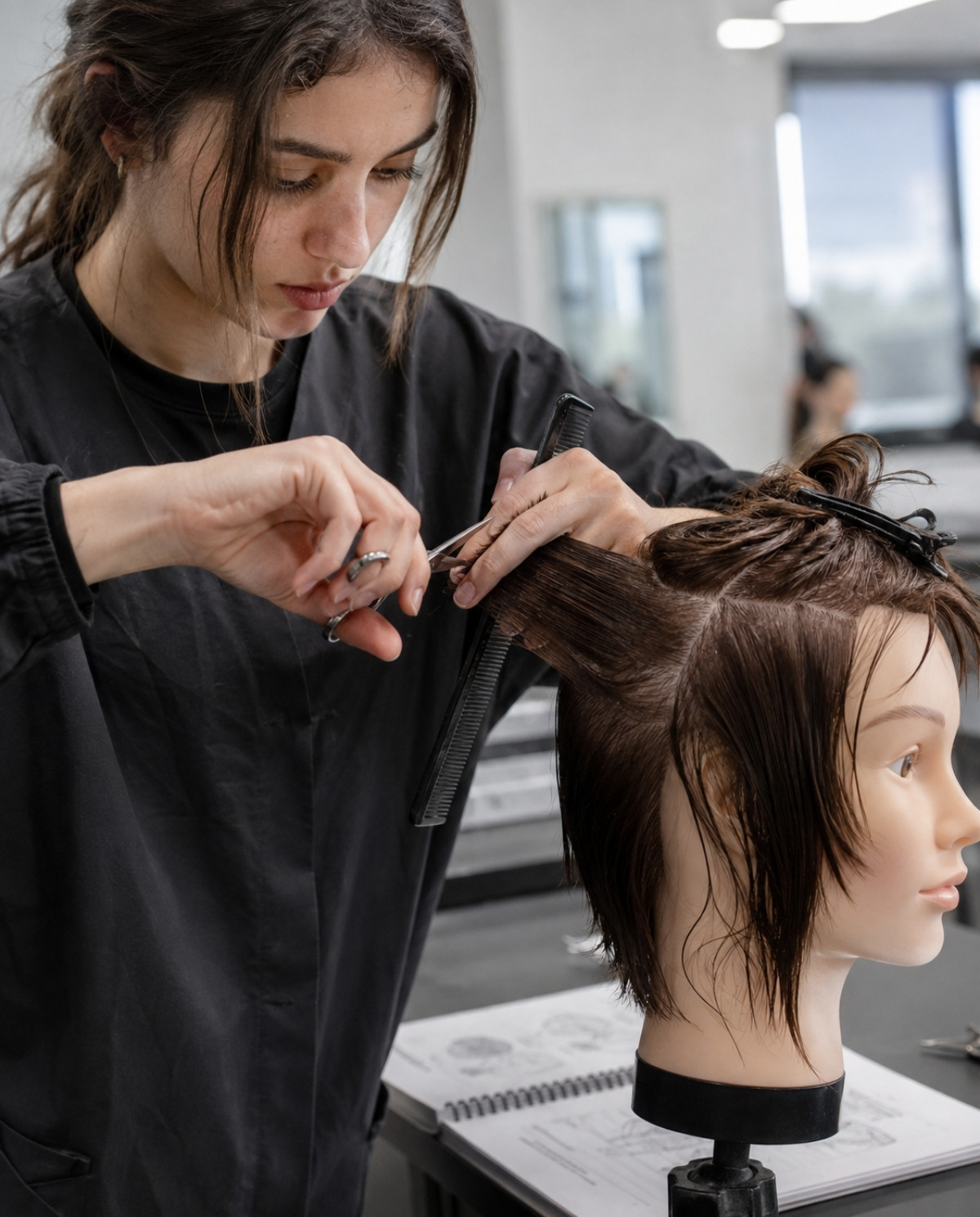
Demand for Licensed Beauty Professionals
Many core cosmetology services must still be performed directly on a client. Haircutting, coloring, chemical texturizing, styling, and similar services involve hands-on professional work rather than tasks that can be delivered entirely through digital systems.
According to the U.S. Bureau of Labor Statistics, employment of hairdressers, hairstylists, and cosmetologists is projected to increase 6% from 2024 to 2034. That compares with a projected 3% growth rate for all occupations.
For the broader occupational category that includes barbers, hairstylists, and cosmetologists, BLS projects approximately 84,200 openings each year on average during the decade.
Many of those openings are expected to result from workers transferring to other occupations or leaving the labor force rather than from employment growth alone.
BLS also expects continuing demand for basic hair care as well as coloring, straightening, and other advanced hair treatments. These projections do not guarantee immediate success for every graduate, but they indicate that the occupation is expected to continue producing employment opportunities.
For someone entering the field, finding an initial salon opportunity is only the beginning. Long-term progress also depends on improving technical ability, delivering reliable client service, encouraging repeat appointments, and gradually developing a consistent clientele.
Understanding Cosmetology Pay and Income Models
Cosmetology earnings can be difficult to summarize with one salary figure because professionals work under very different business arrangements. Employees, commissioned stylists, booth renters, independent suite operators, and salon owners do not all earn money in the same way.
Why Published Wage Data Tells Only Part of the Story
The U.S. Bureau of Labor Statistics reports that employed hairdressers, hairstylists, and cosmetologists had a median hourly wage of $16.95 in May 2024. The lowest 10% earned less than $11.82 per hour, while the highest 10% earned more than $33.76 per hour. BLS states that reported tips are included in those wage figures.
There is an important limitation to those numbers. Approximately 48% of hairdressers, hairstylists, and cosmetologists were self-employed in 2024, and BLS occupational wage data does not include self-employed workers.
Depending on the business arrangement, a cosmetology professional may earn money through:
- Hourly Pay or Service Commission: An employer may pay a fixed hourly wage, a percentage of services performed, or another compensation arrangement.
- Client Tips: Some clients provide gratuities in addition to the listed service price.
- Retail Incentives: Some salons offer commissions or bonuses tied to sales of professional home-care products.
Independent professionals have a different financial structure because client payments become business revenue before expenses are deducted. Booth or suite rent, supplies, insurance, taxes, card-processing fees, advertising, scheduling software, and other operating costs can reduce the amount ultimately retained as personal income.
Newer professionals also tend to spend considerable time improving speed, consultation ability, technical consistency, and client retention. As experience and repeat business develop, income opportunities may improve, although earnings vary substantially according to pricing, location, work arrangement, demand, hours worked, and business expenses.
Where Specialized Services May Create More Revenue Opportunity
Developing advanced skills can give stylists access to appointments with higher service prices, although higher prices do not automatically mean higher profits. Product expenses, appointment length, overhead, and local pricing all affect actual profitability.
Research from Deep Market Insights estimated the global hair salon service market at approximately $215 billion in 2025. Hair coloring represented about 28% of service revenue in that report.
The same research associates techniques such as balayage, ombré, highlights, and creative color transformations with higher average service tickets. Hair and scalp treatments are analyzed separately rather than being included within the 28% coloring share.
Learning advanced color work, corrective techniques, extensions, texture services, or other specialties can help a professional create a broader service menu. School provides an initial technical foundation, but career development usually continues after graduation. BLS notes that cosmetologists may take advanced courses throughout their careers to stay current with new techniques and trends.
Career Options Beyond One Traditional Salon Job
One attraction of cosmetology is that a license can lead to several different working arrangements rather than one fixed employment model.
Ways Licensed Professionals Can Structure Their Careers
Depending on state regulations, experience, business skills, and professional goals, career options may include:
- Employee or Commission Salons: Working within an established salon that may provide facilities, products, booking systems, marketing support, or existing customer traffic.
- Booth and Suite Rental: Renting professional space while taking greater responsibility for pricing, clients, scheduling, supplies, taxes, and operating expenses.
- On-Location Beauty Services: Providing styling for weddings, events, photography sessions, or other assignments when allowed under applicable licensing rules.
- Professional Brand Roles: Using product knowledge and technical experience in education, demonstrations, training, sales, or other positions with beauty companies.
Independent work is a significant part of this profession. According to BLS, 48% of hairdressers, hairstylists, and cosmetologists were self-employed in 2024. BLS also notes that some professionals lease booth space, manage salons, or eventually open their own businesses.
Greater independence can provide more control over scheduling and business decisions, but it can also create additional responsibilities involving expenses, records, marketing, inventory, taxes, and customer management.
You can explore additional possibilities in this overview of career options with a cosmetology license, including paths that extend beyond a conventional salon-chair role.
Creative Work and the Growing Interest in Scalp Care
Cosmetology is also appealing to people who enjoy solving visual and practical problems for individual clients. Every appointment may involve a different hair type, previous chemical history, personal style, maintenance routine, or event goal.
Hair and scalp care has also become a more visible area of consumer interest. Some professionals pursue additional education in cosmetic scalp care or related specialties. Georgia's cosmetology curriculum already includes hair and scalp analysis, scalp conditions, and hair and scalp treatments.
Consumer-market figures point to substantial spending in this broader category. Grand View Research valued the global hair and scalp care product market at $88.2 billion in 2025 and projects growth from $93.6 billion in 2026 to approximately $150.5 billion by 2033.
These figures describe consumer products rather than salon-service revenue, so they should not be treated as evidence of how much a cosmetologist can earn. They do, however, demonstrate substantial market activity around concerns such as dryness, dandruff, hair fall, scalp sensitivity, and thinning.
Professional boundaries remain important. Cosmetologists can provide cosmetic hair and scalp services within the scope allowed by their state license, but they are not medical practitioners. Conditions that appear to require diagnosis or medical treatment should be referred to an appropriate healthcare professional.
Physical and Chemical Risks to Consider Before Enrolling
Cosmetology can be rewarding, but the job also places real demands on the body and requires careful handling of products and equipment.

Standing, Repetition, and Ergonomic Strain
The profession involves substantial time on your feet. The U.S. Bureau of Labor Statistics specifically identifies physical stamina as important because barbers, hairstylists, and cosmetologists spend much of their work shifts standing.
Hair professionals also perform repeated movements involving the fingers, hands, wrists, shoulders, neck, and back. Research published in the Journal of Occupational Health identified factors including prolonged standing, repetitive movement, awkward working positions, and long working periods in relation to musculoskeletal problems among hairdressers.
Good ergonomic practices cannot eliminate every occupational risk, but adjusting body position, chair height, working angles, and equipment setup can help reduce unnecessary strain. Building these habits early may be preferable to waiting until discomfort becomes a recurring problem.
Working Safely Around Salon Chemicals
Cosmetology professionals may routinely work with permanent hair color, lighteners, relaxers, waving products, disinfectants, and other chemical formulations. Proper training therefore includes reading manufacturer instructions, understanding product chemistry, preventing cross-contamination, using appropriate protective measures, and maintaining suitable workplace conditions.
Federal cosmetic regulation has also expanded in recent years. The Modernization of Cosmetics Regulation Act of 2022 (MoCRA) significantly increased FDA oversight of cosmetic products. Its provisions include requirements involving serious adverse-event reporting, facility registration, product listing, safety substantiation records, FDA access to certain records, and mandatory recall authority under specified circumstances.
MoCRA should not be interpreted as meaning that every salon chemical associated with potential hazards has been prohibited. Safe professional use still depends on understanding the products being handled and following applicable workplace requirements.
For example, the FDA warns that some hair-smoothing products may contain or release formaldehyde when heated. Exposure may irritate the eyes, nose, respiratory system, and skin, particularly when ventilation is inadequate.
The Occupational Safety and Health Administration also provides specific guidance concerning hair-smoothing products that contain or release formaldehyde. Employers using these products may need to comply with applicable OSHA Formaldehyde and Hazard Communication requirements.
Safety education therefore has a practical purpose beyond state-board preparation. It helps professionals protect themselves, their coworkers, and their clients throughout day-to-day salon work.
Questions to Ask Yourself Before Starting Beauty School
Before committing to enrollment, consider whether the realities of the profession match your expectations:
- School and Living Costs: Have you reviewed tuition, available financial aid, equipment expenses, transportation, and the cost of supporting yourself during training?
- Client Interaction: Are you comfortable listening carefully, communicating clearly, and working closely with many different personalities?
- Physical Demands: Can you handle spending much of the day standing while repeatedly using your hands and arms?
- Continuing Education: Are you willing to keep learning about new products, techniques, safety practices, and industry developments after earning your license?
- Business Responsibilities: Are you prepared for activities such as rebooking, client follow-up, marketing, retail recommendations, and customer service if your career path requires them?
- Real-World Exposure: Have you toured a school, visited salons, or spoken with working professionals so you understand what their normal workday involves?
It also helps to understand what happens after completing your education. This guide explaining what to do after beauty school walks through licensing and the transition toward finding your first professional opportunity.
Common Questions From Future Cosmetology Students

How Many Months Does Cosmetology School Usually Take?
There is no nationwide completion period because state requirements and individual school schedules differ. Georgia's Master Cosmetology curriculum, for example, requires at least nine months and 1,500 training hours.
Actual completion time may be longer depending on the student's weekly schedule, attendance, school calendar, and whether training is completed on a reduced schedule.
How Is Cosmetology Different From Esthetics?
The legal scope of each profession depends on state law. Cosmetology generally provides broad instruction centered on hair services while also including selected skin and nail subjects. Georgia's curriculum, for example, includes haircutting, hair coloring, chemical services, hair and scalp treatments, skin care, and nail care.
Esthetics follows a more specialized, skin-focused licensing pathway. Training commonly includes facials, skin treatments, hair removal, makeup, brow services, eyelash services, and related esthetic procedures rather than the broad hairstyling and chemical-service curriculum taught in cosmetology.
Can Students Work in a Salon Before They Graduate?
Students may be able to work in non-licensed positions such as reception, scheduling, retail, or administrative support while attending school, depending on the duties involved.
Supervised services performed as part of an approved school program are different from working independently as a licensed cosmetologist. In Georgia, Master Cosmetology students complete 250 hours of Level 1 instruction and must meet the required passing standard before advancing to Level 2 practical services involving live subjects.
Enrollment by itself does not authorize someone to provide cosmetology services independently outside the approved student-training environment.
Can a Cosmetology License Be Used After Moving to Another State?
Moving does not automatically transfer a professional license. Each state establishes its own endorsement, reciprocity, examination, and documentation requirements.
Georgia states that it does not reciprocate with other states. However, an applicant who holds an active license in good standing from another state or U.S. territory may apply for Georgia licensure by endorsement.
Georgia also explains that having fewer school hours than Georgia normally requires does not automatically prevent an actively licensed applicant from seeking endorsement. Whether an applicant must complete additional examinations can depend on the examinations previously passed.
Arkansas uses its own reciprocity process. Current Arkansas requirements include holding the appropriate out-of-state license, satisfying applicable examination requirements, and passing the Arkansas law examination.
Because licensing regulations can change, contact the licensing authority in the state where you plan to work before assuming that your existing education or license will be accepted automatically.
Explore Whether Aiken Beauty & Barber School Fits Your Plans
Researching the profession is only one part of choosing your next step. Seeing an actual training environment can help you understand the classroom setup, practical learning experience, and expectations placed on students.
Aiken Beauty & Barber School provides information for prospective students through its Enrollment page, including the opportunity to learn more about admissions and campus visits.
If you are still deciding whether cosmetology is the right direction for you, use the contact form below to ask questions or arrange a visit and get a closer look at the school's practical training environment.