


What Do You Learn in Cosmetology School Beyond Hair?
What You’ll Actually Learn
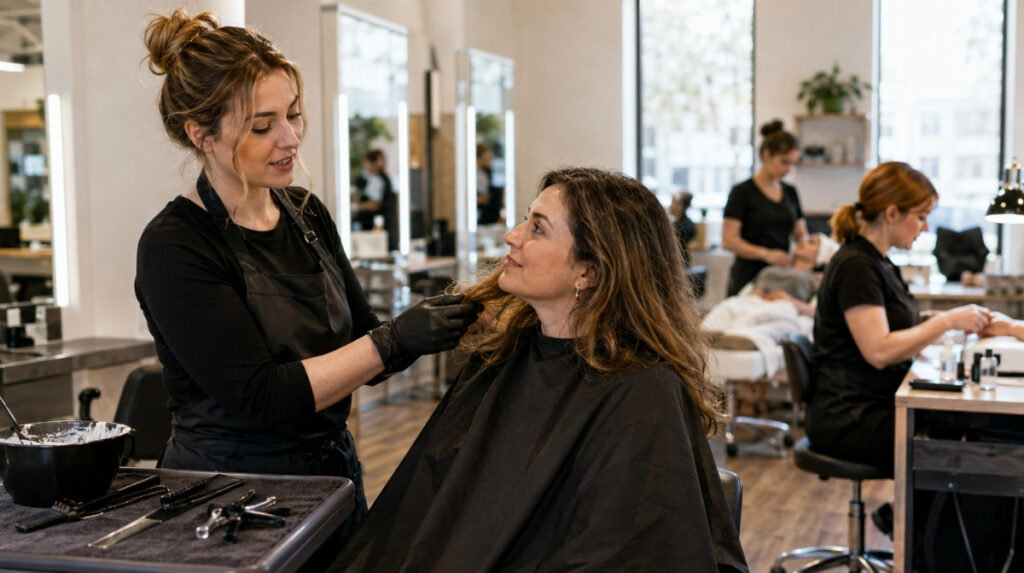
- A Full Beauty Foundation: Cosmetology education covers much more than cutting hair. Students can train in hair design, coloring, chemical texture services, basic skin care, nail services, and other techniques included within their state's cosmetology scope.
- Safety Meets Science: Anatomy, chemistry, infection control, sanitation, chemical safety, and practical calculations all support safer salon services. Scientific concepts represent 35% of the NIC Cosmetology Theory Examination.
- Preparing for the Workplace: Client communication, retailing, inventory awareness, salon operations, and other professional skills can help students prepare for employment, independent work, or future business ownership.
- Licensing Depends on Location: Education and examination rules differ from state to state. Students should choose a program approved for cosmetology education by the appropriate state licensing authority and confirm the requirements where they plan to work.
Starting beauty school can feel exciting and intimidating at the same time. Maybe you imagine creating dramatic color transformations, developing a loyal clientele, or eventually opening a salon of your own, but you still have questions about what happens during the training itself. Some future students wonder whether school will feel repetitive or whether they will have enough opportunities to explore different areas of beauty. If you are still deciding whether this career fits you, learning what to know before choosing cosmetology school can help you think through the commitment before enrolling.
Cosmetology education combines creativity with technical knowledge, supervised practice, sanitation, science, and professional development. Understanding those different pieces can give you a much clearer picture of what your training may involve.
What Makes Up a Cosmetology Education?
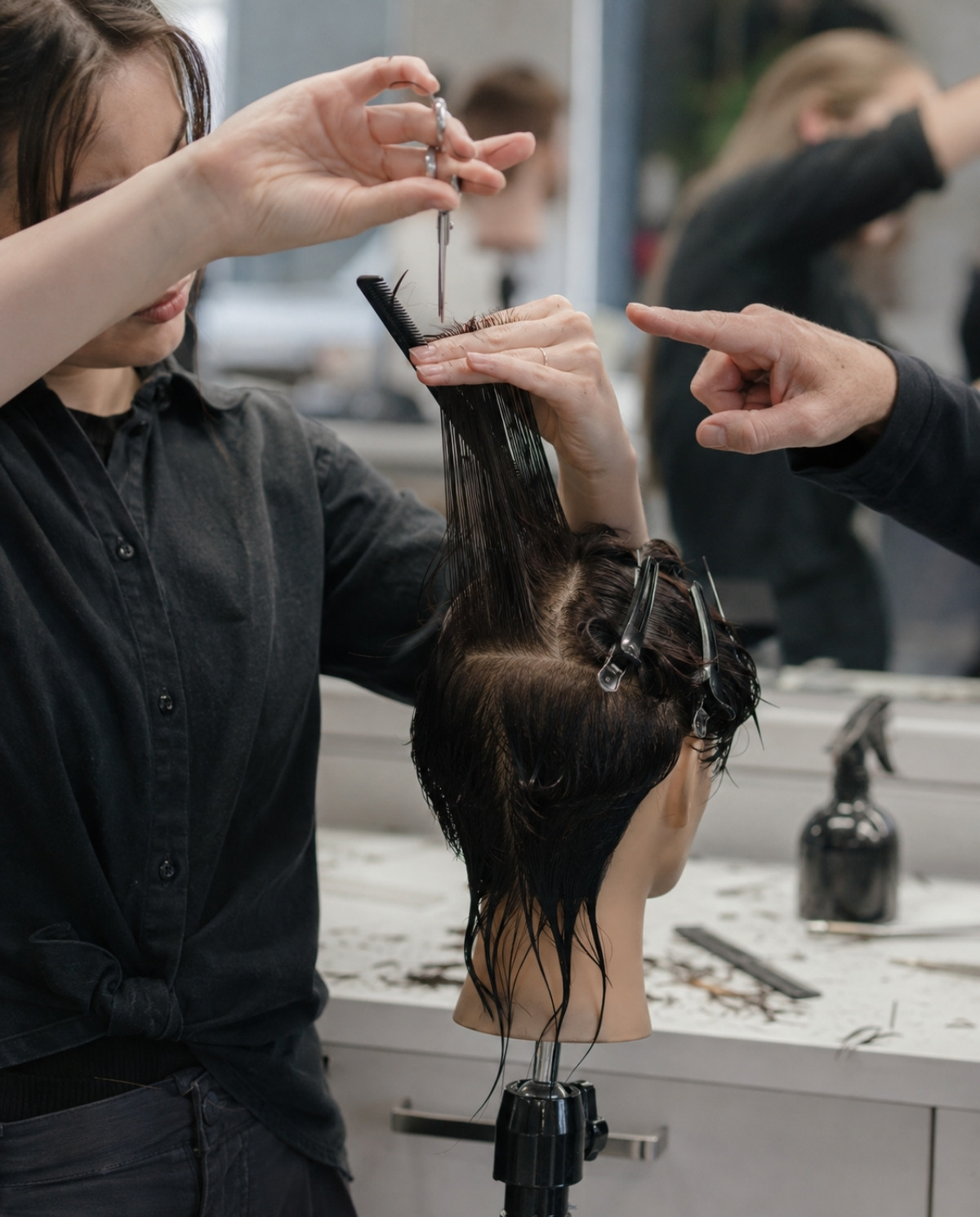
Hair is an important part of cosmetology, but it is far from the entire curriculum. Strong training combines theory and hands-on practice so students learn the reasoning behind a technique as well as the steps required to perform it correctly and safely.
At Aiken School of Cosmetology and Barbering, the published Master Cosmetologist course outline totals 1,500 hours and includes subjects such as hair design, haircutting, anatomy and physiology, chemistry, infection-control principles, chemical texture services, hair coloring, facials, hair removal, makeup, nail care, salon business, and other professional training.
Haircutting and design require more than memorizing a few basic shapes. Students learn how elevation, over-direction, texture, density, growth patterns, proportion, and design choices influence the finished result. The NIC Cosmetology Theory Examination covers haircutting and shaping as well as wet styling, thermal styling, natural hair styling, design principles, and procedures for different hair types and textures.
Chemical services add another level of technical knowledge. Permanent waving and chemical relaxing change the hair through chemical processes, so students need to understand both the procedure and the precautions surrounding it. Hair-color education can include color theory, formulation, lightening, application techniques, and correcting unwanted tones. The NIC blueprint also addresses techniques such as foiling, balayage, color formulation, and corrective color within its chemical-services category.
Why Cosmetology Includes Math and Science
Beauty services may look highly artistic from the outside, but many depend on careful measurements and scientific principles. Product manufacturers may specify particular mixing ratios, processing instructions, or application procedures. Following those directions accurately can help produce more consistent results while reducing the risk of unnecessary hair damage, skin irritation, or chemical overexposure.
Haircutting also involves practical geometry. Elevation, angles, over-direction, balance, and proportion influence shape and movement. Once you begin thinking about the business side of the profession, calculations may also appear in service pricing, product costs, inventory, retail margins, and other financial decisions.
Science is equally important for protecting clients and professionals. According to the National Interstate Council of State Boards of Cosmetology, 35% of the NIC Cosmetology Theory Examination is devoted to scientific concepts. Topics within that domain include infection control and safety, anatomy and physiology, hair and scalp conditions, skin and nail conditions, chemistry, chemical interactions, chemical reactions, and the pH scale.
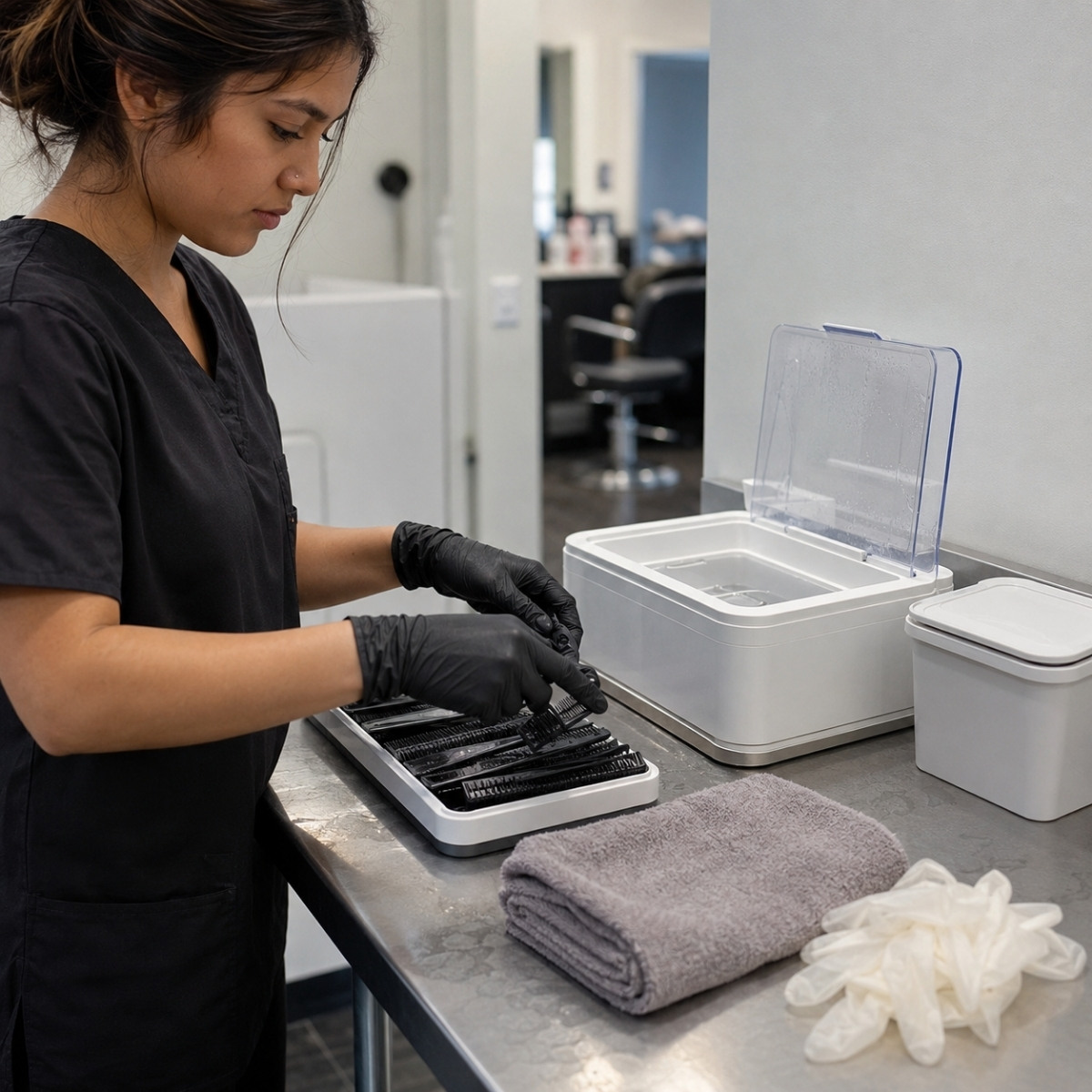
That information has direct salon applications. Students learn why implements and surfaces must be properly disinfected, how contamination can spread, what procedures to follow after blood exposure, and how certain conditions may affect whether a service can be performed safely. Chemical knowledge also helps students recognize why following product instructions and observing a client's hair, skin, and scalp condition matter before and during a service.
School cannot recreate every situation you will ever encounter professionally, but it can teach you how to assess risks, follow established procedures, and recognize when a service should be modified, postponed, or refused.
Beauty Training That Goes Past Hairstyling
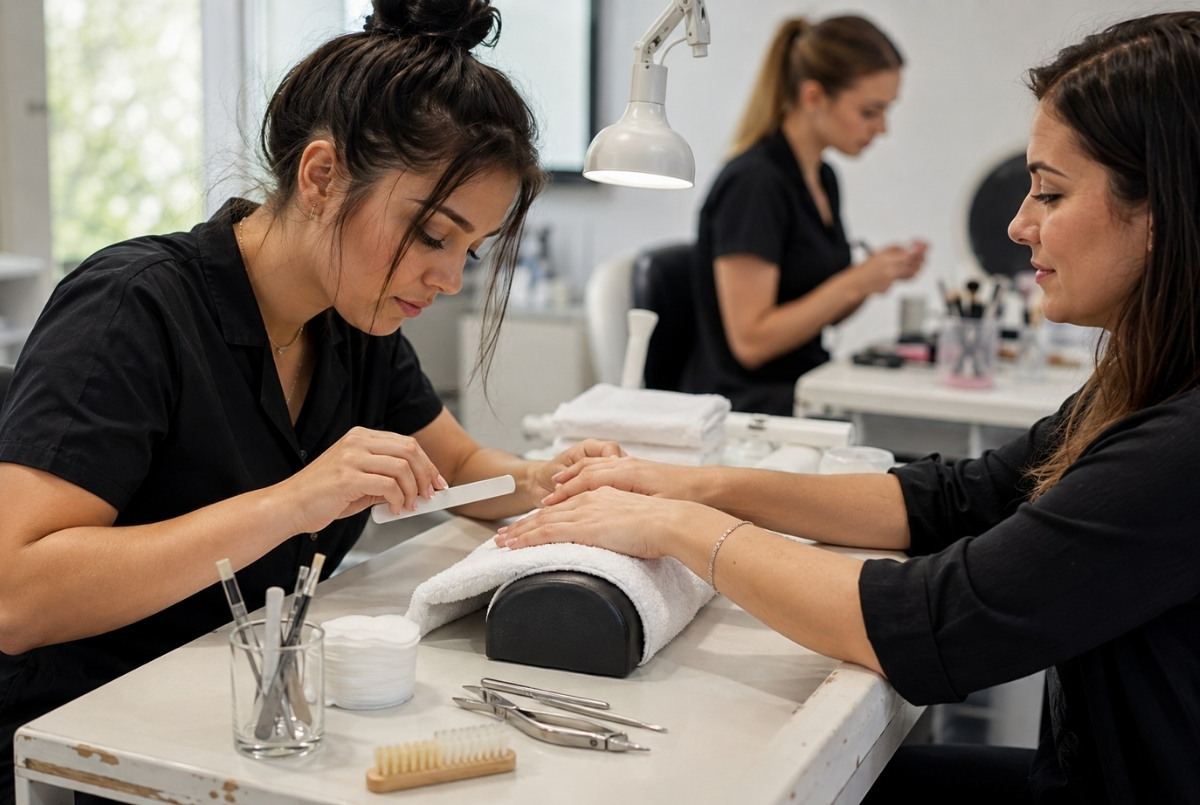
Not every future cosmetologist wants to focus exclusively on cutting and styling. Some students are especially interested in makeup, skin services, nails, or hair removal, which naturally leads to questions about whether those subjects appear in a general cosmetology program.
They often do, although the specific curriculum and services permitted under a cosmetology license vary by state. Aiken School of Cosmetology and Barbering includes training in areas such as facials, hair removal, makeup application, manicures, pedicures, and other nail services alongside its hair-focused instruction.
Exposure to several categories of beauty services gives students an opportunity to discover what interests them most. Depending on the program, hands-on education may include skin analysis, basic facial procedures, makeup application, hair removal, manicuring, pedicuring, and nail enhancement techniques.
Hair-removal instruction can also involve learning appropriate products, procedures, safety precautions, and treatment-area considerations. The exact services a graduate may legally provide, however, are determined by the scope of practice established by the licensing laws in the state where that person works.
A cosmetology license should therefore never be viewed as automatic authorization to perform every beauty or aesthetic procedure. Graduates need to understand where their legal scope begins and ends.
Where Skin Services Fit In
Skin-related training is not simply about applying cosmetics. Students also need basic knowledge of skin structure, common conditions, infection control, contraindications, product safety, and client evaluation.
The NIC Cosmetology Theory Examination assigns 10% of its content to skin care and services. This portion includes skin evaluation, contraindications, infection-control procedures, basic facial services, hair removal, makeup application, and the proper use of skin-care equipment.
Aiken's cosmetology curriculum also includes facial and skin-related education rather than limiting the program to hair. Students may receive instruction in cleansing, skin analysis, facial procedures, makeup application, and hair removal as part of their broader cosmetology preparation.
At the same time, basic cosmetology training should not be confused with advanced esthetics or medical aesthetics. Certain procedures may require another license, specialized education, medical oversight, or additional credentials. The requirements depend on the service and the laws of the state where you practice.
Professional Skills Behind a Beauty Career
Being technically talented does not automatically make someone successful in the beauty industry. Professionals also have to manage appointments, communicate with clients, recommend products responsibly, maintain records, understand supplies, and build a reputation that encourages people to return.
Aiken's published curriculum includes salon business and professional-development subjects alongside technical training. These skills become increasingly useful when graduates start building a clientele, working independently, selling retail products, monitoring inventory, or thinking about eventually operating a business.
The U.S. Bureau of Labor Statistics reports that about 84,200 openings for barbers, hairstylists, and cosmetologists are projected each year, on average, from 2024 through 2034. BLS also reports that 48% of hairdressers, hairstylists, and cosmetologists were self-employed in 2024.
For salon and shop owners, professional responsibilities can extend well beyond providing beauty services. BLS notes that owners may keep business and inventory records, order supplies, arrange advertising, and hire or supervise employees.
That is why learning how a salon operates can matter just as much as improving technical ability. Over time, these combined skills can lead toward many different career paths available with cosmetology training, depending on your experience, interests, licensing rules, and long-term goals.
Adapting Your Skills to Today’s Salon Environment
Trends in beauty change quickly, but a good education focuses on principles that remain useful even when styles evolve. Instead of teaching students to reproduce only one popular haircut or color trend, cosmetology training develops the technical foundation needed to adjust services for different clients.
Texture is one example. The NIC theory blueprint includes hair-care and design procedures for different hair types and textures, along with natural hair styling such as braiding. Students also study hair and scalp evaluation so they can recognize conditions that may influence a service.
Chemical procedures require similar judgment. Permanent waves, relaxers, lighteners, and hair-color products can affect the hair's structure or condition. Students therefore need to understand product instructions, chemical interactions, processing considerations, and the precautions associated with these services.
Product regulation also affects the broader beauty industry. The Modernization of Cosmetics Regulation Act of 2022, or MoCRA, expanded the FDA's authority over cosmetics. Its provisions include requirements involving serious adverse-event reporting, facility registration, cosmetic product listing, and safety substantiation.
Many MoCRA obligations apply primarily to cosmetic manufacturers, processors, and responsible persons rather than individual cosmetologists. Even so, professionals who regularly handle cosmetic products benefit from understanding why ingredient awareness, manufacturer directions, and product safety matter.
Workplace regulation is another consideration. The Occupational Safety and Health Administration explains that some hair-smoothing products may contain formaldehyde or release it during use. When salons or beauty schools use products containing or capable of releasing formaldehyde, OSHA requirements involving formaldehyde exposure and hazard communication may apply.
These examples show why chemistry, sanitation, and safety education have value beyond a licensing examination.
Understanding Training Hours and Licensing Rules
Cosmetology licensing is controlled at the state level, so students should pay close attention to the requirements where they intend to work. A school that prepares students for licensure should meet the standards established by the appropriate state authority rather than relying on accreditation alone as proof that a program satisfies licensing requirements.
For students attending Aiken School of Cosmetology and Barbering, South Carolina is especially relevant. The South Carolina Board of Cosmetology requires applicants for cosmetologist licensure to complete 1,500 hours at a Board-approved cosmetology school and pass the required NIC written and practical examinations. Aiken's published Master Cosmetologist curriculum likewise totals 1,500 hours.
Requirements are not identical across the country. Georgia's State Board of Cosmetology and Barbers rules, for example, also require 1,500 hours for a complete cosmetology school course. Georgia organizes the curriculum into an initial 250 hours of Level 1 training followed by additional service-application education, and students must complete those first 250 hours before providing clinical services to clients.
Arkansas also uses a 1,500-hour cosmetology education requirement under the Arkansas Department of Health cosmetology rules. Its 2026 Candidate Information Bulletin identifies the NIC Cosmetology Theory Examination as the written examination used for cosmetologist candidates.
These state-to-state differences are why students should confirm current requirements directly with the licensing board where they plan to practice rather than assuming that another state's education timeline, examination process, or curriculum structure will apply to them.
After completing your education and moving into the licensing process, knowing how to move from cosmetology school into your first beauty career can make the transition from student training to professional work easier to understand.
Common Questions Before Starting School
- How long does cosmetology training usually take? There is no universal national timeline because each state establishes its own educational requirements. In South Carolina, cosmetologist applicants must complete 1,500 hours at a Board-approved cosmetology school. The amount of calendar time needed to finish those hours depends on the school's schedule, your attendance, holidays, and whether your training schedule is full time or part time.
- Should I purchase professional tools before classes begin? Check with your school first. Kit policies are different from one institution to another, and some required equipment may already be included or offered through the school. Confirm what is provided before spending money on shears, mannequins, styling tools, or other supplies.
- Is cosmetology school difficult if I have no previous experience? Beginners should expect a learning curve because cosmetology combines physical techniques, terminology, science, sanitation rules, and repeated hands-on practice. These skills are taught progressively, allowing students to develop technique and confidence through instruction and supervised practice.
- Do I have to offer every service after becoming licensed? No. Cosmetology education gives you a broad foundation, but many professionals later focus on a particular area such as color, textured hair, bridal services, styling, makeup, or another specialty permitted by their license. More advanced services can have separate legal requirements. For example, Georgia has distinct laser-practitioner licensing requirements for master cosmetologists who want to qualify as Assistant Laser Practitioners, including approved laser or IPL education.
Turn Your Interest in Beauty Into Practical Skills
Choosing cosmetology school is not simply about learning how to recreate fashionable looks. It is an opportunity to develop technical ability, safer working habits, stronger client communication, and a better understanding of how a professional beauty environment operates.
At Aiken School of Cosmetology and Barbering, the Master Cosmetologist program combines a 1,500-hour curriculum with hands-on education across hair, skin, nail, safety, and salon-business subjects. The goal is to help students develop the foundation needed to pursue licensure and prepare for professional opportunities in the beauty industry.
If you are considering the next step, visit the Aiken School of Cosmetology and Barbering Enrollment page for current enrollment information. You can also use the school's contact form to ask questions or arrange a campus tour.