


How to Tell Your Barber What You Want and Avoid a Bad Haircut
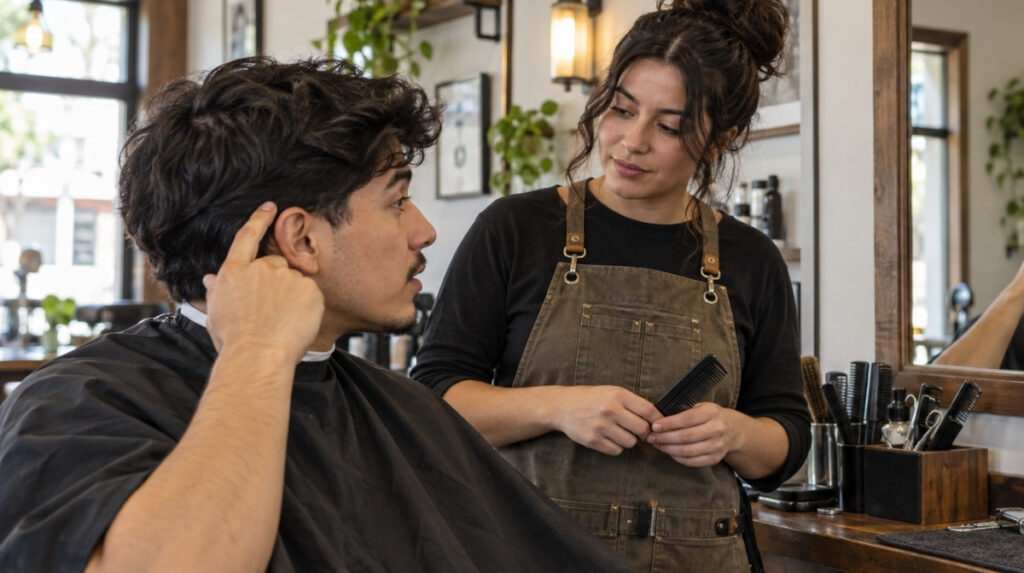
Sitting in a barber chair can feel pretty nerve-wracking the second that cape goes on and you're turned away from the mirror. But a bad haircut isn't always about a lack of technical skill. Sometimes, things go wrong when your expectations don't line up with what your barber visualizes. Understanding clipper guard sizes, choosing the right fade, and using reference photos can help you communicate your preferences and feel more confident about your next haircut.
Essential Tips Before Your Next Barber Visit
- Know Your Clipper Guard Sizes: Standard clipper guards typically increase in 1/8-inch increments. A #1 guard leaves approximately 1/8", a #2 leaves 1/4", and so on, although actual cutting lengths can differ depending on the clipper and blade setting.
- Be Specific About Your Fade: Describe the bottom length (skin or shadow), where you want the fade to sit (low, mid, or high), and how much contrast you prefer.
- Use Three Helpful Reference Photos: Bring a picture of your ideal haircut, another showing a similar hair texture, and one illustrating a style you want to avoid.
- Communicate Before the Cut: Talk about your styling habits, hair concerns, and preferred results so your barber can suggest a haircut that works for you.
- Understand Professional Barber Training: State-approved barbering programs provide regulated instruction in haircutting, hair and scalp knowledge, sanitation, and other essential industry practices.
Understanding Haircut Guard Sizes and Cutting Lengths
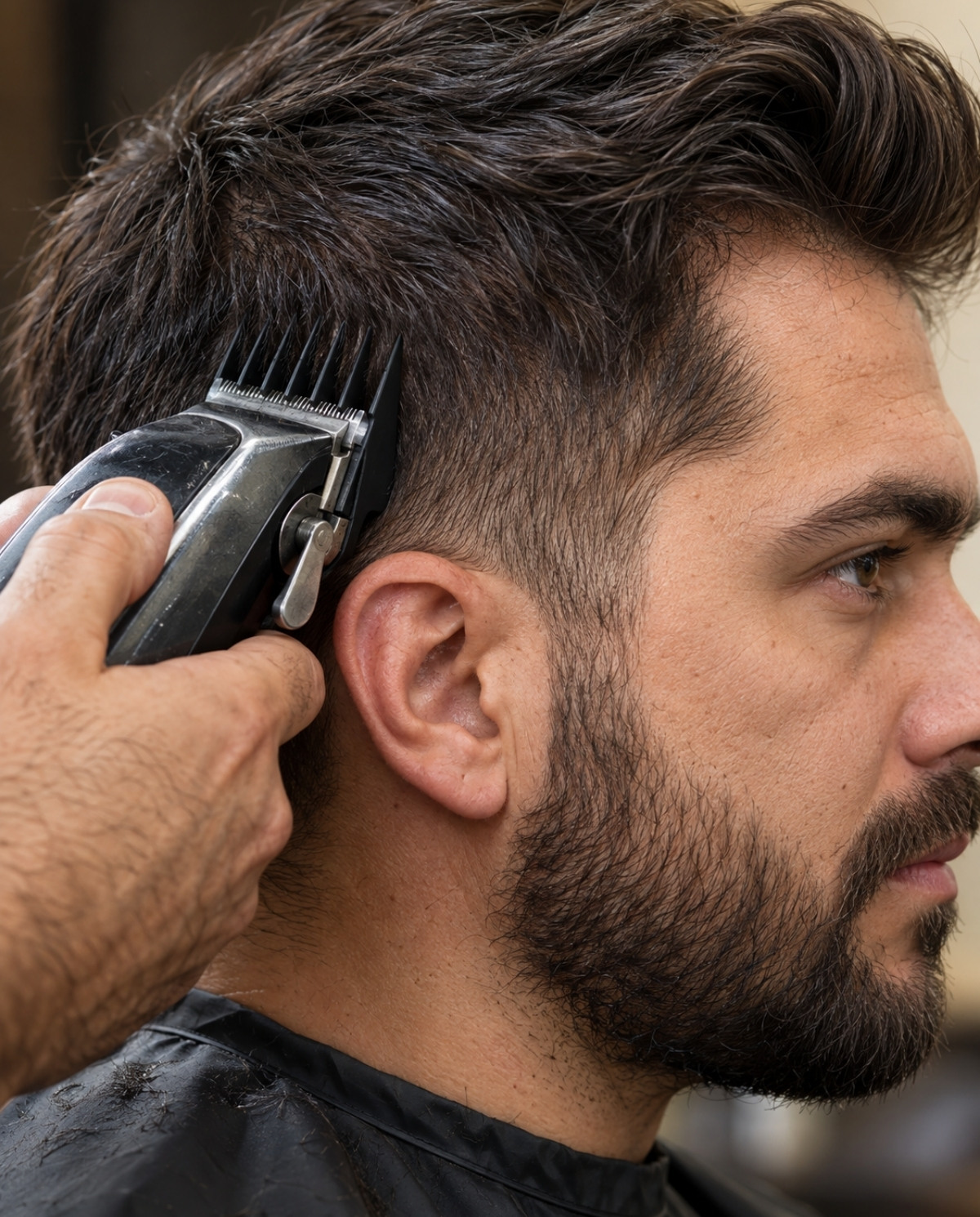
A lot of people guess their side length without knowing how barber hair length numbers work in real life. Most standard clipper guards use a simple convention: every whole-number increase generally adds another eighth of an inch to the cutting length. As noted in the Fade Buzz Cut Length Index and Wahl's official guide comb reference, these guard attachments help control how much hair remains after cutting. Just keep in mind that these measurements are close estimates rather than exact rules across every single brand.
Understanding barber haircut numbers takes away the guessing game. On many clipper systems, a #0 guard leaves roughly 1/16 of an inch (1.5 mm), although #0 attachments and unguarded blade settings vary by manufacturer. Step up to a #1 guard and you leave about 1/8 of an inch (3 mm), creating a very short buzz where your scalp might show clearly. A #2 guard leaves 1/4 of an inch (6 mm) for a clean, classic short side, while a #3 guard leaves 3/8 of an inch (10 mm) for a softer, tailored cut. Finally, a #4 guard leaves 1/2 of an inch (13 mm), offering a moderate length that blends easily into longer hair on top.
If you are wondering what a number 1 haircut means at the barber, asking for a #1 trim typically means the clippers will leave approximately 1/8 of an inch of length. This creates a close, tight style where your scalp may show through, depending on your hair density, strand thickness, and scalp-to-hair color contrast.
One detail many clients overlook is the clipper's adjustable lever. On many professional clippers, a closed lever produces a shorter cut, while an open lever leaves slightly more hair without changing the guard. That means two haircuts using the same #2 guard may still look slightly different depending on the clipper, blade, and lever position. If you want to repeat a previous haircut, ask your barber to remember the guard number and lever setting.
These barber cut numbers work best when matched to your natural hair characteristics. Hair density refers to the number of individual strands growing within a given area of the scalp, while strand thickness describes the diameter of each hair. Someone can have fine strands but high density, or coarse strands with relatively low density. Both characteristics affect how much scalp appears through a short haircut.
If you have sparse hair, fine strands, or a strong contrast between your hair and scalp color, a #1 guard may make your scalp more noticeable. In those cases, stepping up to a #2 or #3 guard may help maintain the appearance of fullness while softening the visibility of uneven head contours, such as natural bumps or dips along the skull. However, a longer guard does not automatically hide thinning, especially when the surrounding hair is significantly denser.
A skilled barber should also evaluate your natural hairline, crown growth direction, and any areas of thinning before recommending a guard length. For example, cutting too close around a receding temple line may draw attention to that area, while leaving some additional length can help create a more balanced shape. Discussing these characteristics before the haircut helps your barber choose a length that suits both your intended style and your natural hair.
Choosing the Right Fade for Your Haircut
When learning how to describe a fade to your barber, asking for a generic "fade" leaves far too much to chance. A fade is a gradual transition where hair blends from a shorter length near the bottom into longer hair higher up. To get the look you want, break your request down into three specific details.
First, specify your starting point or bottom guard length. A skin fade or bald fade takes the hair at the bottom down to the skin, often using a foil shaver or straight razor for a particularly close finish. Alternatively, a shadow fade leaves a visible amount of very short hair at the bottom, often using a short guard or clipper blade setting. A #0.5 or #1 guard can create a softer shadow, depending on the finish you prefer.
Second, establish the fade height, which describes how high the shorter section and its transition extend along the sides and back of the head. On a low fade, the shortest section stays close to the ears and neckline, with the blend remaining relatively low. On a mid fade, the transition rises farther up the sides, generally creating a balanced appearance between a low and high fade. On a high fade, the shorter section extends considerably higher, often approaching the parietal ridge, the area where the upper head begins curving into the sides.
These descriptions are useful starting points rather than fixed measurements. A low fade on one person may look different on someone with a longer head shape, higher temples, or a more pronounced crown. Showing your barber where you want the shortest section to end can be more precise than relying on the words "low," "mid," or "high" alone.
Third, consider the amount of contrast you want between the shortest and longest areas. A high-contrast skin fade makes the change from exposed skin to longer hair more noticeable, while a softer fade creates a less dramatic transition. Recent grooming trends discussed by Men Zone's 2026 Barbershop Trends highlight interest in more natural, low-maintenance styles and softer blends.
These softer transitions may make regrowth less noticeable than very short, high-contrast fades. However, the time between haircuts depends on your hair growth, the original cut, and how sharp you prefer the finish to remain. Many clients schedule haircuts every three to five weeks, while those who prefer especially crisp skin fades may return sooner.
Another detail worth discussing is whether you want a more level fade or a drop fade. A level fade maintains a relatively consistent transition height around the head, while a drop fade curves downward behind the ears, following the contour toward the back. This changes how much length remains around the crown and back of the head. If you have a prominent crown, cowlick, or particular head shape, ask your barber which approach would preserve a balanced silhouette.
Using Haircut Pictures to Communicate Your Preferred Style
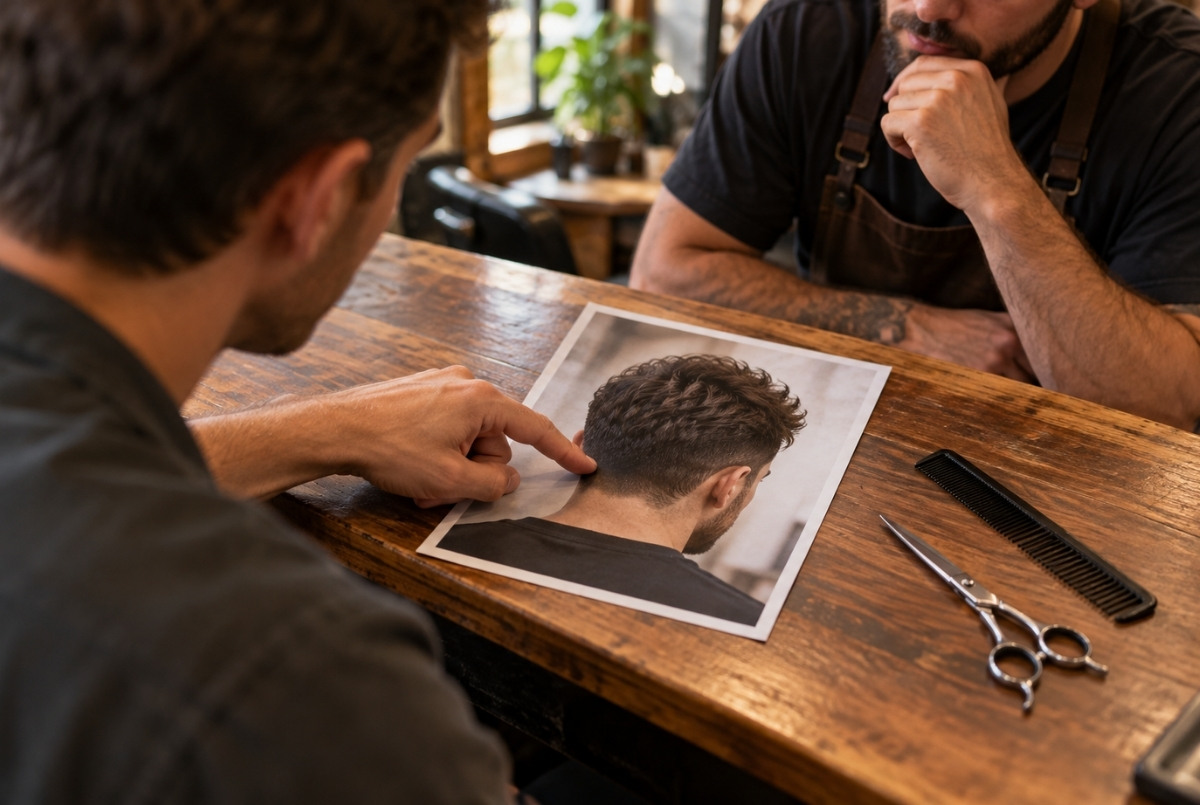
Bringing a picture is one of the easiest ways to explain what you want during a barber appointment, but handing over a single phone photo of a celebrity often falls short. A photo shows an intended style, but it does not account for your personal head shape, hairline, hair density, or natural growth patterns.
To communicate clearly, try a simple three-photo system. The first picture should show your dream style to illustrate the overall shape, top length, and intended flow. The second picture should be a texture match showing someone with hair similar to your natural pattern, whether straight, wavy, coarse, or curly. The third picture should be a no-go photo showing a cut, fade height, or neckline shape you actively dislike, setting clear visual boundaries before the clippers turn on.
Before choosing a reference photo, look beyond the haircut itself. Pay attention to the person's hairline, density, curl pattern, and natural growth direction. A straight, dense hairstyle may not produce the same silhouette on fine or tightly curled hair, even when the barber follows similar cutting lengths. Ask your barber which details of the reference can realistically be recreated and which may need adjusting.
You should also clarify whether the photographed hairstyle requires blow-drying, styling products, or daily maintenance. A heavily styled haircut may look very different once it is washed and left to air-dry. If you only have a few minutes to style your hair each morning, your barber can recommend adjustments that make the look more manageable.
Getting these details right matters beyond a single appointment. According to Zenoti's Salon and Barbershop Metrics Guide, first-to-second-visit retention is one of the key measures barbershops can track to understand whether new clients become returning customers. These figures do not identify poor consultations as the main cause of client loss, but they reinforce the business importance of building strong relationships from the first appointment.
When students train in a quality barbering or cosmetology program, they learn to evaluate hair characteristics and discuss suitable services with clients. This includes identifying natural growth direction, cowlicks, which are areas where hair grows in a different direction from the surrounding strands, and the way a haircut interacts with facial features. A thoughtful consultation helps connect the client's desired appearance with a haircut that can realistically work for their hair.
How to Tell Your Barber Exactly What You Want
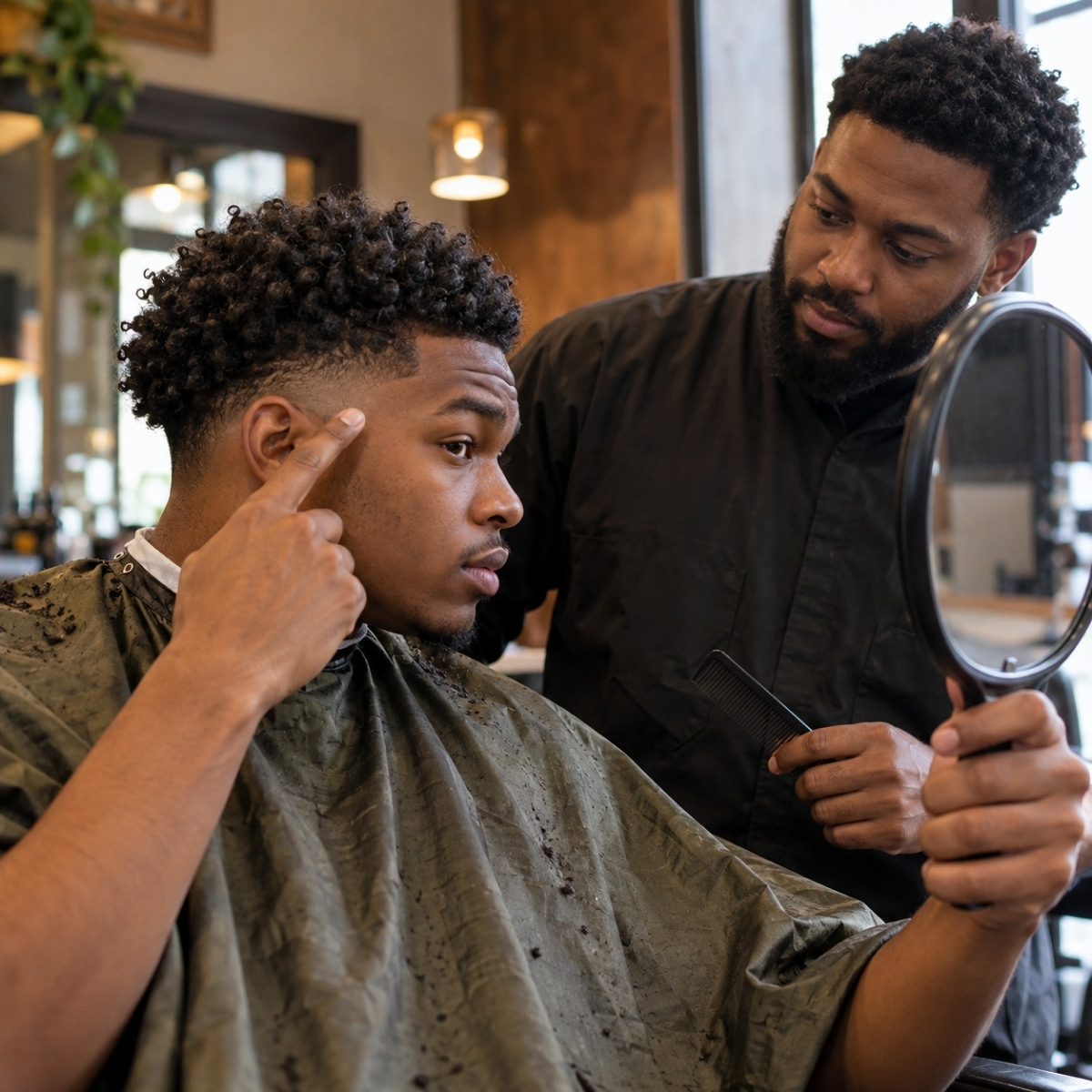
If you sit down and freeze up when trying to figure out how to tell a barber to cut your hair, use this reliable three-part formula: top length, side guard or fade height, and neckline finish.
For example, you can explain that you would like to keep about two inches on top with some textured weight, use a mid fade starting at a #2 guard on the sides, and keep the neckline tapered naturally. This gives your barber a useful starting point for discussing the shape and length you want. Avoid vague phrases like "just make it short on the sides and take a little off the top," which leave too much room for interpretation.
If you step inside a shop without a clear plan, you might wonder what to say when you do not have a specific look in mind. You can visit a barber without knowing exactly what you want and ask for a recommendation. The key is framing your request around your daily routine rather than technical terms. Ask what cut works best with your head shape and a two-minute morning routine, or explain where your hair gets bulky after two weeks so your barber can shape it to grow out more naturally.
You can also explain what you disliked about your previous haircut. For example, mentioning that the sides became too bulky, the top was difficult to style, or the neckline looked too sharp can give your barber practical information. These details often communicate your expectations more effectively than a haircut name alone.
Learning how to respond to client anxiety is another important part of professional customer care. As discussed in Manhattan Barbershop's guide to barbershop anxiety, some clients feel uncomfortable because of clipper noise, close physical contact, or uncertainty about what is happening during the service. Sitting in a chair facing away from the mirror can also make it difficult to follow the barber's progress.
A considerate barber can help build trust by explaining major steps, checking preferences before removing significant length, and allowing the client to ask questions or request a pause. If you feel uncomfortable during your appointment, it is reasonable to ask for clarification before the barber continues.
Common Questions About Barber Appointments
How Does a Taper Differ From a Fade Haircut?
A fade gradually blends hair from very short to longer lengths, often across the sides and back of the head. A traditional taper usually maintains more length overall and concentrates the shortest blending near the sideburns and neckline. However, the terminology can overlap, and different barbers may interpret these styles differently. Showing a reference photo is one of the easiest ways to clarify exactly how short and how high you want the blend.
Do You Need to Wash Your Hair Before a Barber Visit?
Arrive with reasonably clean hair and avoid heavy buildup from styling products like thick pomades or clays. Clean hair makes it easier for your barber to evaluate its natural fall, growth direction, and density. However, you do not necessarily need to wash your hair immediately before your appointment, especially if the service includes shampooing. If you have curly or textured hair, ask whether your barber prefers it in its natural state, detangled, or prepared in a specific way.
Can You Ask Your Barber to Adjust the Length During a Haircut?
Yes. Speak up as soon as you notice that the length is not what you expected. Barbers generally appreciate having an opportunity to adjust the cut before the appointment ends. Removing additional length is usually straightforward, although some changes may require extra blending or reshaping. If the hair appears too short, explain your concern before more is removed, since cut hair cannot be immediately restored.
Why Client Consultation Is an Essential Barbering Skill
For future stylists and barbers, mastering haircut terminology and client communication is just as important as building technical dexterity with shears and clippers. Professional success depends on more than delivering a technically clean cut. Understanding client expectations, recommending realistic styles, and maintaining positive relationships can all contribute to a stronger reputation and repeat business.
Industry data reinforces the value of maintaining client relationships. According to Zenoti's 2026 Barbershop Trends report, new guest visits among barbershops in its North American benchmark dataset declined 17% in 2025 on a same-store basis, while existing guest visits increased 2%. These findings highlight the importance of serving returning clients, although the report does not establish that consultations directly cause higher retention.
Professional barber education also involves meeting state-established training and licensing requirements. In South Carolina, the South Carolina Board of Barber Examiners requires aspiring registered barbers to complete 1,500 hours at a Board-approved barber college or school, or 1,920 hours of supervised on-the-job training as an alternative pathway. Applicants must also pass the required National Interstate Council (NIC) theory and practical examinations. These requirements help establish consistent educational and professional standards for individuals entering the barbering industry.
Beyond preparing students for licensing requirements, formal barbering education can introduce them to hair and scalp structure, hair growth patterns, infection control, and the business responsibilities involved in serving clients. These skills help professionals make informed haircut recommendations and communicate the reasons behind their choices rather than relying on guesswork.
For those considering the profession, the career outlook offers opportunities alongside real earning differences. According to the U.S. Bureau of Labor Statistics, the median hourly wage for barbers was $18.37 in May 2025, including tips, while barber employment is projected to grow 3% from 2025 to 2035. Individual earnings depend on experience, location, clientele, employment arrangement, and business performance.
For aspiring professionals interested in developing these skills, the Barbering program at Aiken School of Cosmetology and Barbering offers hands-on instruction in haircutting, trimming, shaving, grooming, and styling. The school also highlights training related to salon business, client retention, resume writing, and job-seeking skills. Combining technical ability with attentive customer service creates a stronger foundation for long-term professional growth.
Build Your Future in Professional Barbering
Turning client uncertainty into trust is one of the skills that can help barbers establish long-term relationships and grow their careers. If you want to take your passion for hair to a professional level, visit the Enrollment page at Aiken School of Cosmetology and Barbering to explore the application process, admission requirements, and opportunities to visit the campus.
Whether you are interested in barbering as a career or simply want to learn more about the training environment, you can schedule a campus tour to meet the team and ask questions about the program. Leave your contact information in the form below, and an admissions representative can help you explore your next steps.