


Can I Work as an Esthetician or Barber with a Cosmetology License?
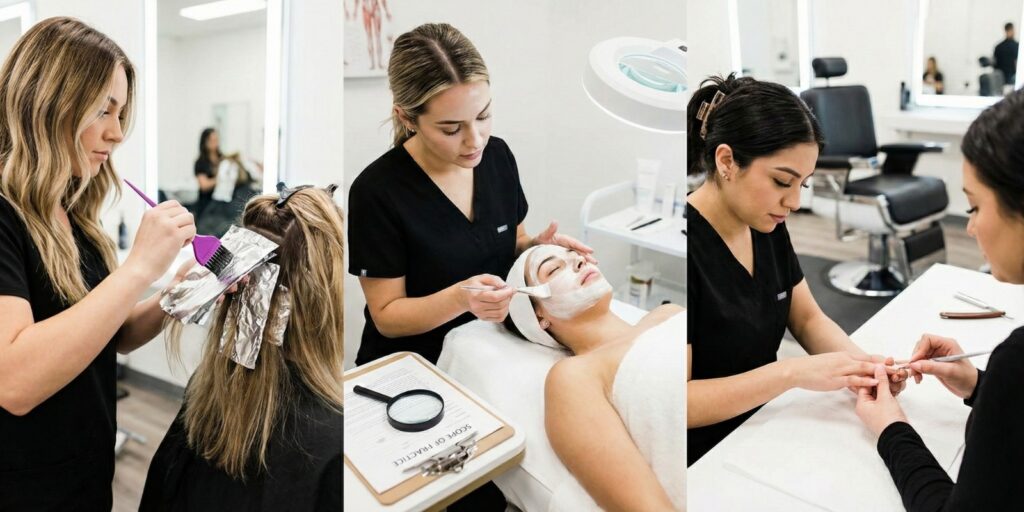
If you have just finished school or are looking at your cosmetology license on the wall, you might be asking yourself: "What am I actually allowed to do with this?" I see this question pop up constantly in beauty forums and among my students. People want to know if they can pivot into doing lashes full-time, offering advanced facials, or jumping over to a barbershop without starting from scratch.
The truth is that a cosmetology license is incredibly versatile, but it isn't a "get out of jail free" card for every service under the sun. The confusion usually stems from the fact that cosmetology is defined differently depending on which state line you cross.
What your instructor said or what the salon down the street allows doesn't actually matter. What matters is your legal scope of practice as defined by your state board.
Why Your License Isn't a "One-Size-Fits-All" Tool
In the United States, every state board creates its own set of rules. For example, New York includes things like waxing, nails, and even some barbering services under the cosmetology umbrella.
Then you have a state like Texas, which is very specific about what a "Cosmetology Operator" can do. They can’t perform or advertise straight-razor shaving - only safety razors are allowed for that service under their scope.
When people ask me, "Can I work as a lash tech with a cosmetology license?" my answer is always: You can do exactly what your specific state says you can do. No more, no less.
The Quick Verification Method I Recommend
Before I add a new service to a menu or advise anyone on a career change, I use a simple 4-step check to stay safe:
- Go to your state’s licensing board website (in our case, the South Carolina Board of Cosmetology).
- Search for terms like “scope of practice” or “statutes and regulations.”
- Look for the specific service you want to offer: microdermabrasion, straight razor shaving, eyelash extensions, or chemical peels.
- If the language is blurry, call or email the board. Save that response! Having it in writing is your best insurance policy.
States like California often release "Industry Bulletins" to clarify new trends like microneedling, which helps pros stay on the right side of the law.
Can a Cosmetologist Work as an Esthetician?
In most states, the answer is a "qualified yes." Most cosmetology licenses include basic skin care. This usually covers things like cleansing, masks, and surface-level exfoliation.
For example, Florida explicitly lists skin care and waxing as part of cosmetology. However, you have to be careful with the "Esthetician" title. According to the National Coalition of Estheticians Association, some states let you do the work but won't let you call yourself an "Esthetician" unless you hold that specific license.
The Danger Zone: Advanced Procedures
This is where I see people get into trouble. There is a big difference between a relaxing facial and a medical-grade treatment. Illinois, for instance, is very clear that cosmetologists cannot perform procedures intended to affect the living layers of the skin.
Similarly, California has banned microneedling and derma-rolling for anyone under the barbering and cosmetology board, regardless of their license type. Always check the "prohibited practices" list before you buy expensive equipment.
Can a Cosmetologist Work as a Nail Tech?
This is usually the most straightforward path. In many states, including Texas and Florida, the cosmetology license covers manicures, pedicures, and artificial nail applications.
Even though you are legally allowed to do it, I always suggest getting extra training if your school program was hair-heavy. Real-world success in nails depends on your knowledge of sanitation and chemistry, which keeps your clients safe and your license valid.
The Lash Tech Confusion: Training vs. Licensing
I see a lot of people take a two-day "Lash Certification" course and think they are ready to go. But a certificate from a private company is not a license.
In California, you must be a licensed cosmetologist or esthetician to apply extensions. Texas actually has a specific "Eyelash Extension Specialist" license, but they also allow full Cosmetology Operators to perform the service.
One thing I always tell people to check is their insurance. On forums like SalonGeek, pros often discuss how adding new services - like moving from lash tints to extensions - can change your liability coverage. Even if the state says "yes," make sure your insurance provider says "yes" too.
Can a Cosmetologist Work as a Barber?
This is where the line gets thin. While cosmetologists are pros at cutting and coloring hair, the "Barber" title usually involves the use of a straight razor on the face.
In Texas, a cosmetologist can do almost everything a barber does except straight-razor shaving. New York is a bit more flexible, but in most places, if you want to offer that classic hot towel shave, you need a barbering license or a crossover certification, so always check your state’s definitions/scope.
The Risk of Working Unlicensed
I know it's tempting to start working "under the table" while you're still in school or waiting for your test date. But the risks are massive, for example, Texas makes the line clear in its scope guides: licensed practitioners may perform or advertise only the services allowed under their license, and prohibited services (like straight-razor shaving for Cosmetology Operators) can’t be performed or advertised for compensation.
Doing so can lead to heavy fines or even being banned from getting your license in the future. It’s just not worth the shortcut.
How Aiken School of Cosmetology Helps You Master These Paths
If you’re in the South Carolina area and you want to make sure you’re "Salon Ready" for any of these lanes, the school you choose is your foundation. At Aiken School of Cosmetology and Barbering, the focus is on giving you the actual skills you need to get hired, not just the hours needed to pass a test.
Here is how we break down the programs to fit your goals:
Master Cosmetology: The Ultimate Flexibility
If you want to be able to do hair, skin, and nails, the Master Cosmetology (1,500 hours) program is your best bet. It’s designed to give you that broad scope so you can work in a full-service salon and offer a variety of treatments. We use high-quality products like CHI to ensure you’re learning with the best tools.
Focused Licenses for Specialists
If you already know you only want to focus on one niche, we offer specialized tracks that get you into the workforce faster:
- Esthetics (600 hours): Perfect if you want to skip the hair and focus entirely on skin health, facials, and makeup.
- Nail Technology (300 hours): The quickest path to a license if your passion is exclusively for manicures, pedicures, and nail art.
- Master Barber (1,500 hours): For those who want to master the art of the straight razor shave and traditional men's grooming.
The "Aiken Advantage"
One thing I love about this school is the "Salon Ready" philosophy. You don't just sit in a classroom; you get business training, resume help, and real-world experience on the salon floor.
If you're still confused about which license is right for your career goals, the easiest thing to do is see it for yourself. You can book a 30-minute campus tour to talk to the admissions team and get your specific questions answered about schedules and programs. It’s a great way to see the energy of the school and decide which path feels right for you.
test comment