


Your Path to an Esthetician License: Everything About School, Cost, and Career Growth
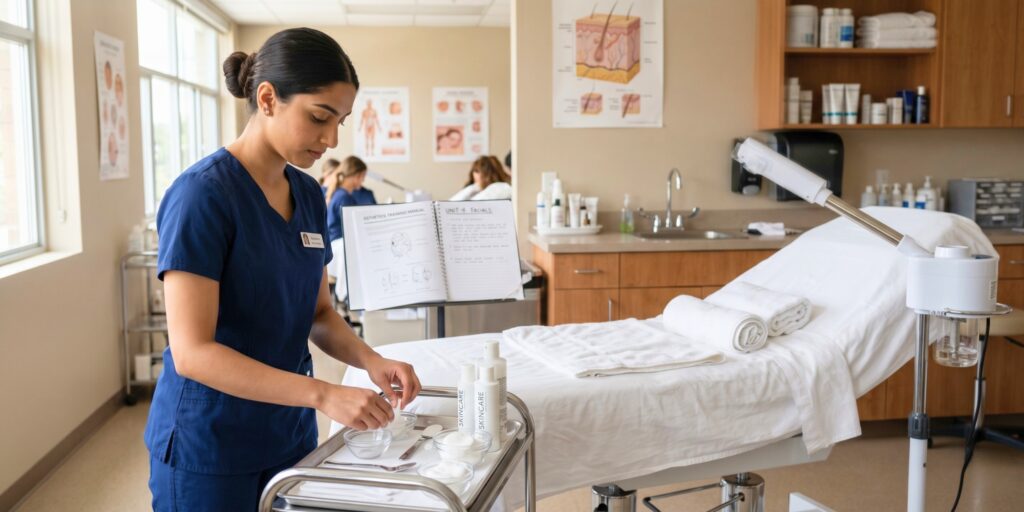
Starting a new career path is a major decision. Many people begin with a passion for skincare and then build that interest into a professional skill set grounded in science, safety, and hands-on training. If you want to know how to become an esthetician, it takes more than simply enjoying products and trends.
This guide walks through esthetician school, licensing, and the real costs involved. It is about building a strong foundation in skin care knowledge, practical training, and professional accountability.
Main Highlights
- Career Speed: Training often takes just a few months instead of several years.
- Industry Demand: The Bureau of Labor Statistics expects 7% growth through 2034.
- Earning Power: The average salary sits around $45,374, while advanced specialties can lead to higher earnings.
- Professional Standards: The Modernization of Cosmetics Regulation Act (MoCRA) has raised expectations for safety and accountability in the beauty industry.
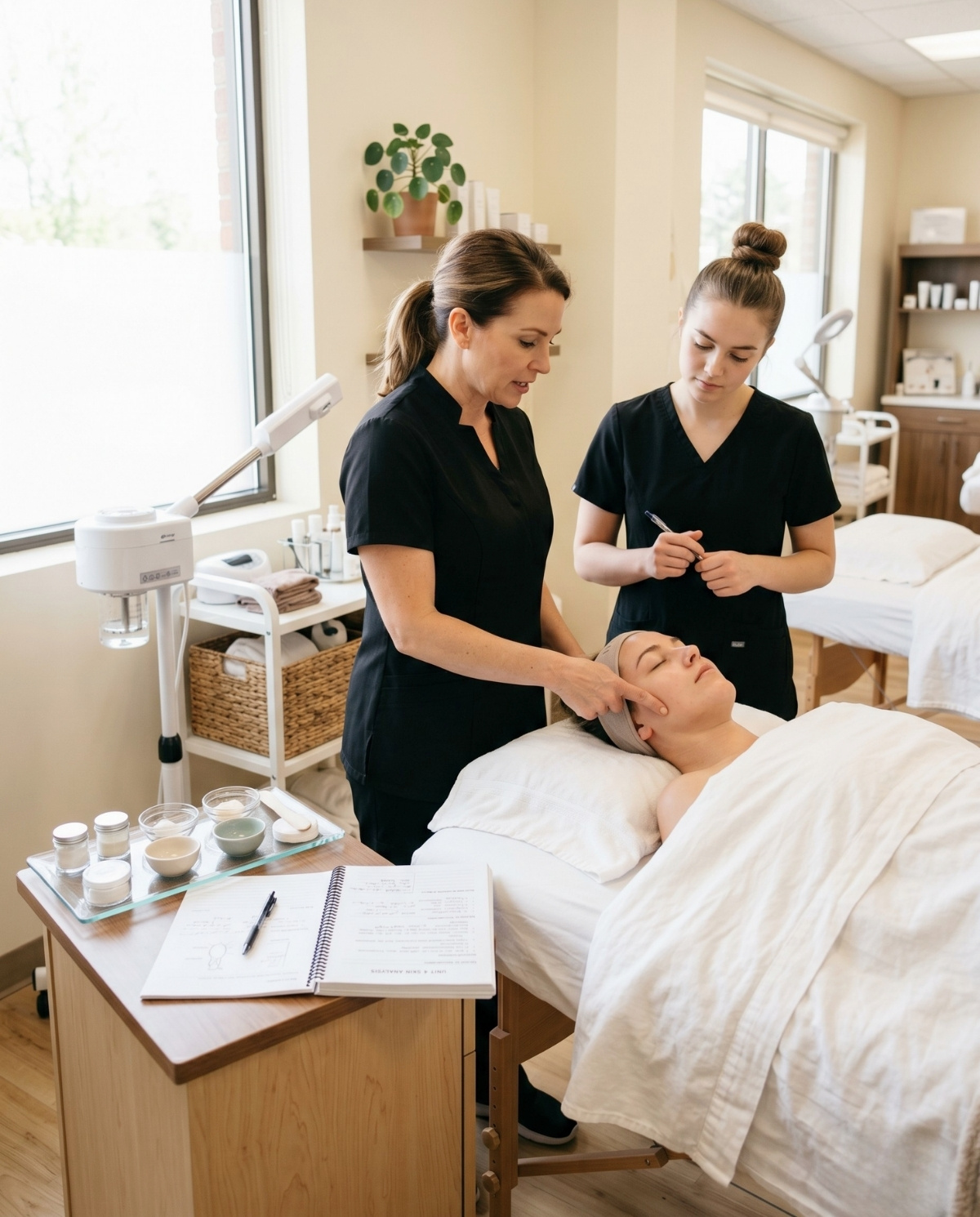
What Today’s Professionals Are Trained to Do
The beauty world has shifted toward what Mintel analysts call "Metabolic Beauty." This means clients increasingly expect you to understand how overall wellness can affect the skin. As a professional, your scope of practice focuses on the skin and its protective barrier, which helps keep moisture in and external irritants out.
You may learn to use clinical-grade exfoliation and modern equipment to support skin care services. Understanding the science behind these treatments is one of the things that separates a trained professional from a hobbyist.
Clients are also moving beyond simple "clean beauty" claims and paying more attention to active ingredients and how they interact with the skin. Choosing a program that emphasizes both theory and hands-on practice can help prepare you for current industry expectations.
Your Educational Route to Becoming an Esthetician
Before you enroll, you need to check a few basic requirements. Most states expect you to be at least 16 or 17 years old. You also need a high school diploma. If you have wondered, "can you be an esthetician with a ged," you will be glad to know that almost all state boards accept it.
The general path for how to become an esthetician after high school is clear:
- Research schools with esthetician programs.
- Complete the required training for an esthetician.
- Pass the state board exams.
- Apply for the license.
Esthetician School Explained: Online and In-Person Training
When you search for the quickest way to become an esthetician, you might see ads for an online esthetician course. It is important to be realistic here. While you can take online classes for an esthetician to learn anatomy or chemistry, you cannot learn how to safely perform services through a screen alone.
Most states require hands-on hours in a supervised clinic. If a program claims you can do esthetician school online without any in-person training, it may not meet licensing requirements. That would prevent you from getting a license for an esthetician, making that "quick" route a dead end.
How Much Time Does It Take to Become an Esthetician?
If you are wondering how many years of school for an esthetician are required, the answer is usually measured in months. While the Bureau of Labor Statistics notes you must complete a state-approved program, the specific hour requirements are set by your local board.
Training requirements vary by state. At Aiken Beauty and Barber School, the esthetics program is designed to meet South Carolina licensure requirements and is listed as 450 hours over 6 months on the school’s esthetics page.
This type of schedule can support a faster transition into a new career. You spend time learning in the classroom and developing confidence through supervised practical experience.
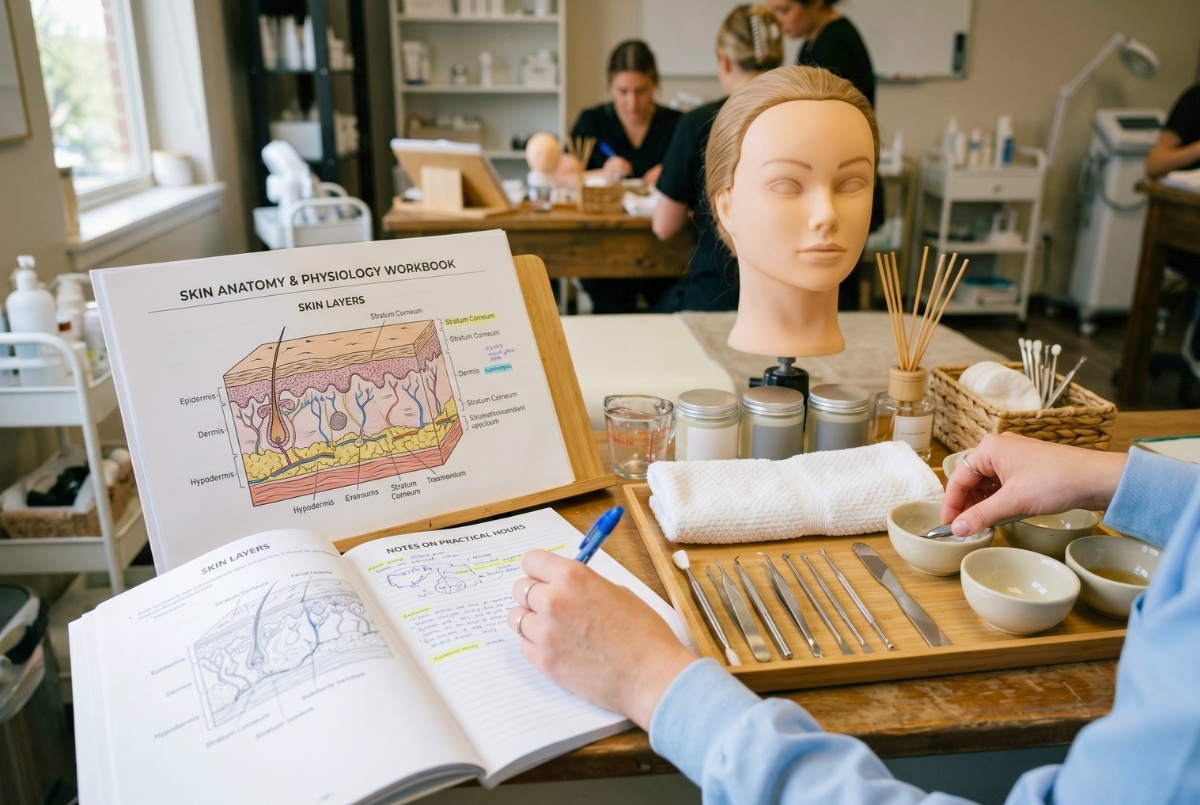
Esthetician School Costs and Budgeting Basics
The esthetician school cost is an investment in your professional future. Tuition can vary widely depending on the school, location, and program structure.
Many students worry about the upfront cost. There are several ways to manage this:
- FAFSA for esthetician school: You can apply for federal aid if your school participates in Title IV programs.
- Grants for esthetician school: Some schools provide money that does not need to be paid back.
- VA Benefits: If you or a family member served in the military, the VA pays for esthetician school at many qualifying locations.
When calculating how much it costs to become an esthetician, remember to include "kit fees." These cover the professional tools and products you will use during your training.
Steps to Earn Your Esthetician License
Once you finish your esthetician program, you enter the final phase. This is the official recognition of your skills by the state board.
Licensing exams vary by state. Many states require a written exam, and some also require a practical exam. In states with a two-part system, the process looks like this:
- Theory Exam: A written test covering skin biology, sanitation, and state laws.
- Practical Exam: A hands-on demonstration where you perform services to prove your technique is safe.
While states like California have moved away from the practical portion, South Carolina still uses a two-part examination process for esthetics licensure.
How much does it cost to get an esthetician license? You will pay for the application and testing fees, which usually total between $100 and $250, depending on your state.
Career Opportunities After Esthetician School
The question "what can you do with an esthetician license" has many answers today. Common workplaces include:
- Medical Spas: Performing advanced treatments like micro-needling.
- Resort Spas: Working in high-end luxury environments.
- Self-Employment: Managing your own books and specializing in niche services like lash extensions.
Data from ZipRecruiter in early 2026 shows the average salary for an esthetician is currently around $45,374. Focusing on a specialty can increase your earning potential. Your esthetician yearly salary can also grow as you build a loyal client base.
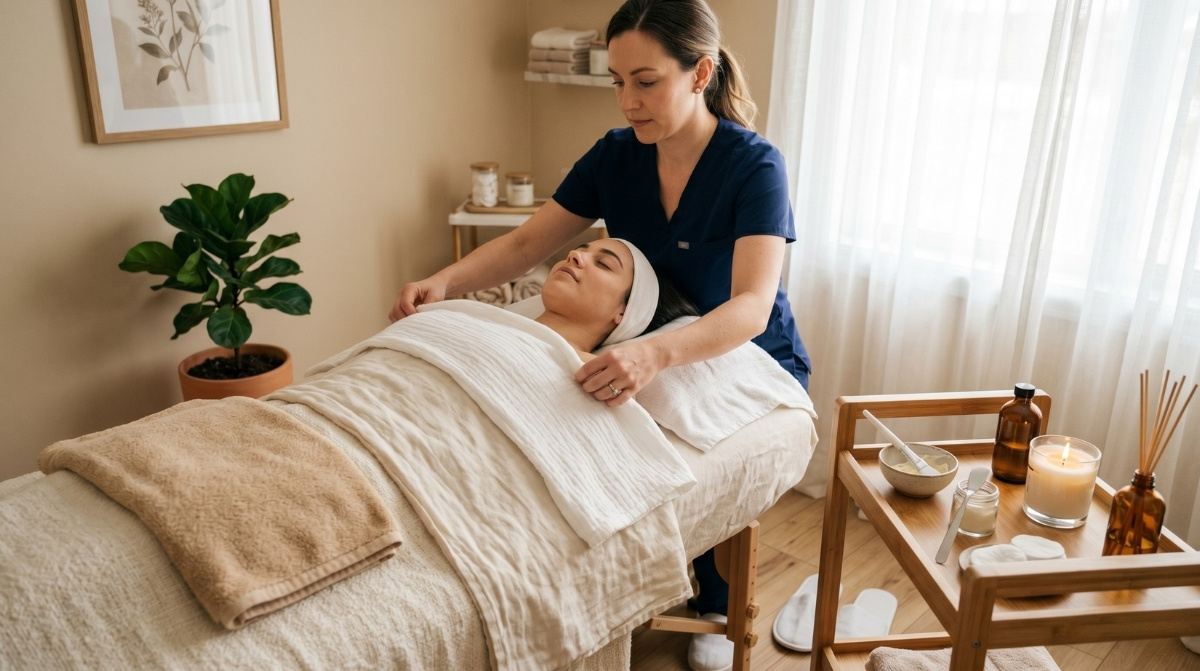
Are You Ready to Build Your Skills?
Choosing where you learn is just as important as what you learn. At Aiken Beauty and Barber School, the esthetics program is designed to help students build practical skills for a professional future in skin care.
The school’s esthetics page highlights training in skin physiology, facial massage, hair removal, make-up application, salon business, and client retention, along with hands-on learning experiences. The program is also designed to prepare students for South Carolina licensure.
Our goal is to help you graduate with the knowledge, practical training, and confidence to begin your career. Your future in skin care is waiting, and we are here to help you navigate every step of the journey.
I invite you to find out more in Enrollment to see how we can help you reach your goals. Please fill out the contact form we leave at the end of the article to get in touch with us directly.
Frequently Asked Questions Before You Begin
Is it hard to get a job as an esthetician?
The demand for experts is strong. Employers look for graduates who understand safety, sanitation, and hands-on techniques. Choosing a reputable school can make the job hunt much easier.
Can you be an esthetician without going to school?
No. Every state requires a specific number of educational hours from an approved school before you can sit for the licensing exam.
Do you need a degree to be an esthetician?
You do not need a college degree. You need a diploma or GED and the completion of a state-approved esthetician course.