


Beauty Instructor License Requirements: State Board Exams, Training Hours, Online Options, and Renewal
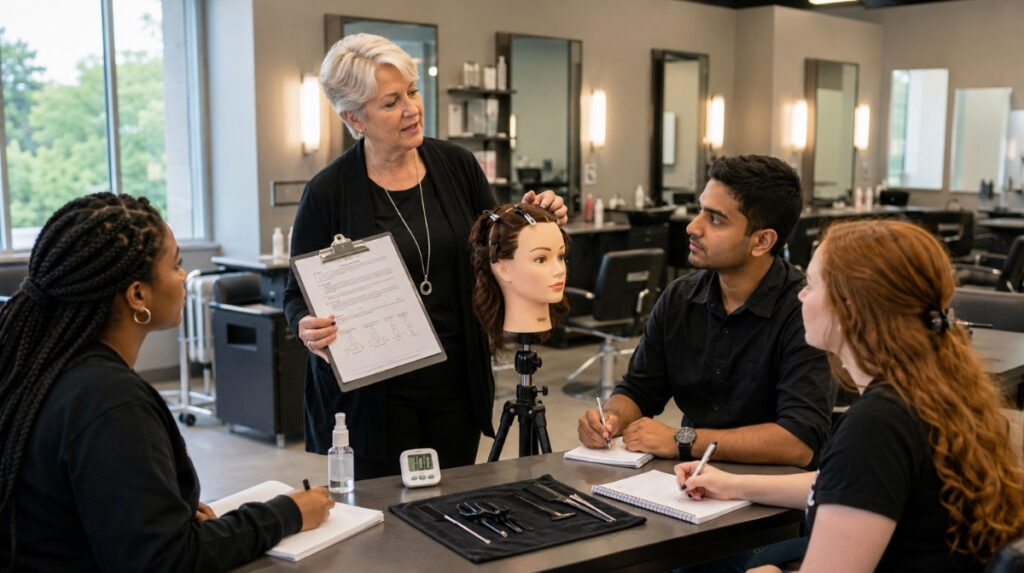
Stepping away from the salon chair and into a beauty school classroom is one of the most rewarding shifts a professional stylist, esthetician, or nail technician can make. Spending long hours on your feet takes a serious physical toll over time, and transitioning into education can provide a practical way to protect your health, secure more predictable hours, and share your years of salon expertise. If you want to move from serving daily clients to guiding the next generation, meeting your state instructor qualifications or earning the right teacher credentials is the next natural step for your career.
Transitioning into an educational role helps you reclaim your personal schedule while establishing yourself as a true expert in the niche. This guide breaks down the standard requirements, schooling hours, state board steps, and preparation strategies so you can make the move into the classroom with total confidence.
Key Takeaways
- Career Longevity: Becoming an instructor can help preserve your physical health while setting you up as an industry authority with steadier hours and, depending on the employer, better potential access to traditional employment benefits.
- Modern Curriculums: Modern beauty classrooms focus heavily on business strategies, digital client tracking, skin and scalp wellness, ingredient awareness, strict sanitation, and helping students build solid professional judgment.
- Hybrid Training Options: Depending on local rules, some states and schools may offer flexible hybrid formats that let you study theory online while finishing supervised, hands-on student teaching inside a physical classroom.
- Exam Strategies: You can conquer state board testing anxiety by using a structured study plan, taking timed practice tests, and following candidate guides from your state's official exam vendor.
Understanding the Role: What Does a Beauty Educator Do?
Before you begin filling out your state application, it helps to look at how different boards classify this professional milestone. If your background covers comprehensive hair, skin, and nail care, you may pursue a cosmetology instructor license in states that still issue one. If your passion is focused on a specific area of the industry, you might instead look into an esthetics instructor license, a nail instructor license, or a natural hair instructor license.
Depending on where you live, the local board might use a few different titles to classify teachers. You will see terms like beauty culture instructor, cosmetology teacher, educator, approved instructor, or state approved beauty instructor training program graduate. In some states, like Texas, the board actually removed the separate beauty school instructor license altogether. Instead, licensed schools must verify that their educators hold the active practitioner license for whatever specific subjects they teach, according to the Texas Department of Licensing and Regulation. No matter the exact title printed on your application, your core mission is shifting from doing the work to teaching the theory, safety, and communication mechanics behind it.
To help you see where this career path can lead, I recommend checking out our comprehensive guide on the meaning, duties, and career paths for beauty instructors. Learning the proper instructional methods ensures you can explain complicated procedures to a room full of beginners instead of just demonstrating them with your own hands.
Prerequisite Milestones and Classroom Hours
Most states require a baseline of hands-on salon experience, a valid practitioner license, and targeted schooling before you can apply for an educator credential. Because these rules are managed locally, you cannot assume every state follows the same path. You have to prove your technical skills, keep your practitioner license active, and understand your exact legal scope of practice.

The Baseline Requirements
To start planning, you need a clear view of the structural cosmetology instructor requirements set by your local board. Most states start by checking for a current, active license in your specific area, whether that is a cosmetologist, esthetician, or nail technician license. From there, your local board might require a set number of teaching hours, recent salon experience, a formal exam, or a combination of those elements.
I suggest looking over our detailed breakdown of training and license requirements for beauty instructors to see a clear checklist of standard milestones. Just keep in mind that rules vary by state, so always double-check that your chosen school is recognized by the state board where you intend to work before spending money on tuition.
Navigating Classroom Education
Once you meet the baseline requirements, your state may require formal instructor education, documented work experience, an exam, or a combination of those elements. This may mean registering for a specialized cosmetology instructor training program or tracking down the specific esthetics instructor license requirements for your region.
I know some outdated guides claim that teaching in a beauty school is a low-paying backup plan, but recent data shows a more complete story. The ACTE Career Center lists the national average salary for cosmetology instructors at $52,096 per year, with top earners making around $93,600. Salary.com shows a similar national average of roughly $50,872. Your actual income will depend on your location, specialty, hours, employer type, full-time or part-time status, and benefits, but these numbers show that education can be a highly viable, rewarding career path.
Modern industry insights from sources like ProBeauty AI point to growing importance around business platforms, digital client tracking, branding, automation, personalization, and overall salon operations. Your time behind the chair is incredibly valuable because it gives students a practical bridge to the real world of client retention, retail sales, and self-employment. A state approved program does not teach you how to do a facial or cut hair from scratch; it focuses on the art and mechanics of teaching. You will study lesson planning, student evaluation, classroom management, and how to communicate with different learning styles. Choosing the right academy for this phase alters your long-term trajectory, because great schools teach you how to turn your personal salon instincts into repeatable lessons.
The Digital Shift: Can You Train Online?

If you are working full-time at a busy salon, giving up your regular income to sit in a physical classroom all day feels incredibly difficult. This financial reality makes a lot of pros ask if they can get their cosmetology instructor license online.
The honest answer depends entirely on your state laws and school approvals. Some states and schools may allow a hybrid model where you complete theory topics like academic grading or lesson planning through an online esthetics instructor course or a digital online nail instructor curriculum.
However, you cannot expect an online program to cover everything. Becoming an effective educator requires supervised teaching, clinic-floor management, student-client consultation oversight, sanitation supervision, and live demonstration skills that a screen simply cannot verify. For instance, the Washington State Department of Licensing requires instructor candidates to hold a current qualifying license, graduate from a state-licensed school with at least 500 instructor hours, and pass state-approved written and practical examinations. This is why board-approved structure matters so much more than pure convenience.
Before enrolling in any cosmetology instructor course online, I recommend asking these four questions:
- Is the training school fully approved by the local state board?
- Do online theory hours count toward your official license requirements?
- Are you required to finish your supervised student teaching hours in person?
- Will this specific program qualify you for your state exam or employment goals?
Blending online convenience with real classroom practice is what builds true confidence before you face the state board.
Preparing for the State Board Exams
The biggest hurdle for experienced beauty pros is often testing anxiety. If you have been out of school for a long time, the thought of a multi-part exam can bring on serious imposter syndrome. Knowing exactly what to expect on the test is the best way to calm those nerves.
In states that require a formal educator test, the licensing process finishes with one or more state board cosmetology instructor exams. The exact layout depends on your location and testing vendor, but it generally features two distinct sections:
- The Theory Portion: This is a computer-based, multiple-choice cosmetology instructor written exam. It may test your knowledge of educational psychology, lesson design, safety codes, infection control, student evaluation, and curriculum design. You may face a similar setup if you take a specialized esthetics instructor exam or nail instructor exam.
- The Practical Demonstration: In states that require it, this portion grades your actual teaching mechanics. A typical cosmetology instructor practical exam may require you to submit a lesson plan, present a short lecture, explain sanitation rules, and show that you can manage a classroom safely. The judges are not evaluating how well you perform a service; they are checking how clearly and safely you teach it to others.
To see how these academic skills are developed from day one, you can read our overview on how beauty instructors learn to teach and manage a classroom. Once you understand the curriculum layout, you can follow a simple preparation sequence to maximize your chances of success.
First, download the latest candidate information bulletin from your state’s exam vendor. For example, PSI tells test takers to use official Test Taker Guides and Candidate Information Bulletins for exam preparation, while the NIC National Instructor Theory Examination bulletin explains that candidates should visit the official exam provider or NIC website for the most current bulletin before testing. These official guides can outline the exact test categories, timing, reference materials, allowed supplies, fees, retake procedures, identification rules, and safety steps.
Second, spend time with a dedicated cosmetology instructor study guide. Use a digital cosmetology instructor practice test to get used to the wording of multiple-choice questions, and aim for a steady passing score above 80 percent before scheduling the real thing.
Third, take a complete cosmetology instructor state board practice test under timed, quiet conditions to train your brain for the pacing of the exam. If your state requires a live teaching demonstration, practice your lesson out loud in front of a licensed peer and ask them to grade your clarity, pacing, sanitation language, and safety instructions.
Finally, pull together your graduation documents, active practitioner license info, proof of work history when required, completed cosmetology instructor application, and registration fees before booking your test date.
Regional Rules: A State-by-State Look
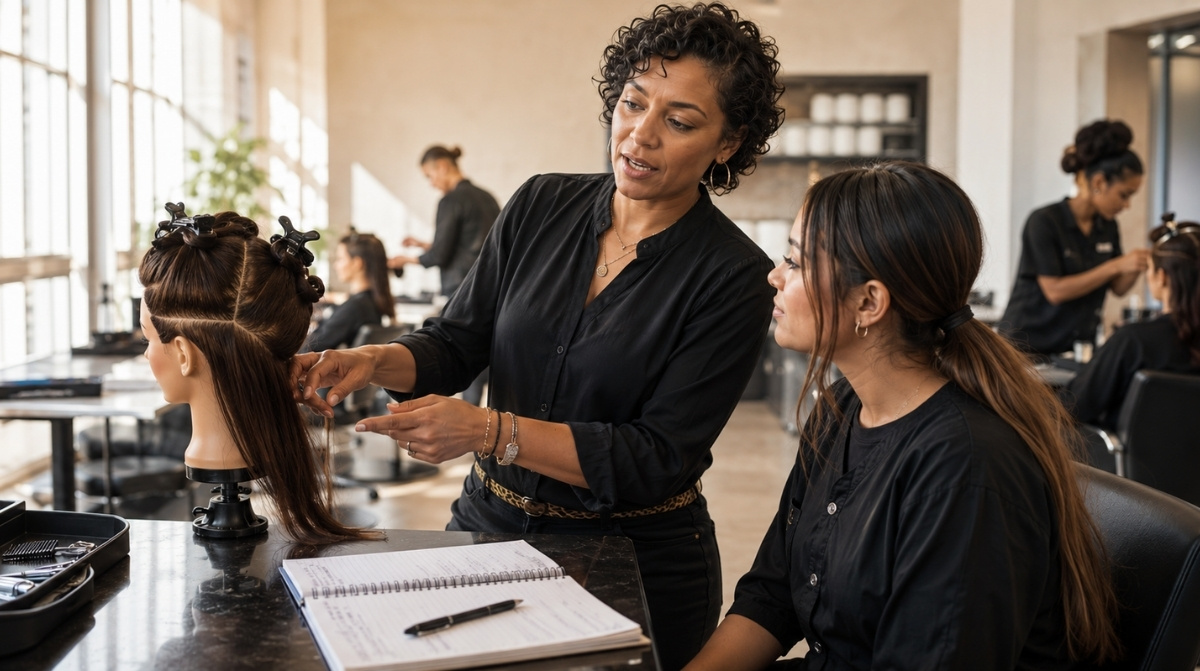
Because there is no single national teaching credential, you must follow the exact laws of the state where you plan to work. Treat each state as its own separate pathway.
If you are looking at a cosmetology instructor license in Georgia, you will follow a highly structured hours-based system. Georgia’s PSI documentation lists 750 school hours for Master Cosmetology Instructor and Hair Designer Instructor pathways, 500 school hours for Esthetician Instructor, and 250 school hours for Nail Technician Instructor, alongside current license and work-experience requirements for the relevant field.
Earning a cosmetology instructor license NC involves matching your specific specialty. The North Carolina Board of Cosmetic Art Examiners lists teacher requirements of 800 hours for cosmetology, 650 hours for esthetics, 320 hours for manicuring, and 320 hours for natural hair care in an approved teacher program, or proof of one year of full-time work in a cosmetic art shop immediately prior to application. Applicants must also hold the correct current license, meet education requirements, and pass the state board examination with the required score.
The process for a cosmetology instructor license in Texas is completely different. The Texas Department of Licensing and Regulation states that beginning September 1, 2021, an instructor license is not required to teach barbering or cosmetology in a licensed school. A licensed Texas school may employ a teacher who holds the appropriate TDLR license for the acts they will teach, and the school may set additional hiring qualifications. This means Texas no longer follows the older 500-to-750-hour instructor-license model.
Do not assume California has a traditional educator license either. The California Board of Barbering and Cosmetology publishes training-hour requirements for practitioner licensing categories, but it does not present a separate cosmetology instructor license pathway. Career guidance for cosmetology teacher training in California commonly notes that schools generally expect a current specialty license, even when a separate instructor certification is not required by the state.
In the Midwest, a cosmetology instructor license in Illinois follows a traditional school model. Illinois administrative rules allow you to qualify with 500 hours of teacher training if you have two years of recent licensed experience, or 1,000 hours of teacher training if you do not have that work history, according to Illinois Administrative Code Section 1175.405.
Out West, a Washington state cosmetology instructor license requires a current qualifying Washington practitioner license before enrolling, graduation from a state-licensed school with at least 500 instructor hours, and passing state-approved practical and written exams, according to the Washington State Department of Licensing. For a cosmetology instructor license Utah path, the testing is run through the Division of Professional Licensing and its approved exam provider, meaning you need to grab the latest Utah cosmetology exam information and current Utah candidate bulletin to verify current requirements.
Other states like Virginia, Kansas, and Wisconsin all maintain unique fee structures, renewal timelines, and training requirements. You can look directly at local regulatory boards to check specific training paths, renewal cycles, exam steps, and fee schedules before investing in tuition. Treat regional salary data as a market signal rather than a guarantee, since local employer demand can change quickly.
Keeping Your Educator License Active
Earning your certificate is a major milestone, but keeping it active takes regular maintenance. You must track your renewal cycles carefully to keep your classroom doors open. Many states require beauty educators, practitioners, or both to complete continuing education before renewal, but CE rules vary by state and license type.
Treat license renewal as a strict local compliance habit rather than a generic checklist. When your renewal window opens, look at your state board website for the exact fee to renew a cosmetology instructor license, your expiration date, late penalties, CE hour requirement, and approved class formats. Also check whether the renewal applies to a separate instructor certificate, your practitioner license, or both.
Our approach to education reflects a major shift toward wellness and science-based salon services. Industry insights from America’s Beauty Show note that modern hair trends increasingly balance self-expression with healthy hair, wellness, and sustainability. Similarly, Rizzieri Aveda School notes that skin and scalp health are shaping modern service demand, with clients arriving more informed and expecting providers to understand how underlying conditions affect results.
For you as an instructor, the real task is translating these trends into clear systems. Students must learn how to check for skin contraindications, explain product formulations simply, protect the skin barrier, discuss scalp health responsibly, follow sanitation protocols, document client consultations, and know when to refer a client to a medical professional. Continuing education keeps you relevant in a world driven by social media updates and high consumer expectations. Fortunately, balancing these hours with a busy work schedule is easier when your state allows online training. Many approved vendors offer cosmetology instructor CEU classes or general cosmetology instructor continuing education classes online, letting you finish your requirements during school breaks or weekend evenings. Just make sure the course is accepted by your board before you pay for it.
Frequently Asked Questions
Can I teach in a different state if I move?
Licensure does not automatically transfer across state lines. You will need to apply for reciprocity, endorsement, or a new state-specific pathway through the new state board. They will look at your original schooling hours, exam scores, work history, and license standing to see if you match their local requirements.
What happens if my practitioner license expires?
In many states, your teaching authority is tied directly to your underlying practitioner license. If your cosmetology, skin, barbering, or nail license lapses, you may lose the legal right to teach until that baseline credential is completely restored. This is especially important in states that no longer issue separate instructor licenses, because the practitioner license may be the primary credential your school must verify.
What is the fee to renew a cosmetology instructor license?
The exact cost varies depending on your location. Check your state board's official site for current rates, and make sure to see if the fee applies to a separate instructor certificate, your practitioner license, or both.
Do I need separate certifications for nails or skin if I have a cosmetology instructor license?
Generally, a full cosmetology instructor credential may allow you to teach subjects within the broad cosmetology curriculum, including hair, skin, and nails. However, the exact teaching scope depends on state law, school approval, and the license category you hold. Specialized credentials like an esthetics instructor certification or nail instructor certification usually limit your teaching to those specific departments, so confirm the scope with your board and your school before accepting the role.
Ready to Share Your Knowledge?
Moving from the salon chair to the front of the classroom is about protecting your health, building your professional legacy, and changing the future of the beauty industry. You already have the hands-on talent and the real-world wisdom. Now, you just need to partner with an educational team that knows how to turn your salon expertise into true teaching mastery.
Whether your goal is a more predictable schedule, physical longevity, or mentoring the next generation of solo professionals, we are here to provide the foundational support you need. You can find out more about how to get started on our Enrollment page. Take a moment to fill out our brief contact form below to connect with an admissions advisor, ask your questions, and start your transition into beauty education today.