


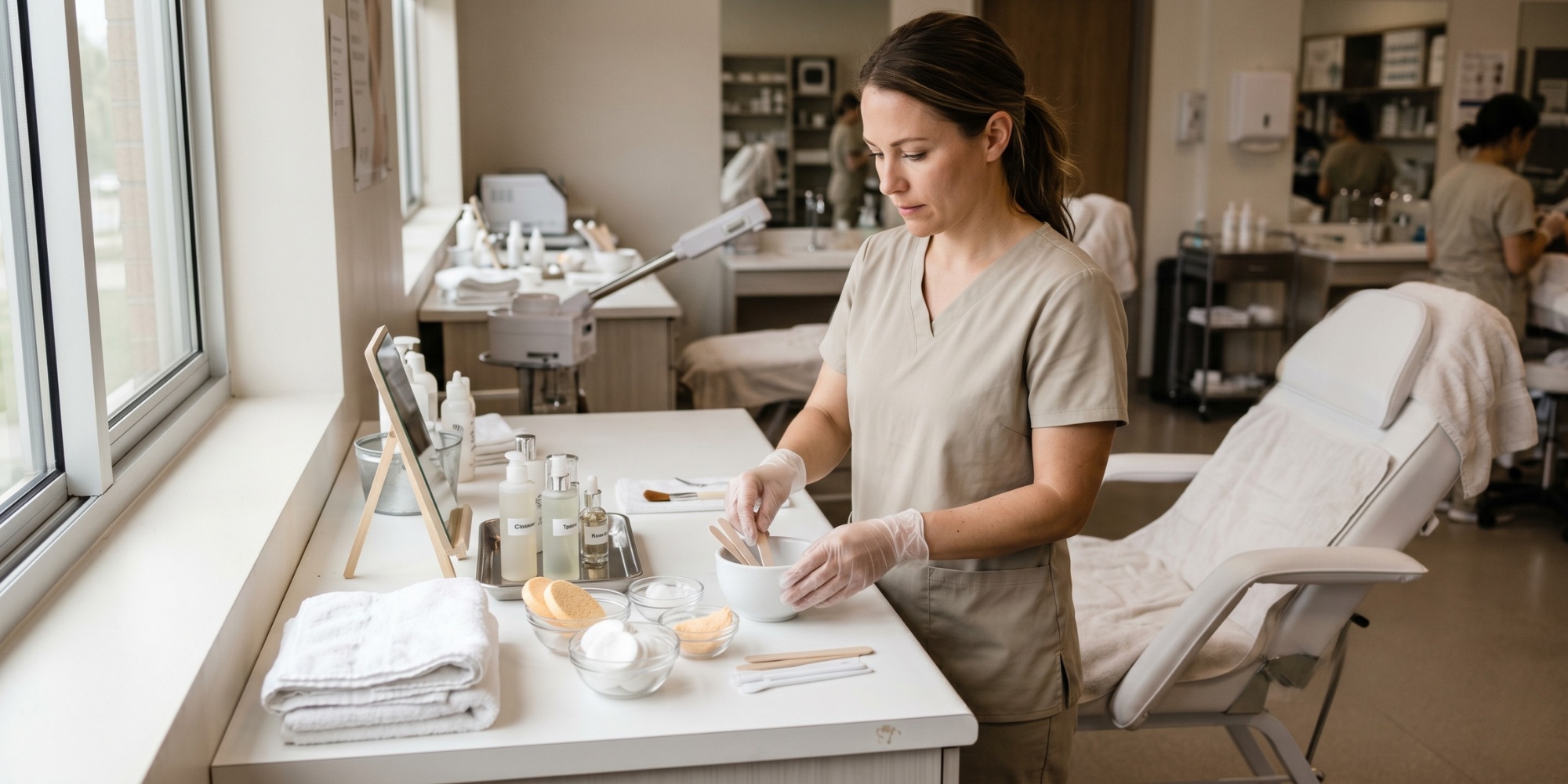
Deciding to start a career in the beauty industry often comes down to one major factor: seeing a real return on your time and effort. I often see people at a crossroads, trying to figure out if skincare is a passing fad or a stable path forward. In today’s market, the shift toward wellness and long-term skin health means there are more opportunities than ever for those who take the science seriously. Success in this niche rewards professionals who prioritize client safety, product chemistry, and a deep understanding of their legal boundaries. If you are trying to figure out the best way to start, checking out a guide on your path to an esthetician license can help you see the education and investment needed to turn an interest into a real career.
Core Insights for 2026
- Strong Market Growth: Data from the U.S. Bureau of Labor Statistics shows that jobs for skincare specialists are expected to grow 7% through 2034, which is much faster than the average for most other fields.
- Diverse Work Environments: I have seen graduates find roles in everything from luxury spas and physician offices to retail brands and cruise ships.
- Earning Power: The BLS reported a median wage of $19.98 per hour in 2024, but those working in medical offices often see a higher median of $23.40. While high-tier earners can reach much higher levels, it is best to view those figures as a result of specialization and experience.
- The Path to Business Ownership: Many pros choose self-employment, but it requires a solid handle on local zoning, business licenses, sanitation, and insurance.
- Bridge Opportunities: There is a growing interest among RNs and cosmetologists in adding aesthetic training, though these paths are strictly managed by state board rules and medical delegation requirements.
Defining Your Professional Scope: What Do Estheticians Actually Do?
I always tell my students that your value is tied to your scope of practice. This is the legal boundary of what your license allows you to do. A modern professional is not just someone who applies products; you are a specialist trained in skin analysis, barrier support, and identifying when a client needs a referral to a dermatologist.
The BLS describes skincare specialists as experts who provide facials and body treatments to improve a person’s appearance. On a daily basis, esthetician duties involve sanitizing equipment, evaluating skin conditions, recommending routines, and performing treatments like hair removal or deep cleansing within approved methods.
In South Carolina, state law defines an esthetician as a person licensed to practice skin care, make-up, or similar work, and it explains that skin care is for the sole purpose of beautifying the skin. I find that knowing these legal limits makes you a more reliable professional. If you want to visualize the daily routine of a student, I recommend reading about what is esthetician school like to get a feel for the hands-on training involved.
The Shift Toward Skin Longevity
The objective of a modern treatment plan has moved beyond simple relaxation. I call this approach “Bio-Aesthetics,” where the focus is on long-term skin health, age prevention, and barrier maintenance. While this isn’t a separate legal category, it represents where the market is headed. Clients increasingly want to bridge the gap between their home routine and professional results, and they trust estheticians who can guide them through that journey safely.
Industry Trends and Healthy Aging
According to McKinsey’s wellness research, nearly 60% of consumers now view healthy aging as a top priority. This is great news for your career because it means clients are looking for consistency and prevention rather than one-off fixes. I have found that building a career on trust and product knowledge is much more sustainable than just following beauty trends.
Where Do Estheticians Work? Finding Your Place
One of the best things about this license is that it doesn’t limit you to just one type of environment. In 2026, the options for where to work as an esthetician are incredibly broad.
Data from the BLS regarding work environments shows that specialists are found in personal care services, self-employment, medical offices, and even travel accommodations.
1. Leading Beauty Retailers
Major players like Sephora and Ulta are huge employers for those with beauty knowledge. At these companies, your license is a major asset for providing consultations or services like brow shaping. Ulta’s career page and Sephora’s careers site often list roles where you can gain fast experience in customer education and product recommendations. I think these are some of the best esthetician jobs for beginners because they teach you exactly how consumers make decisions.
2. Dermatology and Medical Settings
Working alongside doctors or in a medical spa allows you to see the clinical side of the industry. This is often called medical esthetics, though in many states, this is a job title rather than a different license. A 2026 survey by Allergan Aesthetics found that 78% of consumers feel more satisfied when they have a long-term plan with their practitioner. This supports the move toward “sequential treatment planning” in medical-adjacent offices.
3. Travel and Luxury Resorts
If you enjoy traveling, esthetician jobs on a cruise ship offer a chance to work while seeing the world. Companies like OneSpaWorld recruit wellness pros for sea-bound roles. These jobs are fast-paced and help you build a global perspective on beauty, though I suggest looking closely at contract details like housing and commissions.
4. Boutique Waxing and Lash Studios
Specializing in high-volume services like Brazilian waxing or lash artistry can help you build a client base very quickly. These studios are great for perfecting your speed, communication, and sanitation habits—skills that I believe are essential regardless of where you end up working later on.
Advancing Your Career: Specialization and Transitions
I believe your career should continue to evolve long after you finish school. Whether you want to move into management or a more clinical role, there are several paths to take.
RNs and the Aesthetic Crossover
I have seen many Registered Nurses (RNs) move into the aesthetic field to work in med spas or plastic surgery offices. This path allows for more clinical involvement, but it is heavily regulated. In South Carolina, the South Carolina Board of Cosmetology links to state resources for licensed nurses performing cosmetic services, including advisory materials on cosmetic procedures and neuromodulators. The joint advisory opinion on neuromodulators provides guidance for licensees performing injections such as Botox for cosmetic and non-cosmetic purposes. It is not an independent shortcut, but it is a very popular and lucrative career bridge.
The Master Esthetician Path
Some states offer higher-tier licenses, like a Master Esthetician. For example, Washington law allows these pros to perform expanded services like medium-depth peels. If you eventually find that you enjoy the teaching side of things more than the services, you might even consider becoming an instructor to train the next generation.
Understanding Esthetician Salary and Earnings
When people ask me about an esthetician yearly salary, I remind them that a flat average doesn’t tell the whole story. Your income depends on your location, your tips, and whether you earn a commission on product sales.
The BLS profile for skincare specialists notes a median wage of $19.98, but the top 10% in the field earn more than $37.18 per hour. If you look at the esthetician salary by state, you will see that markets in different states and metro areas can vary widely. A strong solo practice or a role in a high-end medical office often offers a much higher ceiling than an entry-level spa position.
The Medical Wage Difference
Data shows that working in a medical setting can pay more. The BLS reported that those in physician offices earned a median of $23.40 compared to $18.55 in standard personal care services. While some guides suggest a range of $70,000 to $100,000 for top specialists, I suggest treating that as an upper-tier goal rather than a guaranteed starting wage.
Can You Open a Spa or Work from Home?
I often hear from students who want to run an esthetician business from home. While about 26% of specialists are self-employed, doing this correctly takes a lot of planning.
- The Legal Side: Your space must meet state board requirements and local zoning laws. In South Carolina, the Board of Cosmetology licenses and regulates salons, booth renters, schools, and related programs, and South Carolina salon regulations address licensure requirements for cosmetology, nail technology, and esthetics salons.
- Safety Protocols: You must stay within your scope of practice. For example, if you plan to offer microneedling, you need to understand the FDA’s guidance on these devices and check if they are classified as Class II devices for aesthetic use.
- Business Reality: Going solo gives you control, but you are also responsible for your own taxes, marketing, and supplies.

Landing Your First Job
When you are looking for a job as an esthetician with no experience, your portfolio and school clinic hours are your best assets. I suggest focusing on your sanitation habits and your ability to conduct a thorough client consultation.
During an interview, be ready for a practical exam. A manager might ask you to demonstrate a facial or explain how you would handle a skin reaction. They want to see that you have calm judgment and professionalism. You should be ready to talk about the differences between products and how you protect client safety in your notes.
Building Your Professional Legacy
Choosing the right place to start your education is the most important decision you will make this year. As you have seen, the demand for skincare pros is high, and the potential to build a specialized career is very real. But it all starts with a license built on quality training. I believe that a “Salon Ready” approach is the best way to bridge the gap between being a student and becoming a professional.
If you want to see how to take the first step toward your goals, you can find more details on our Enrollment page. I’d love to help you figure out which path in the beauty industry is right for you. If you have questions about the process or the programs, feel free to fill out the contact form below and we can start a conversation about your future.
Common Questions About the Career
Is it hard to get a job after esthetician school? The outlook is positive, with 7% growth expected over the next few years. While specialized medical roles require a strong portfolio, there are many entry-level spots in spas and retail to help you get started.
What career cluster does esthetics fall under? It is generally part of Human Services, specifically in personal care. Some newer classifications group it under Healthcare & Human Services, which reflects the wellness focus of the industry.
Can I move to another state? Many states allow for license transfers, but the rules vary. You might need to provide proof of your hours or take a state-specific exam. I recommend checking out our guide on how state board exams and transfer rules work to see what you might need.
Do I need a degree to be a medical esthetician? Usually, you do not need a four-year degree, but you must have a state-approved license. “Medical esthetician” is typically a job title, not a separate license, and you must always stay within your state’s legal scope of practice.
