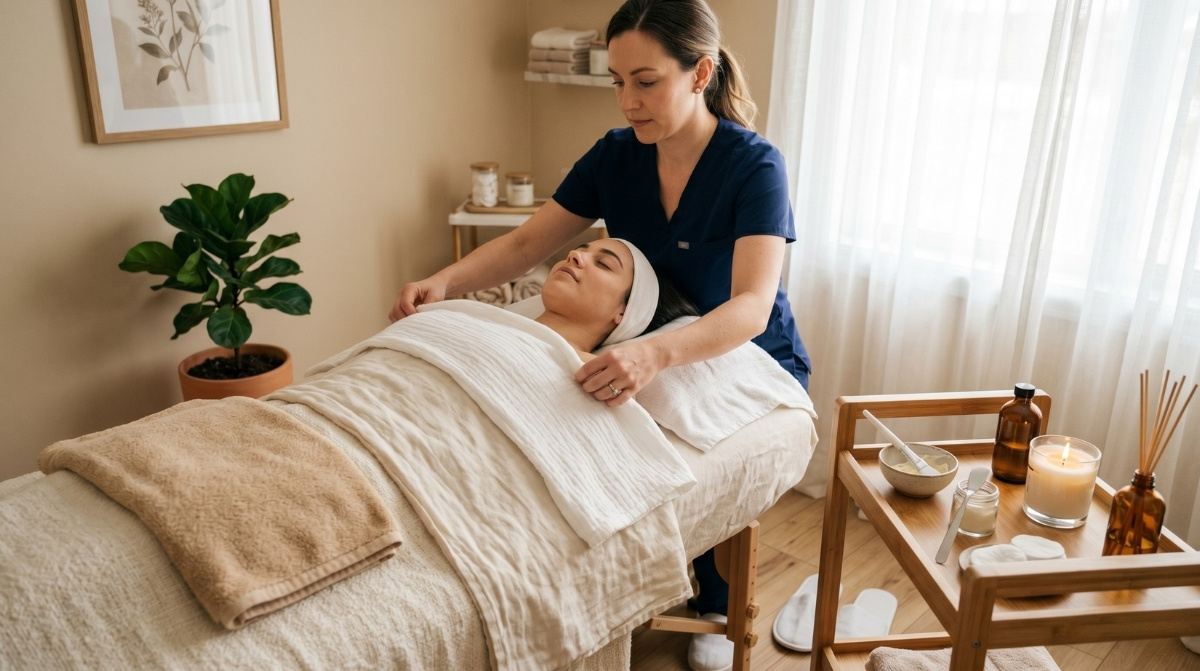
What Can You Do With An Esthetician License? A Complete Career Guide

Deciding to start a career in the beauty industry often comes down to one major factor: seeing a real return on your time and effort. I often see people at a crossroads, trying to figure out if skincare is a passing fad or a stable path forward. In today’s market, the shift toward wellness and long-term skin health means there are more opportunities than ever for those who take the science seriously. Success in this niche rewards professionals who prioritize client safety, product chemistry, and a deep understanding of their legal boundaries. If you are trying to figure out the best way to start, checking out a guide on your path to an esthetician license can help you see the education and investment needed to turn an interest into a real career.

Core Insights for 2026

  • Strong Market Growth: Data from the U.S. Bureau of Labor Statistics shows that jobs for skincare specialists are expected to grow 7% through 2034, which is much faster than the average for most other fields.
  • Diverse Work Environments: I have seen graduates find roles in everything from luxury spas and physician offices to retail brands and cruise ships.
  • Earning Power: The BLS reported a median wage of $19.98 per hour in 2024, but those working in medical offices often see a higher median of $23.40. While high-tier earners can reach much higher levels, it is best to view those figures as a result of specialization and experience.
  • The Path to Business Ownership: Many pros choose self-employment, but it requires a solid handle on local zoning, business licenses, sanitation, and insurance.
  • Bridge Opportunities: There is a growing interest among RNs and cosmetologists in adding aesthetic training, though these paths are strictly managed by state board rules and medical delegation requirements.
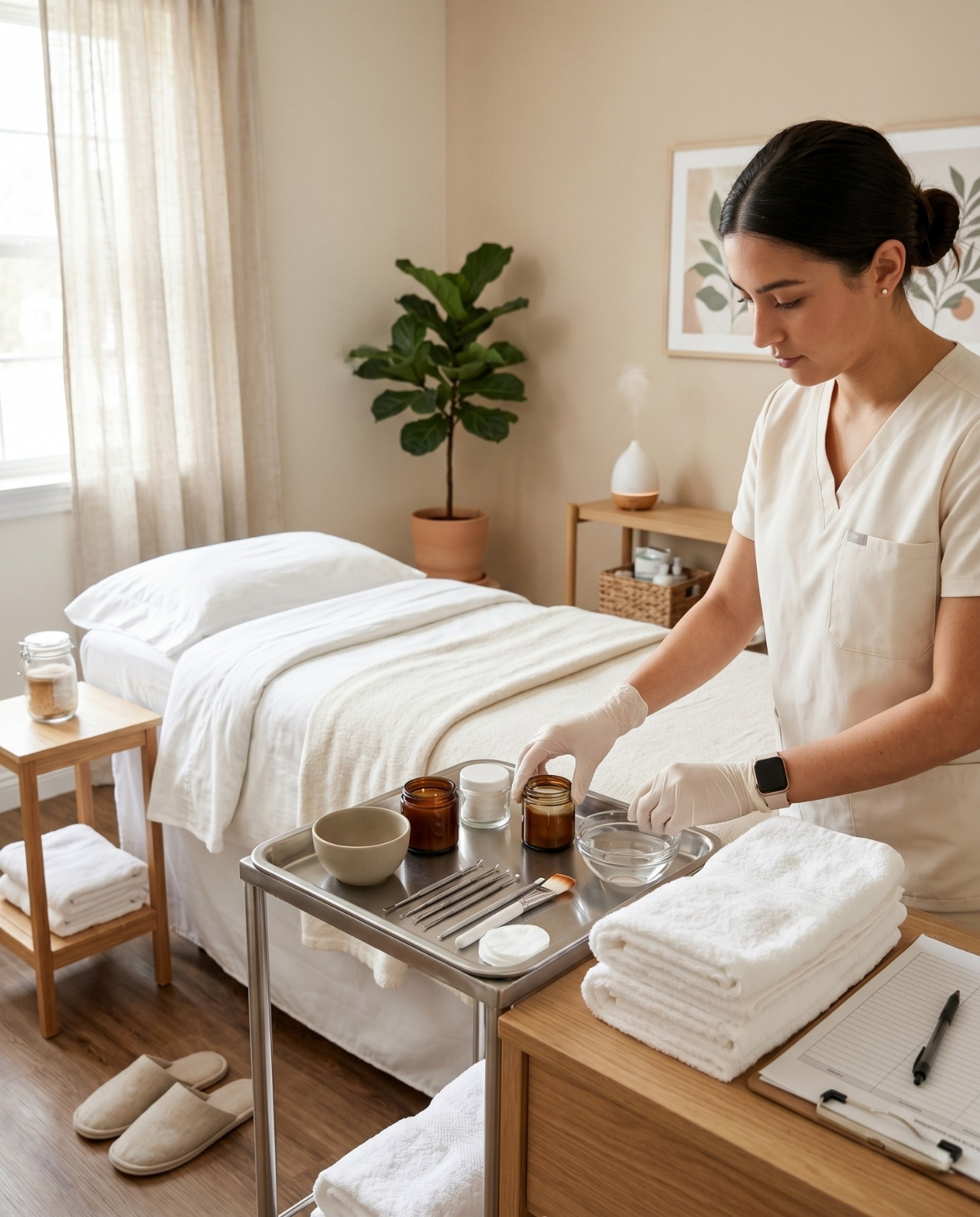
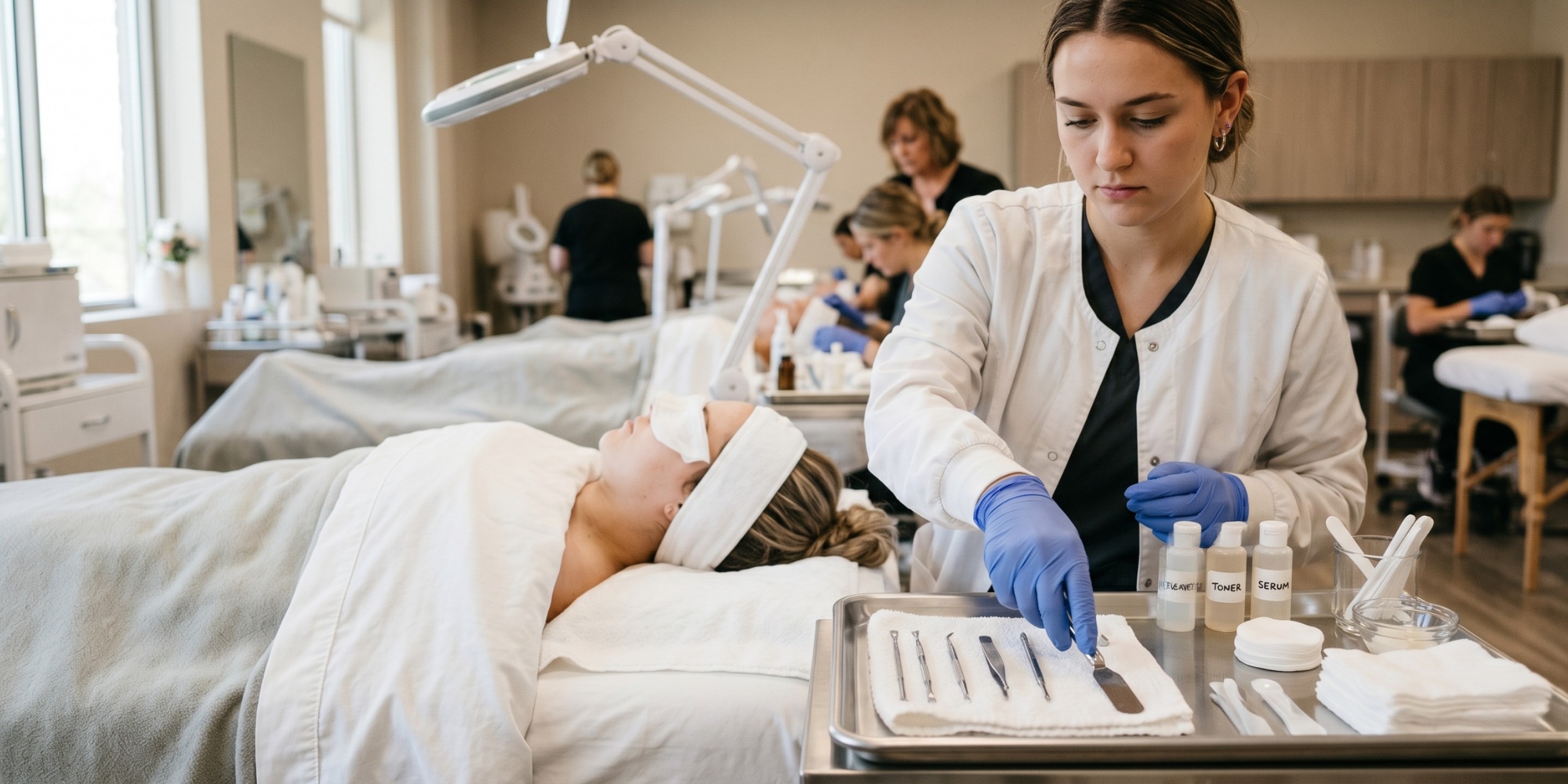
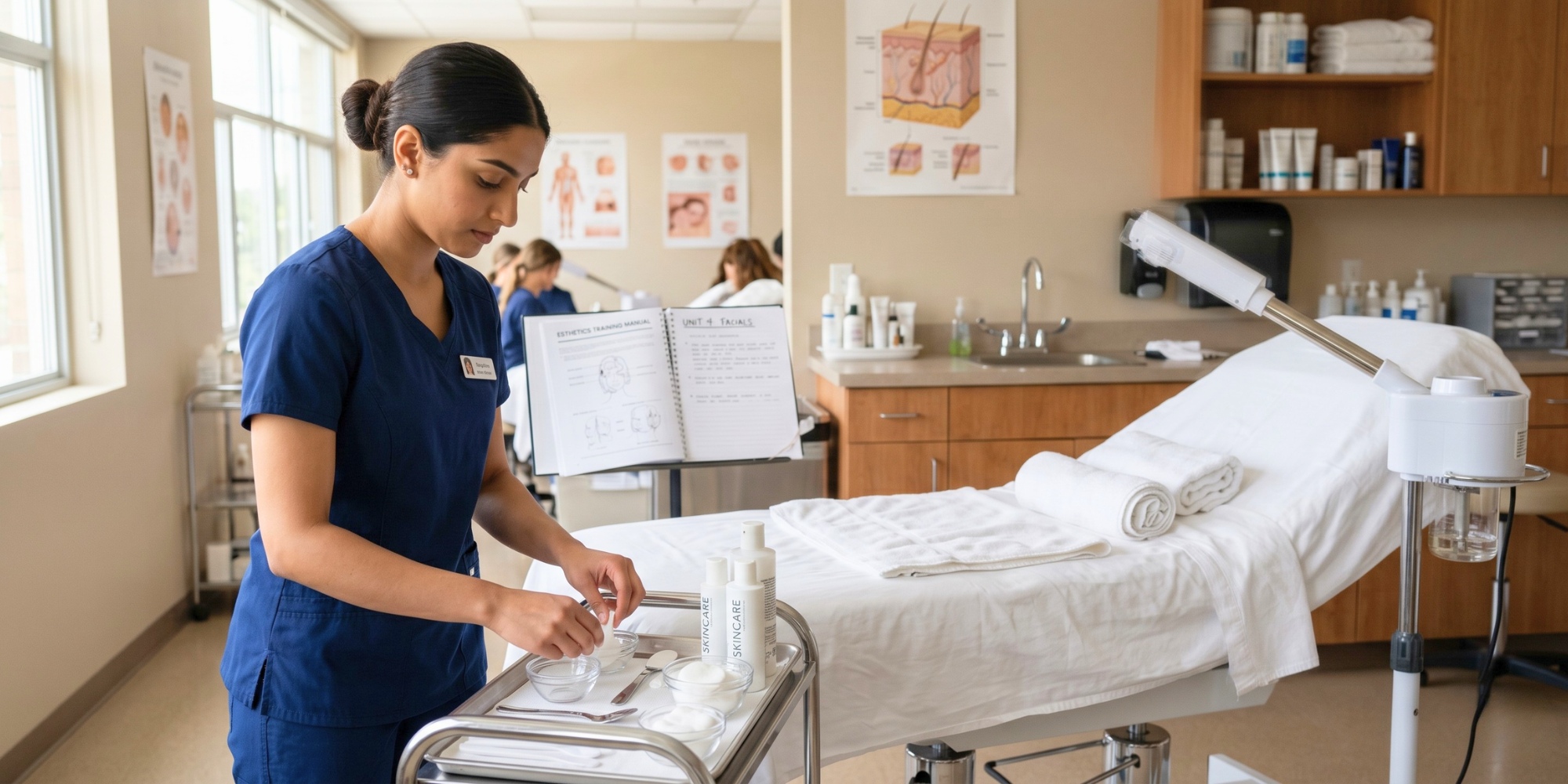
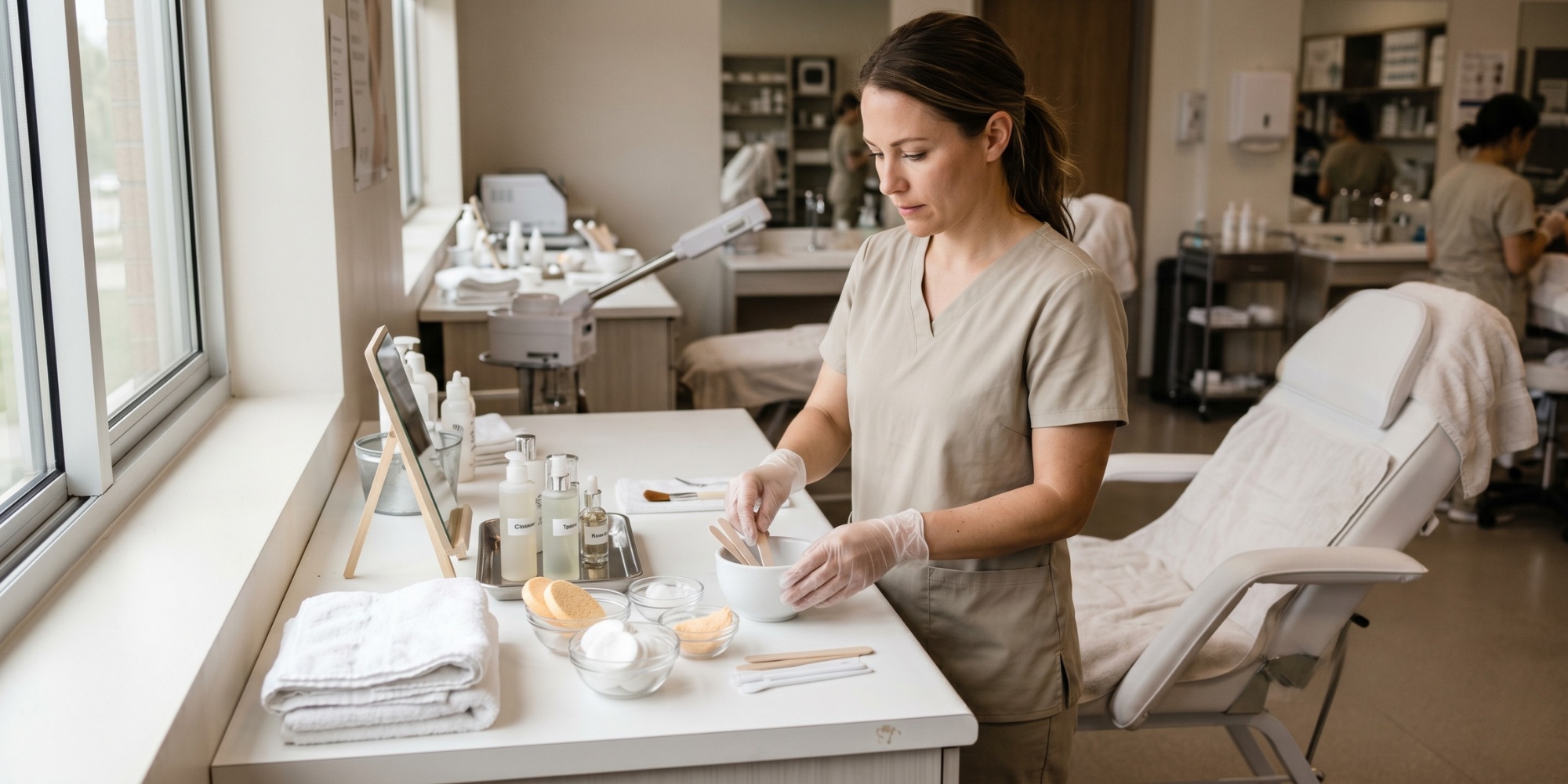
A student esthetician wearing gloves organizes skincare tools and folded white towels on a professional station next to a facial bed.

Defining Your Professional Scope: What Do Estheticians Actually Do?

I always tell my students that your value is tied to your scope of practice. This is the legal boundary of what your license allows you to do. A modern professional is not just someone who applies products; you are a specialist trained in skin analysis, barrier support, and identifying when a client needs a referral to a dermatologist.

The BLS describes skincare specialists as experts who provide facials and body treatments to improve a person’s appearance. On a daily basis, esthetician duties involve sanitizing equipment, evaluating skin conditions, recommending routines, and performing treatments like hair removal or deep cleansing within approved methods.

In South Carolina, state law defines an esthetician as a person licensed to practice skin care, make-up, or similar work, and it explains that skin care is for the sole purpose of beautifying the skin. I find that knowing these legal limits makes you a more reliable professional. If you want to visualize the daily routine of a student, I recommend reading about what is esthetician school like to get a feel for the hands-on training involved.

The Shift Toward Skin Longevity

The objective of a modern treatment plan has moved beyond simple relaxation. I call this approach “Bio-Aesthetics,” where the focus is on long-term skin health, age prevention, and barrier maintenance. While this isn’t a separate legal category, it represents where the market is headed. Clients increasingly want to bridge the gap between their home routine and professional results, and they trust estheticians who can guide them through that journey safely.

Industry Trends and Healthy Aging

According to McKinsey’s wellness research, nearly 60% of consumers now view healthy aging as a top priority. This is great news for your career because it means clients are looking for consistency and prevention rather than one-off fixes. I have found that building a career on trust and product knowledge is much more sustainable than just following beauty trends.

Where Do Estheticians Work? Finding Your Place
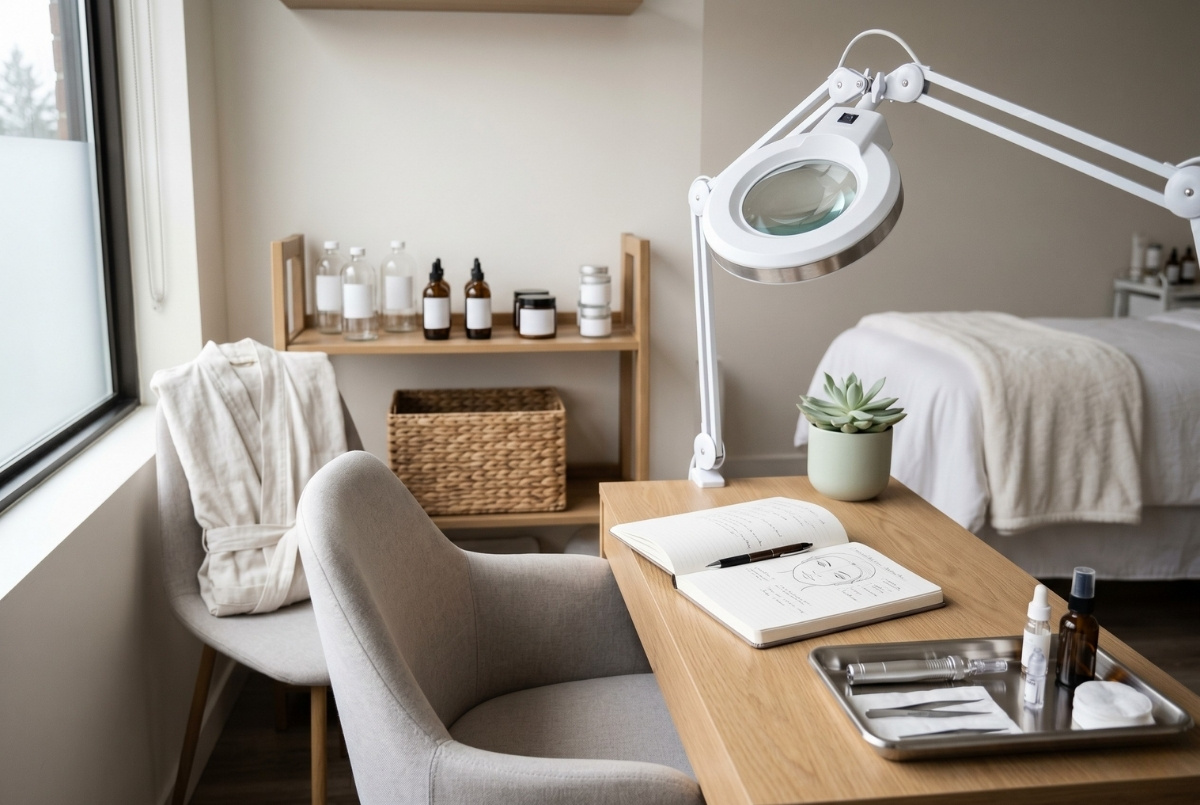
A detailed interior photograph of a modern beauty clinic treatment room. A wooden consultation desk holds a magnifying lamp, an open notebook with a facial diagram, a pen, steel tools, and glass bottles. Two grey chairs are at the desk, one with a robe. In the background, a shelving unit with more products and a treatment bed are visible near a large window.

One of the best things about this license is that it doesn’t limit you to just one type of environment. In 2026, the options for where to work as an esthetician are incredibly broad.

Data from the BLS regarding work environments shows that specialists are found in personal care services, self-employment, medical offices, and even travel accommodations.

1. Leading Beauty Retailers

Major players like Sephora and Ulta are huge employers for those with beauty knowledge. At these companies, your license is a major asset for providing consultations or services like brow shaping. Ulta’s career page and Sephora’s careers site often list roles where you can gain fast experience in customer education and product recommendations. I think these are some of the best esthetician jobs for beginners because they teach you exactly how consumers make decisions.

2. Dermatology and Medical Settings

Working alongside doctors or in a medical spa allows you to see the clinical side of the industry. This is often called medical esthetics, though in many states, this is a job title rather than a different license. A 2026 survey by Allergan Aesthetics found that 78% of consumers feel more satisfied when they have a long-term plan with their practitioner. This supports the move toward “sequential treatment planning” in medical-adjacent offices.

3. Travel and Luxury Resorts

If you enjoy traveling, esthetician jobs on a cruise ship offer a chance to work while seeing the world. Companies like OneSpaWorld recruit wellness pros for sea-bound roles. These jobs are fast-paced and help you build a global perspective on beauty, though I suggest looking closely at contract details like housing and commissions.

4. Boutique Waxing and Lash Studios

Specializing in high-volume services like Brazilian waxing or lash artistry can help you build a client base very quickly. These studios are great for perfecting your speed, communication, and sanitation habits—skills that I believe are essential regardless of where you end up working later on.

Advancing Your Career: Specialization and Transitions

I believe your career should continue to evolve long after you finish school. Whether you want to move into management or a more clinical role, there are several paths to take.

RNs and the Aesthetic Crossover

I have seen many Registered Nurses (RNs) move into the aesthetic field to work in med spas or plastic surgery offices. This path allows for more clinical involvement, but it is heavily regulated. In South Carolina, the South Carolina Board of Cosmetology links to state resources for licensed nurses performing cosmetic services, including advisory materials on cosmetic procedures and neuromodulators. The joint advisory opinion on neuromodulators provides guidance for licensees performing injections such as Botox for cosmetic and non-cosmetic purposes. It is not an independent shortcut, but it is a very popular and lucrative career bridge.

The Master Esthetician Path

Some states offer higher-tier licenses, like a Master Esthetician. For example, Washington law allows these pros to perform expanded services like medium-depth peels. If you eventually find that you enjoy the teaching side of things more than the services, you might even consider becoming an instructor to train the next generation.

Understanding Esthetician Salary and Earnings

When people ask me about an esthetician yearly salary, I remind them that a flat average doesn’t tell the whole story. Your income depends on your location, your tips, and whether you earn a commission on product sales.

The BLS profile for skincare specialists notes a median wage of $19.98, but the top 10% in the field earn more than $37.18 per hour. If you look at the esthetician salary by state, you will see that markets in different states and metro areas can vary widely. A strong solo practice or a role in a high-end medical office often offers a much higher ceiling than an entry-level spa position.

The Medical Wage Difference

Data shows that working in a medical setting can pay more. The BLS reported that those in physician offices earned a median of $23.40 compared to $18.55 in standard personal care services. While some guides suggest a range of $70,000 to $100,000 for top specialists, I suggest treating that as an upper-tier goal rather than a guaranteed starting wage.

Can You Open a Spa or Work from Home?

I often hear from students who want to run an esthetician business from home. While about 26% of specialists are self-employed, doing this correctly takes a lot of planning.

  • The Legal Side: Your space must meet state board requirements and local zoning laws. In South Carolina, the Board of Cosmetology licenses and regulates salons, booth renters, schools, and related programs, and South Carolina salon regulations address licensure requirements for cosmetology, nail technology, and esthetics salons.
  • Safety Protocols: You must stay within your scope of practice. For example, if you plan to offer microneedling, you need to understand the FDA’s guidance on these devices and check if they are classified as Class II devices for aesthetic use.
  • Business Reality: Going solo gives you control, but you are also responsible for your own taxes, marketing, and supplies.
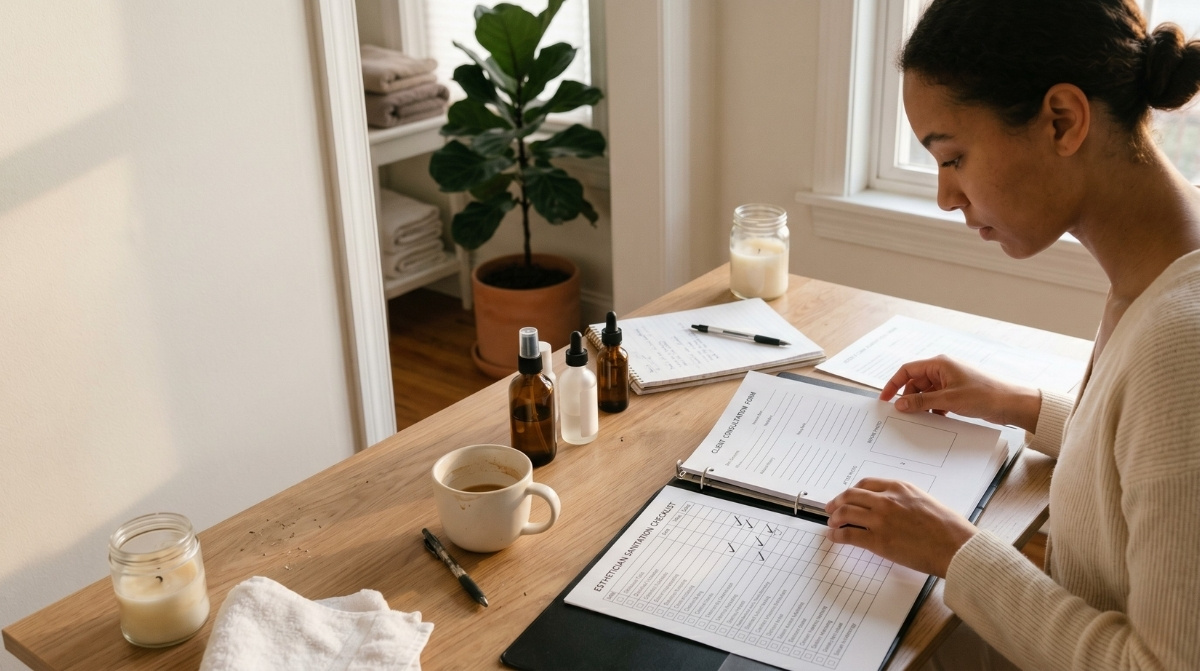
A student esthetician organizes a career portfolio and sanitation checklist on a wooden desk beside skincare bottles and a coffee mug.

Landing Your First Job

When you are looking for a job as an esthetician with no experience, your portfolio and school clinic hours are your best assets. I suggest focusing on your sanitation habits and your ability to conduct a thorough client consultation.

During an interview, be ready for a practical exam. A manager might ask you to demonstrate a facial or explain how you would handle a skin reaction. They want to see that you have calm judgment and professionalism. You should be ready to talk about the differences between products and how you protect client safety in your notes.

Building Your Professional Legacy

Choosing the right place to start your education is the most important decision you will make this year. As you have seen, the demand for skincare pros is high, and the potential to build a specialized career is very real. But it all starts with a license built on quality training. I believe that a “Salon Ready” approach is the best way to bridge the gap between being a student and becoming a professional.

If you want to see how to take the first step toward your goals, you can find more details on our Enrollment page. I’d love to help you figure out which path in the beauty industry is right for you. If you have questions about the process or the programs, feel free to fill out the contact form below and we can start a conversation about your future.

Common Questions About the Career

Is it hard to get a job after esthetician school? The outlook is positive, with 7% growth expected over the next few years. While specialized medical roles require a strong portfolio, there are many entry-level spots in spas and retail to help you get started.

What career cluster does esthetics fall under? It is generally part of Human Services, specifically in personal care. Some newer classifications group it under Healthcare & Human Services, which reflects the wellness focus of the industry.

Can I move to another state? Many states allow for license transfers, but the rules vary. You might need to provide proof of your hours or take a state-specific exam. I recommend checking out our guide on how state board exams and transfer rules work to see what you might need.

Do I need a degree to be a medical esthetician? Usually, you do not need a four-year degree, but you must have a state-approved license. “Medical esthetician” is typically a job title, not a separate license, and you must always stay within your state’s legal scope of practice.
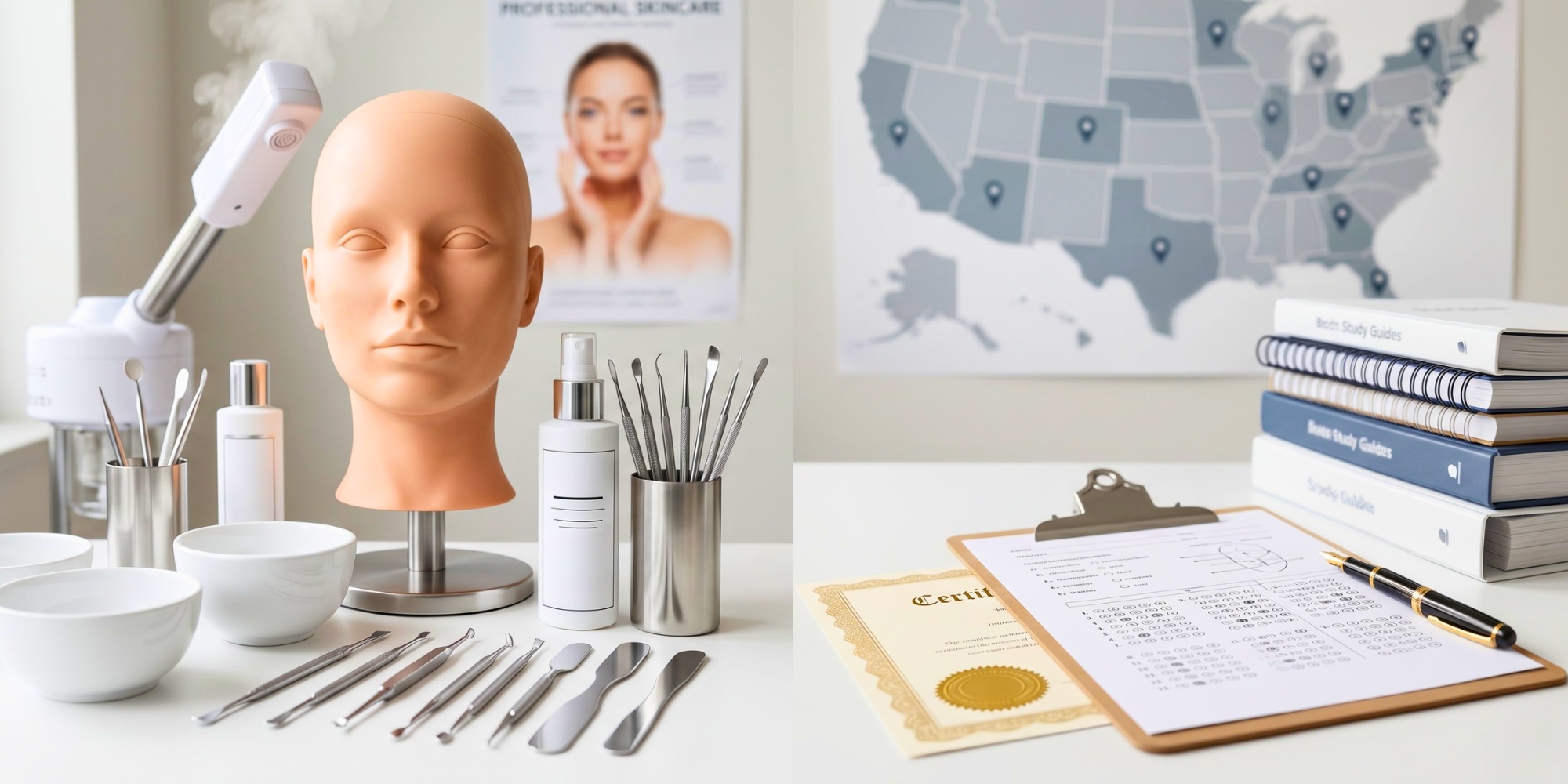
How to Get Your Esthetician License: A Pro’s Breakdown of Exams and State Requirements

Deciding to pursue a career in skin care brings up a lot of questions about where to begin. The path to becoming a licensed professional involves strict rules that change depending on where you live. Navigating the paperwork, training minimums, and testing procedures can easily become overwhelming for new students. I want to clear up the confusion and explain exactly how to earn your credentials, so you can focus on mastering your craft and building a successful practice.

Key Takeaways

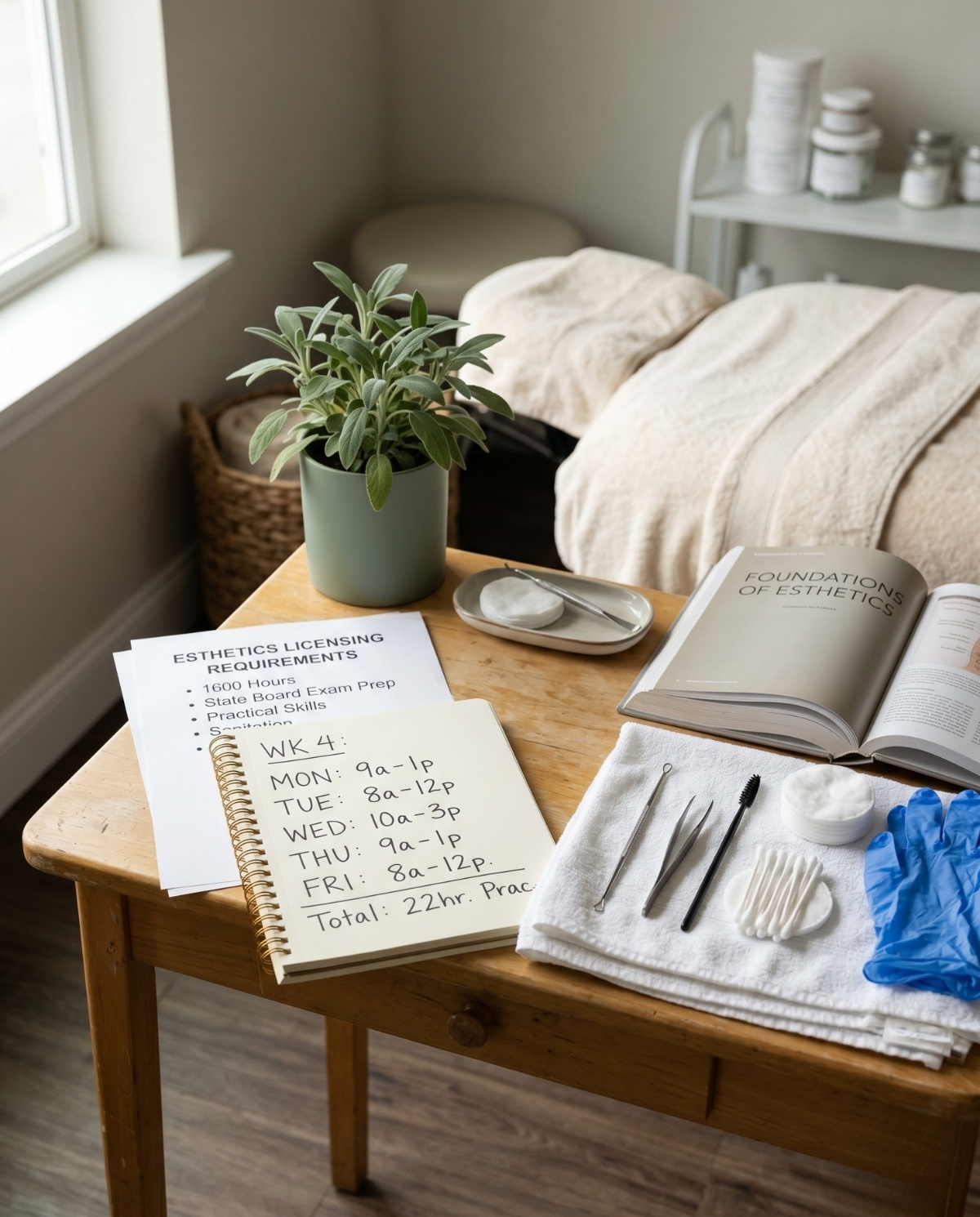
A wooden desk holds a notebook with handwritten practice hours, licensing requirements, an open textbook, and professional skincare tools laid out on a white towel.

What It Takes to Earn Your Credentials

Understanding Your Training Hours and Schooling

You cannot legally perform professional skin care services without going to an approved school. Before you worry about how to apply for an esthetician license, you must understand your local training rules. When you look at esthetician hours by state, the numbers jump around quite a bit. Every local government decides what services are safe for beginners to perform and bases the required schooling time on that standard.

Here is a quick look at the esthetician required hours by state in a few different areas:

If you are wondering how many hours you need for an esthetician license in your specific area, always check directly with your local regulatory board. Completing your minimum hours simply means you are legally allowed to take the test. A great beauty school will go beyond the bare minimum to make sure you actually feel confident working with real clients.

Can You Learn Online and What Does It Cost?

Many working adults wonder if they can get an esthetician license online. The straightforward answer is that a fully remote path does not exist for this hands-on career. According to some distance learning standards, certain beauty schools offer digital coursework for the theory portion of the education. You still must complete your physical, practical training in an actual student salon. Sitting behind a screen will not teach you the correct pressure for an extraction or how to apply hot wax safely.

People also frequently ask how much it costs to get an esthetician license. Tuition generally ranges from $4,000 to $12,000 depending on your location and the depth of the curriculum. To really understand the financial side and the long-term value of this education, I highly recommend reading our guide on your path to an esthetician license, everything about school costs, and career growth.

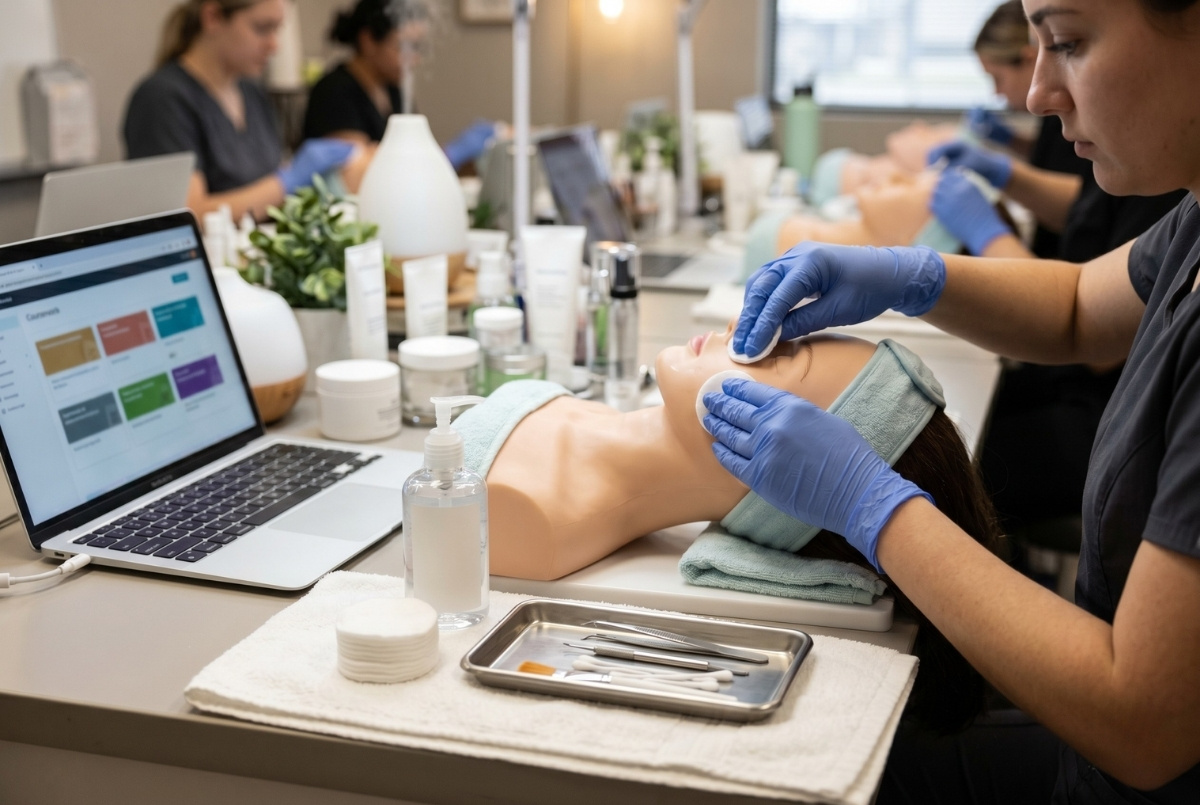
An esthetician student in blue gloves performs a facial treatment on a training mannequin head next to a laptop and professional tools.

Conquering the State Board Exams

The Written Theory Test

The esthetician written exam focuses heavily on microbiology, anatomy, product chemistry, and strict infection control rules. Students often want to know how many questions are on the esthetician state board exam. If your location uses the standard NIC testing format, the exam features 110 items, with 100 of those counting toward your final score. Finding a reliable esthetician written exam practice test is a brilliant way to prepare your mind for the actual testing day.

The Hands-On Practical Test

The practical exam for esthetics requires you to physically demonstrate your skills in front of an evaluator. Evaluators are not grading you on giving a relaxing spa experience. They watch closely to see if you drop a tool, cross-contaminate your supplies, or fail to sanitize your hands.

Getting a realistic idea of what esthetician school is really like day-to-day will show you why instructors drill these safety protocols so intensely. As noted in the NIC exam resources, mastering infection control and blood exposure procedures builds the muscle memory you need to pass this test smoothly.

Background Checks and the Application Process

How to Apply After Testing

Passing your tests is a huge milestone. After that, you still need to formally submit your paperwork to the state. Your school instructors will usually guide you on how to apply for an esthetician license after passing the exam so you do not miss any required forms or fees. Places like New York process everything through its online licensing system, while Florida handles applications through the DBPR portal.

Criminal History Considerations

I also want to touch on a topic that causes anxiety for some prospective students regarding criminal backgrounds. Many boards review criminal histories on a case-by-case basis. Texas, for example, offers a criminal history evaluation process before you even enroll in school. Total honesty on your application is always the best approach.

Moving States and Transferring Your Credentials

Understanding Reciprocity and Endorsement

Building a beauty career means you might want to relocate someday. If you move, an esthetician license transfer from state to state is usually handled through a process called endorsement or reciprocity.

If you research esthetician reciprocity by state, you will find that a new state reviews your current training hours and testing history. Sometimes they grant you a credential immediately, while other times they ask you to take a brief state law exam. New York and Virginia have established transfer pathways for experienced professionals moving into their jurisdictions, as detailed in the Virginia licensing requirement summary. You just have to submit the right paperwork.

While the Cosmetology Licensure Compact sounds like a shortcut, it is currently built for cosmetologists and is not yet active for licensees. Transferring still requires navigating each state’s individual rules.

Renewals and Going Solo

Once licensed, keeping your credentials active is fairly simple. States like Florida require renewals every other year. If you get married or legally alter your identity, your local portal will have specific forms to update your information, similar to California’s name change process.

Earning this credential gives you real freedom. The Bureau of Labor Statistics highlights that many skincare specialists are self-employed, giving you the power to shape your own career.

Overhead view of a wooden table with a laptop showing a licensing portal, a handwritten checklist, application forms, a calendar, and a coffee mug.

Ready to Start Your Beauty Journey?

Navigating the rules and requirements is just the very first step of a rewarding career. Having a supportive educational environment makes a huge difference when you learn the ropes and prepare for those board exams.

We would love to help you take that next step and build a solid foundation for your future in the beauty industry. Find out more details about getting started in Enrollment.

Fill out the contact form below to connect with us. We are happy to answer your questions, discuss scheduling, and guide you through the process!

Frequently Asked Questions

Do you need a license to be an esthetician?
Yes, you absolutely need official credentials to perform professional skin care services legally. The exact title might change based on where you live. Florida calls it a Facial Specialist registration, while most other places use a standard license title.

How many questions are on the esthetician state board exam?
Under the common NIC format, you will face 110 items, with 100 of them actively scored. Always verify this with your local testing vendor, as individual locations can occasionally use their own unique test formats.

How do I find out where to get my esthetician license testing done?
Your state board website will tell you exactly which testing vendor they use. Places like Georgia often use PSI, while New York handles application and exam scheduling directly through its licensing system.

What are the requirements for an esthetician license in my area?
The safest way to check esthetician requirements by state is to visit your local government licensing website. For instance, getting an esthetics license in NY means checking the New York Department of State, while transferring credentials into Virginia means reviewing the Virginia Board for Barbers and Cosmetology. That is where you will find the most accurate rules.

What Is Esthetician School Like? A Pro’s Guide to Classes, Hours, and Prep

You probably have a bathroom cabinet full of serums, spend your evenings reading ingredient labels, and have a skincare routine that feels almost scientific. But there is a huge difference between being a dedicated consumer and being a professional in a treatment room. Moving into this career turns your passion into a licensed profession, and it is completely normal to feel some nerves. You might wonder if you can handle the science, the sanitation standards, and the hands-on technical skills required.

This guide takes a closer look at what modern esthetics training is really like.

Important Things to Know

  • Career Growth: Employment for skincare specialists is projected to grow 7% from 2024 to 2034, which is faster than average for all occupations.
  • Scientific Focus: Modern esthetics training goes beyond basic treatments and places strong emphasis on skin barrier knowledge, ingredient literacy, sanitation, and client safety.
  • Updated Regulations: MoCRA has increased attention on cosmetic safety and labeling awareness, making compliance and professional education more important across the beauty industry.
  • Time Requirements: Training hours vary widely by state, from 220 hours in some Florida specialty pathways to 1,000 hours in states such as Georgia.
  • Income Reality: Earnings depend on location, specialty, business model, and clientele. The BLS reports a median wage of $19.98 per hour for skincare specialists, while some advanced or specialized roles may earn significantly more.

What Is Esthetician School Like?

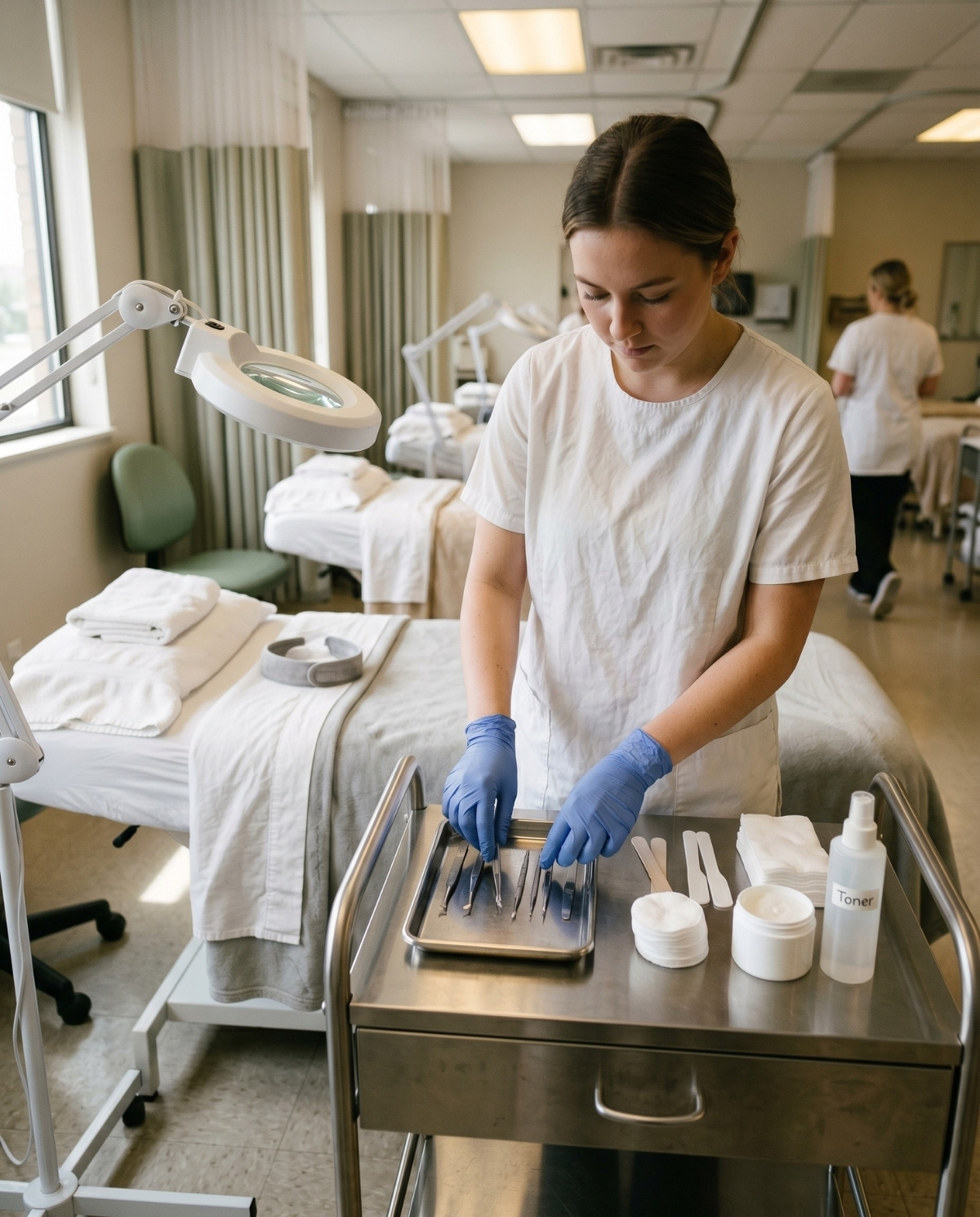
A student esthetician wearing a white smock and blue gloves organizes skincare tools on a metal tray in a training clinic.

Modern esthetics training often feels less like a traditional lecture classroom and more like a professional clinic. A strong program balances theory with repetition. Students spend time studying skin structure, product chemistry, consultation methods, infection control, and sanitation before applying that knowledge in supervised practice. Most days are usually split between classroom instruction and student clinic work.

During training, students learn how to perform consultations, recognize visible skin concerns within their scope, maintain sanitation standards, and deliver services safely. Programs commonly include facials, hair removal, skin analysis, cleansing protocols, extractions, and brow or lash services. Students also develop the discipline required for the profession, including room setup, tool disinfection, treatment flow, and professional communication with clients.

Why Demand Is Growing

According to the U.S. Bureau of Labor Statistics, employment for skincare specialists is projected to grow 7% from 2024 to 2034. The BLS also notes that demand is supported in part by services such as mini-sessions and mobile facials, which appeal to clients looking for convenience and lower-cost options.

The Science of Skin: What You Actually Learn

The science side of esthetics can sound intimidating at first, but that foundation is what gives the profession credibility. A quality esthetics program teaches not only how to perform services, but also why certain products, ingredients, and treatment steps matter for skin health and client safety.

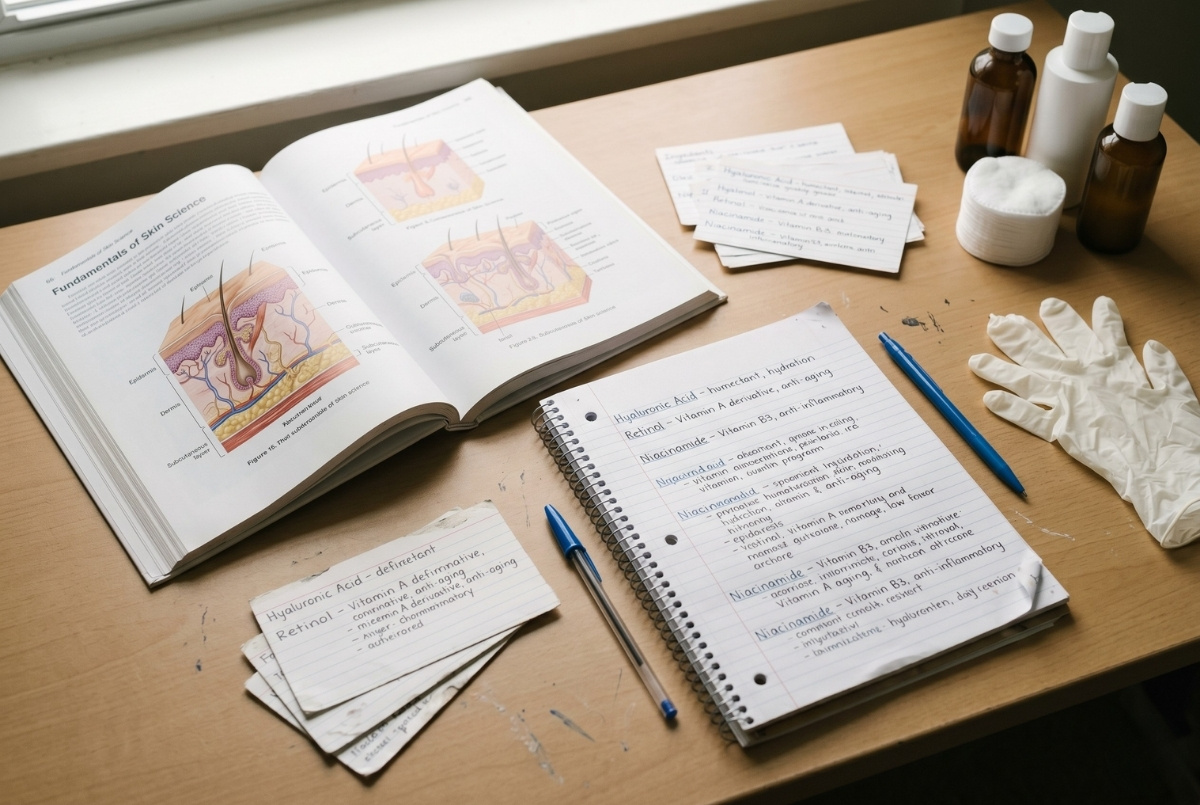
An open textbook showing skin anatomy diagrams sits next to handwritten notes, skincare flashcards, and protective gloves on a wooden desk.

Biology and Safety Basics

Students typically spend significant time learning skin anatomy, barrier function, pH, product chemistry, ingredient interactions, contraindications, and sanitation. Understanding these topics helps future estheticians protect the skin barrier and work more safely with professional products. Students also learn when a visible condition may fall outside their scope and when a client should be referred to a physician or other licensed medical professional. That knowledge is a core part of safe practice.

Building Your Hands-On Skills

Hands-on coursework usually includes cleansing methods, facial movements, extractions, hair removal, lash and brow services, makeup fundamentals, and treatment customization. Students are trained to work carefully, protect skin integrity, and avoid unnecessary trauma. Whether someone plans to focus on facials, waxing, or another specialty, precision and consistency are essential parts of training.

The Roadmap: Hours, Costs, and Locations

The logistical side of esthetics school is simple: your state’s rules help determine how long training will take. At Aiken School of Cosmetology and Barbering, the esthetics program is listed as 450 hours / 6 months. Other states have different requirements:

  • California: 600 hours under current state requirements.
  • Texas: 750 hours for an esthetician license.
  • Florida: 220 hours for Facial Specialist; 400 hours for Full Specialist.
  • Georgia: 1,000 hours for esthetician training.
  • Arizona: 600 hours for aesthetics under current state requirements.

If you have a busy schedule, flexible formats such as part-time or evening training can make school more manageable. Theory may sometimes be offered in hybrid form, but state-approved practical training still has to be completed in person.

Safety and Compliance in 2026

The Modernization of Cosmetics Regulation Act (MoCRA) has increased attention on cosmetic safety, recordkeeping, and adverse event oversight in the beauty industry. For estheticians, the focus is usually on safe work practices, recognizing reaction signs, and documenting incidents appropriately while following state board rules and employer policies.

Planning Your Budget: Esthetician School Cost

Tuition can vary significantly depending on the school, location, program length, and what is included in the student kit. Many esthetics programs fall somewhere in the several-thousand-dollar range. It is a smart idea to ask whether tuition includes books, supplies, and kit costs.

Students who are concerned about affordability should also verify whether a school qualifies for federal financial aid. Not every beauty or trade school participates in those programs, so it is important to confirm FAFSA eligibility directly with the institution before enrolling. Comparing total tuition, schedule flexibility, licensure preparation, and job-placement support can be more useful than focusing only on the headline price. You can find more details on this in our guide to everything about school cost and career growth.

Preparation: From the First Day to the State Board

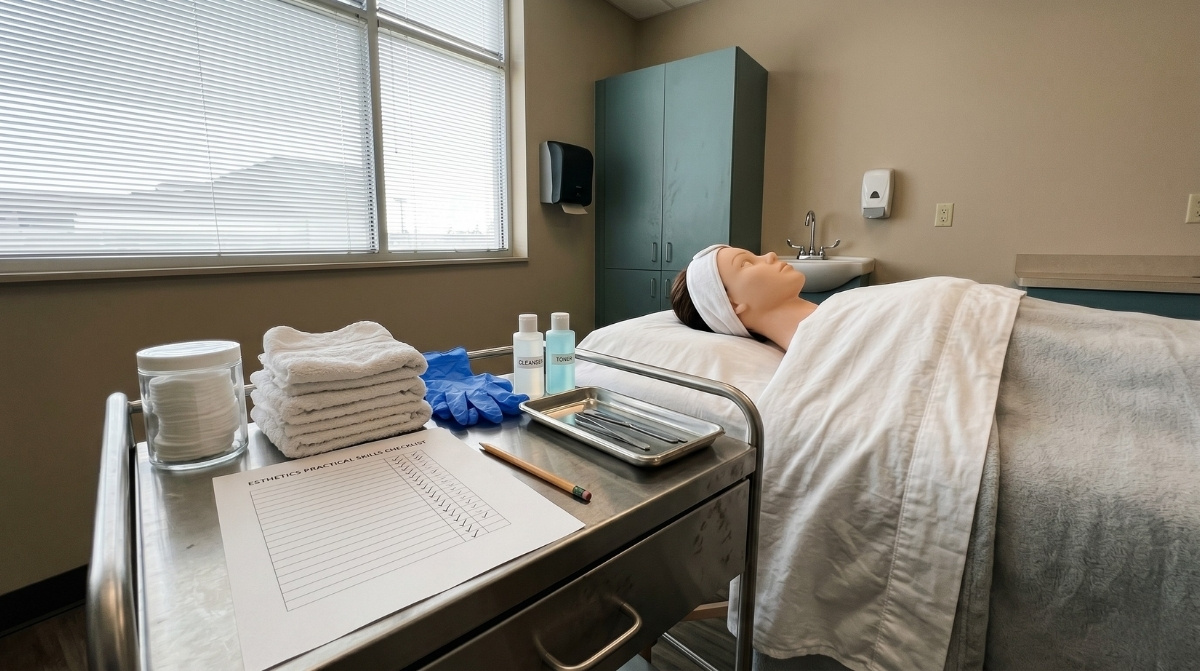
A metal treatment cart holding a skills checklist, towels, and skincare tools stands in an esthetics training room with a mannequin on a treatment bed.

Before starting, it is important to confirm both the school’s admission requirements and the state’s training standards. Requirements vary, but many students must meet minimum age and education rules before enrolling. At this school, the catalog lists a minimum age of 16 and accepts a 10th grade transcript, high school diploma, or GED.

Once enrolled, students usually receive training materials and practical tools used during the program. Early practice may begin in supervised training settings before moving into clinic work with real clients. That transition is where students begin connecting theory, safety, and practical technique. The State Board: Your Final Hurdle

The last step is licensure. Depending on the state, that may involve a written exam, a practical exam, or both. Students usually spend the final portion of their training reviewing safety rules, infection control, service procedures, and state-law requirements. Passing the licensing process is what formally opens the door to legal practice.

Income after licensure can vary widely. According to the U.S. Bureau of Labor Statistics, skincare specialists had a median wage of $19.98 per hour in May 2025, with top earners making substantially more. Beauty Insurance Plus also notes that some specialized, luxury, or medically adjacent roles can reach much higher earnings, especially when commission, retail sales, or business ownership are involved.

Are You Ready to Start?

Choosing where to train is about more than simply completing the required hours. It is about finding an environment where you can build confidence, discipline, and real-world readiness. At Aiken School of Cosmetology and Barbering, the focus is on helping students become “Salon Ready” for the pace and expectations of professional salon and spa work.

If you are ready to take the first step toward licensure, you can learn more on the school’s Enrollment page. If you have questions or want to visit the campus, use the contact form below this article to get in touch.

FAQ: Common Questions

Can I work a full-time job while in school? Many programs offer part-time, evening, or other flexible schedule options to help students balance work and education.

Is esthetician school hard to get into? Admission is usually based on meeting age, education, and school-specific enrollment requirements rather than on a competitive GPA.

Can a nurse attend esthetician school? Yes. Many nurses pursue esthetics training to expand into skincare-focused or medically adjacent settings, although the services they may perform depend on state law and licensure.

What is the difference between a basic and master esthetician? That depends on the state. Some states use advanced or master esthetics categories with additional training and expanded service authority, while others do not use that distinction at all.

Do I need a license to work from home? In most states, yes. Performing paid skincare services generally requires proper licensure, and home-based businesses may also need to meet local zoning, salon licensing, inspection, and sanitation requirements.

Your Path to an Esthetician License: Everything About School, Cost, and Career Growth

Starting a new career path is a major decision. Many people begin with a passion for skincare and then build that interest into a professional skill set grounded in science, safety, and hands-on training. If you want to know how to become an esthetician, it takes more than simply enjoying products and trends.

This guide walks through esthetician school, licensing, and the real costs involved. It is about building a strong foundation in skin care knowledge, practical training, and professional accountability.

Main Highlights

  • Career Speed: Training often takes just a few months instead of several years.
  • Industry Demand: The Bureau of Labor Statistics expects 7% growth through 2034.
  • Earning Power: The average salary sits around $45,374, while advanced specialties can lead to higher earnings.
  • Professional Standards: The Modernization of Cosmetics Regulation Act (MoCRA) has raised expectations for safety and accountability in the beauty industry.

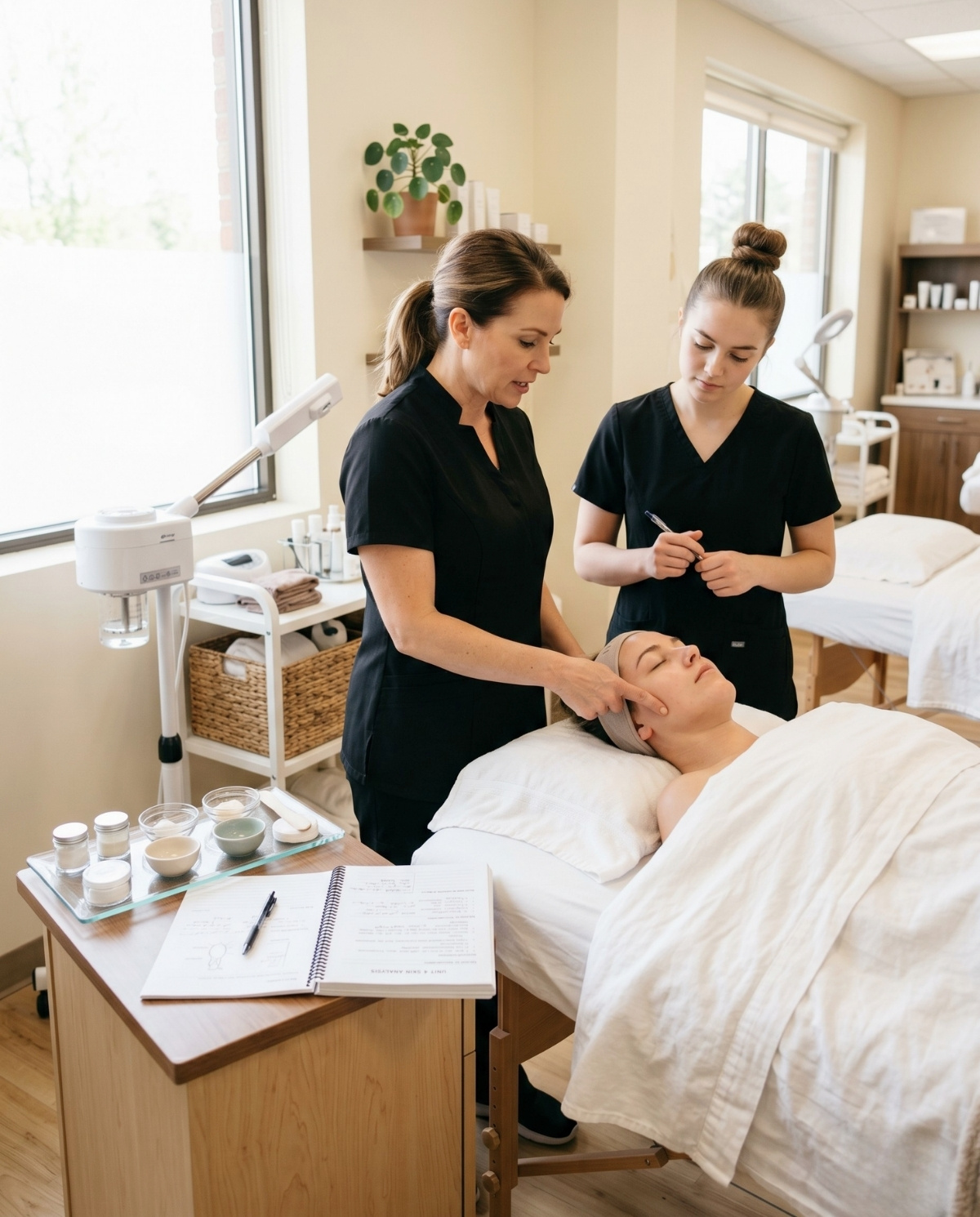
A skincare instructor points to a client's cheek while teaching a student esthetician during a skin analysis demonstration.

What Today’s Professionals Are Trained to Do

The beauty world has shifted toward what Mintel analysts call “Metabolic Beauty.” This means clients increasingly expect you to understand how overall wellness can affect the skin. As a professional, your scope of practice focuses on the skin and its protective barrier, which helps keep moisture in and external irritants out.

You may learn to use clinical-grade exfoliation and modern equipment to support skin care services. Understanding the science behind these treatments is one of the things that separates a trained professional from a hobbyist.

Clients are also moving beyond simple “clean beauty” claims and paying more attention to active ingredients and how they interact with the skin. Choosing a program that emphasizes both theory and hands-on practice can help prepare you for current industry expectations.

Your Educational Route to Becoming an Esthetician

Before you enroll, you need to check a few basic requirements. Most states expect you to be at least 16 or 17 years old. You also need a high school diploma. If you have wondered, “can you be an esthetician with a ged,” you will be glad to know that almost all state boards accept it.

The general path for how to become an esthetician after high school is clear:

  1. Research schools with esthetician programs.
  2. Complete the required training for an esthetician.
  3. Pass the state board exams.
  4. Apply for the license.

Esthetician School Explained: Online and In-Person Training

When you search for the quickest way to become an esthetician, you might see ads for an online esthetician course. It is important to be realistic here. While you can take online classes for an esthetician to learn anatomy or chemistry, you cannot learn how to safely perform services through a screen alone.

Most states require hands-on hours in a supervised clinic. If a program claims you can do esthetician school online without any in-person training, it may not meet licensing requirements. That would prevent you from getting a license for an esthetician, making that “quick” route a dead end.

How Much Time Does It Take to Become an Esthetician?

If you are wondering how many years of school for an esthetician are required, the answer is usually measured in months. While the Bureau of Labor Statistics notes you must complete a state-approved program, the specific hour requirements are set by your local board.

Training requirements vary by state. At Aiken Beauty and Barber School, the esthetics program is designed to meet South Carolina licensure requirements and is listed as 450 hours over 6 months on the school’s esthetics page.

This type of schedule can support a faster transition into a new career. You spend time learning in the classroom and developing confidence through supervised practical experience.

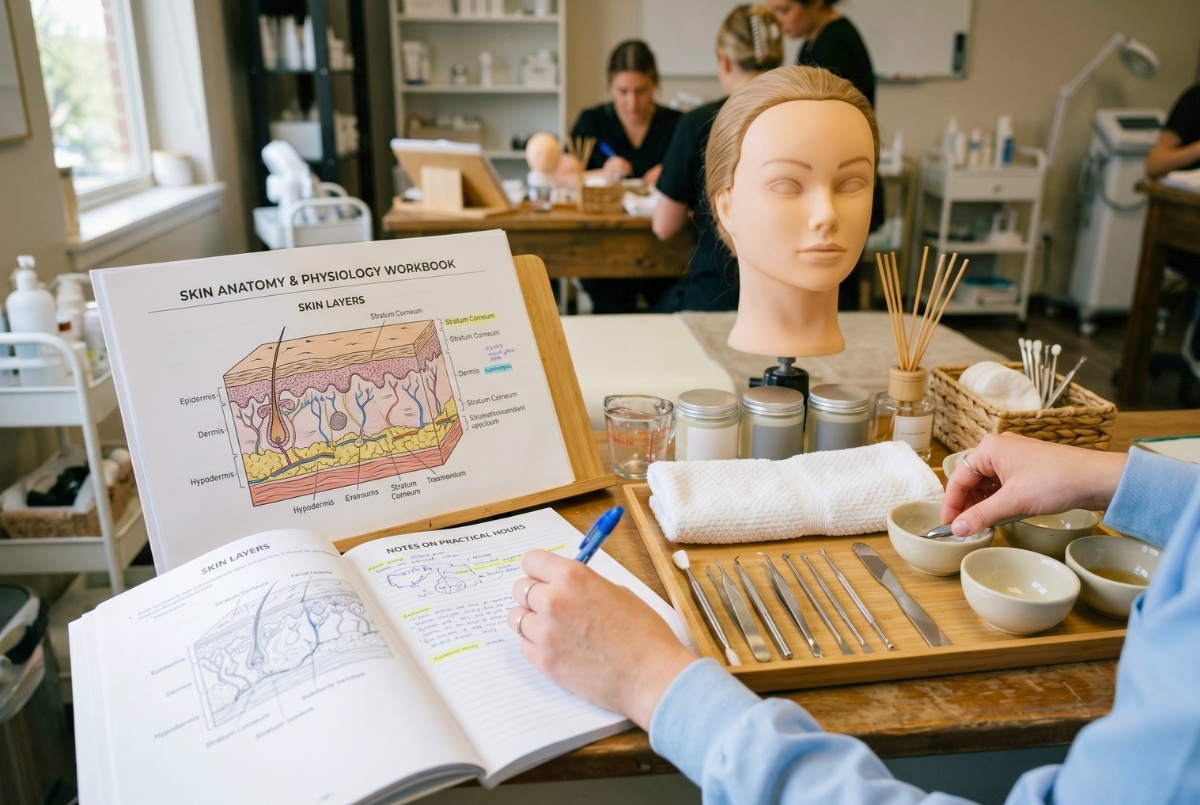
A student's hands arrange facial tools and take notes beside an open skin anatomy workbook and a mannequin head in a bright classroom clinic.

Esthetician School Costs and Budgeting Basics

The esthetician school cost is an investment in your professional future. Tuition can vary widely depending on the school, location, and program structure.

Many students worry about the upfront cost. There are several ways to manage this:

  • FAFSA for esthetician school: You can apply for federal aid if your school participates in Title IV programs.
  • Grants for esthetician school: Some schools provide money that does not need to be paid back.
  • VA Benefits: If you or a family member served in the military, the VA pays for esthetician school at many qualifying locations.

When calculating how much it costs to become an esthetician, remember to include “kit fees.” These cover the professional tools and products you will use during your training.

Steps to Earn Your Esthetician License

Once you finish your esthetician program, you enter the final phase. This is the official recognition of your skills by the state board.

Licensing exams vary by state. Many states require a written exam, and some also require a practical exam. In states with a two-part system, the process looks like this:

  • Theory Exam: A written test covering skin biology, sanitation, and state laws.
  • Practical Exam: A hands-on demonstration where you perform services to prove your technique is safe.

While states like California have moved away from the practical portion, South Carolina still uses a two-part examination process for esthetics licensure.

How much does it cost to get an esthetician license? You will pay for the application and testing fees, which usually total between $100 and $250, depending on your state.

Career Opportunities After Esthetician School

The question “what can you do with an esthetician license” has many answers today. Common workplaces include:

  • Medical Spas: Performing advanced treatments like micro-needling.
  • Resort Spas: Working in high-end luxury environments.
  • Self-Employment: Managing your own books and specializing in niche services like lash extensions.

Data from ZipRecruiter in early 2026 shows the average salary for an esthetician is currently around $45,374. Focusing on a specialty can increase your earning potential. Your esthetician yearly salary can also grow as you build a loyal client base.

A licensed esthetician in blue scrubs adjusts linens on a client resting on a treatment bed in a bright, warm spa room.

Are You Ready to Build Your Skills?

Choosing where you learn is just as important as what you learn. At Aiken Beauty and Barber School, the esthetics program is designed to help students build practical skills for a professional future in skin care.

The school’s esthetics page highlights training in skin physiology, facial massage, hair removal, make-up application, salon business, and client retention, along with hands-on learning experiences. The program is also designed to prepare students for South Carolina licensure.

Our goal is to help you graduate with the knowledge, practical training, and confidence to begin your career. Your future in skin care is waiting, and we are here to help you navigate every step of the journey.

I invite you to find out more in Enrollment to see how we can help you reach your goals. Please fill out the contact form we leave at the end of the article to get in touch with us directly.

Frequently Asked Questions Before You Begin

Is it hard to get a job as an esthetician?
The demand for experts is strong. Employers look for graduates who understand safety, sanitation, and hands-on techniques. Choosing a reputable school can make the job hunt much easier.

Can you be an esthetician without going to school?
No. Every state requires a specific number of educational hours from an approved school before you can sit for the licensing exam.

Do you need a degree to be an esthetician?
You do not need a college degree. You need a diploma or GED and the completion of a state-approved esthetician course.

The Professional Guide to Nail Technology Hygiene and Essential Aftercare Advice

I’ve been noticing a really interesting shift in the nail world lately. It isn’t just about the latest chrome powder or jelly polish anymore. In 2026, the real trend is actually what happens underneath the polish. Clients are becoming way more focused on safety, and as a professional, my job has shifted from just making things look pretty to making sure they stay healthy.

If you are just getting your feet wet in this industry, I suggest checking out our 2026 beginner guide to nail technology to understand the basics. Once you have a handle on the foundation, providing solid aftercare advice for nail technology becomes your best tool for building trust. It’s about showing your clients that you understand the science of the nail plate, not just the aesthetics.

The Core of Cleanliness: Understanding Microorganisms

In a high-standard environment, the first thing I teach isn’t how to hold a brush, but how to manage what we call the bio-burden. This is basically the amount of germs living on a tool or surface. To keep everyone safe, a pro needs to be able to list the four types of organisms that are pertinent to nail technology: bacteria, fungi, viruses, and parasites.

Knowing these categories helps you recognize how they act in a salon. For example, fungi love the dark, moist spots created when an enhancement starts to lift away from the natural nail. To stop these pathogens, you have to use mechanical debridement. This means physically scrubbing away the sticky layer of bacteria before you even start using chemicals. If you don’t break that layer first, your disinfectant can’t do its job. According to the 2026 Sunset Review Report by the California Board of Barbering and Cosmetology, poor disinfection is still a major cause of infections like ringworm, even in expensive salons.

A gloved hand reaches for a manicure brush near a tray of sanitized metal tools at a clean salon workstation.

The Reality of High-Tech Fungal Treatments

As people become more health-conscious, they start asking about the latest medical gadgets. One question I get all the time is: does UV technology kill nail fungus?

Limitations of Salon UV Lights

I always have to clarify the difference between sanitizing and curing. While there is UV technology that fights nail fungus in medical clinics, it uses specific wavelengths that our salon lamps just don’t have. In fact, if a client already has an infection, putting gel polish over it can make things worse by trapping moisture. According to CT.gov’s Infection Control Guidelines, UV boxes are only for dry storage and aren’t meant for sterilization.

Does Laser Tech Work?

You might also wonder, does laser technology work on nail fungus? Based on the Medical Policy SURG.00138 from Healthy Blue Louisiana, laser technology for nail fungus is usually an assistant to other treatments. It uses heat to slow down the fungus, but it rarely cures it completely on its own. By knowing the limits of this technology, you can guide your clients toward real medical help when they need it.

Nail technician points at natural fingernails during client consultation at a salon desk with tools and UV lamp.

Advanced Aftercare for Your Clients

The most important time for nail health is actually the weeks between salon visits. If a client isn’t taking care of their nails at home, the work I do in the chair won’t last.

Better Solutions for Healing

Most topical liquids have a hard time getting through the tough surface of a nail. To fix this, I often suggest using fungal nail patches with hydrogel technology. These patches keep the nail hydrated, which makes the keratin more porous so protective ingredients can actually reach the nail bed.

I also focus on the nail matrix, which is where the new nail is born. I recommend using a nail care pen with nail matrix technology for daily use. These pens deliver nutrients directly to the area where new cells form, ensuring the client grows a strong foundation for their next set of nails.

The Pro Hygiene Kit

The tools your clients use at home matter too, using a salmon hygiene technology nail brush is a huge upgrade over basic wooden brushes. These specific tools use resin-set filaments that don’t let bacteria grow on them, so the client stays clean while they scrub under their nails at home. You can learn more about these types of tools in our guide to nail tech procedures and starter kits.

Reports from Research Nester (2026) show that the global market is moving toward these proven wellness products. Clients want items backed by data, not just pretty packaging.

Becoming a Clinical Specialist

A standard license gets you in the door, but extra training helps you lead the room. For those who want to work with high-risk clients, like people with diabetes, earning a medical nail technician certificate is the best move.

This certification lets you do more than just basic beauty work. It also makes your salon eligible for a healthy nail salon recognition program. Joining a healthy nail salon program shows your community that you care about chemical safety and clean air. This is vital because the FDA’s 2026 Framework now draws a very sharp line between general wellness and medical claims. Having real institutional backing is the only safe way to market your high standards.

A student nail technician in a beauty school class performs a detailed manicure on a client's hand at a wooden table with tools, training guides, and an olive plant.

Start Your Professional Journey at Aiken Beauty and Barber School

Choosing the right place to train is the biggest decision you’ll make for your career. At Aiken Beauty and Barber School, I don’t just want you to learn how to paint nails. I want you to become an industry leader who understands clinical-grade hygiene and advanced aftercare.

The future of this field belongs to the specialists. Whether you want to open your own medical-grade salon or consult for wellness brands, our approach gives you the scientific edge that employers are looking for in 2026. We bridge the gap between beauty and science so you can build a career on a foundation of safety.

Your path from a student to a specialist starts here. You can find out more about how to join us on our Enrollment page. If you have any questions, just fill out the contact form right below this article. I can’t wait to help you start your future!

FAQ: Safety and Technology

Is it okay to use my LED lamp to treat an infection?
No. While specialized uv technology for nail fungus exists in clinics, salon lamps are only designed to harden gel products. They don’t have the power to kill fungal spores.

What is the benefit of a nail care pen with nail matrix technology?
Standard oils usually just sit on top of the skin. A pen using matrix technology is made with smaller molecules that can penetrate the fold of the skin to reach the growth center of the nail.

Why should I look for a healthy nail salon recognition program?
Being part of a healthy nail salon program gives your clients a reason to trust you. It serves as third-party proof that you follow the best safety and hygiene rules in the industry.