


What Barber School Teaches Before You’re Ready for Real Clients
What to Know Before Your First Barbering Class
- You can start as a beginner. Aiken’s Master Barber course begins with fundamentals such as infection control, tool handling, and haircutting. The published outline places clinic-floor training after the first 280 hours.
- Your service menu can go beyond haircuts. Beard work and shaves build on your cutting skills. Aiken also teaches coloring, permanent waving, and relaxing. The services you can offer professionally depend on your license.
- Plan separate study sessions for theory and practical skills. South Carolina requires both exams for applicants taking the Registered Barber or Master Hair Care Specialist exam pathway. In Texas’s fiscal year 2025 Class A Barber results, 37.25% of completed written attempts passed, compared with 89.80% of completed practical attempts.
- Build a record you can use at the next appointment. A few details about clipper settings, the neckline, and past product reactions can help you repeat a service and catch changes that matter.
Your first few haircuts in school are a chance to see how small choices show up in the finished cut. You might change a clipper guard and find that the transition looks softer, or leave a little extra length at the crown and see a stubborn swirl settle. If you’re choosing between barbering and cosmetology, start with the work you want to do most days. Our comparison of barber and salon training introduces the two paths.
How Beginner Barbers Build Their Skills
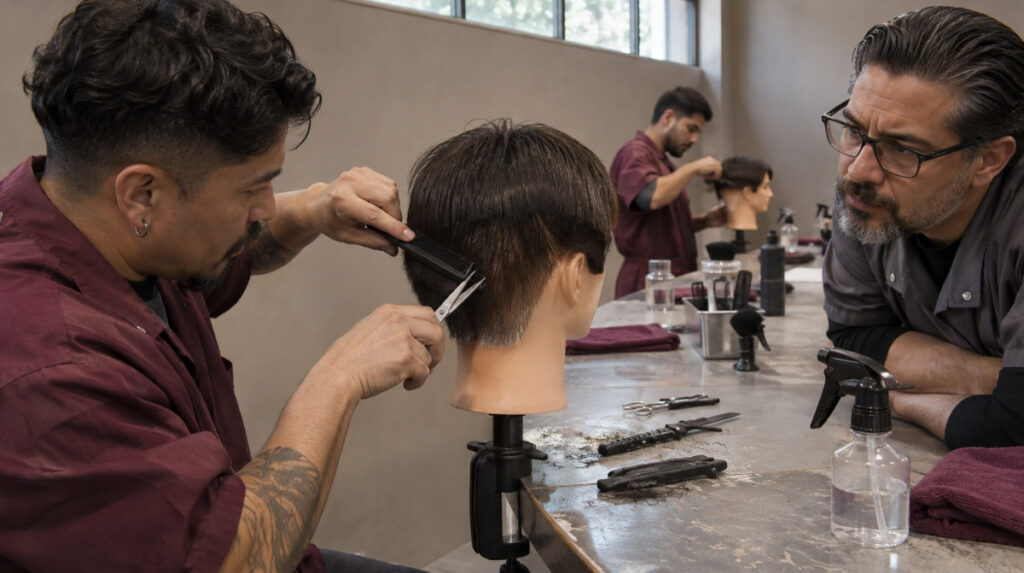
Early lessons give you time to work on one skill at a time. You can repeat a section on a mannequin to see what happens when you change the angle of your shears or adjust how you move your clippers. That repetition helps you recognize which choices are worth carrying over to the clinic floor.
Learning to Control Your Tools
Set the chair height so you can see the area you’re working on without constantly bending or reaching. Turn the chair or change your position as you work around the head.
- Clippers and trimmers. Compare the lengths different guards leave and practice using the lever to soften the transition between them.
- Shears. Use your thumb to move the cutting blade while keeping the rest of your hand steady.
- Razors. Practice blade position, light pressure, and controlled strokes with an instructor before using a razor on a client.
Looking at the Hair Before You Cut
Check the scalp, then look at the hair’s density, texture, and direction of growth. Pay particular attention to the crown and neckline. Lift a section and watch where it falls when you release it. That tells you more about how the cut will sit than looking at the hair while you’re holding it in place. It can also help you decide where to begin a fade, how much length to leave around a cowlick, or how a curl will sit after it dries.
Taking Your Practice onto the Clinic Floor
Aiken’s published Master Barber course outline places the first clinic-floor block after a 280-hour junior phase. That phase covers tools, infection control, hair and scalp science, shaving, and haircutting. During supervised client work, you add a new step to what you’ve practiced on mannequins. You talk through the service with a client, confirm what they want, and adjust the cut to the way their hair grows.
Building a Menu Around More Than Haircuts
Fades, tapers, scissor cuts, and line-ups give you several ways to serve clients from the start. Beard shaping, mustache trims, and hot-towel shaves add options for clients who want more from the same visit. Before adding a service, consider how often clients are likely to ask for it, how long it takes, and what supplies you’ll use.
Preparing for Beard Work and Hot-Towel Shaves
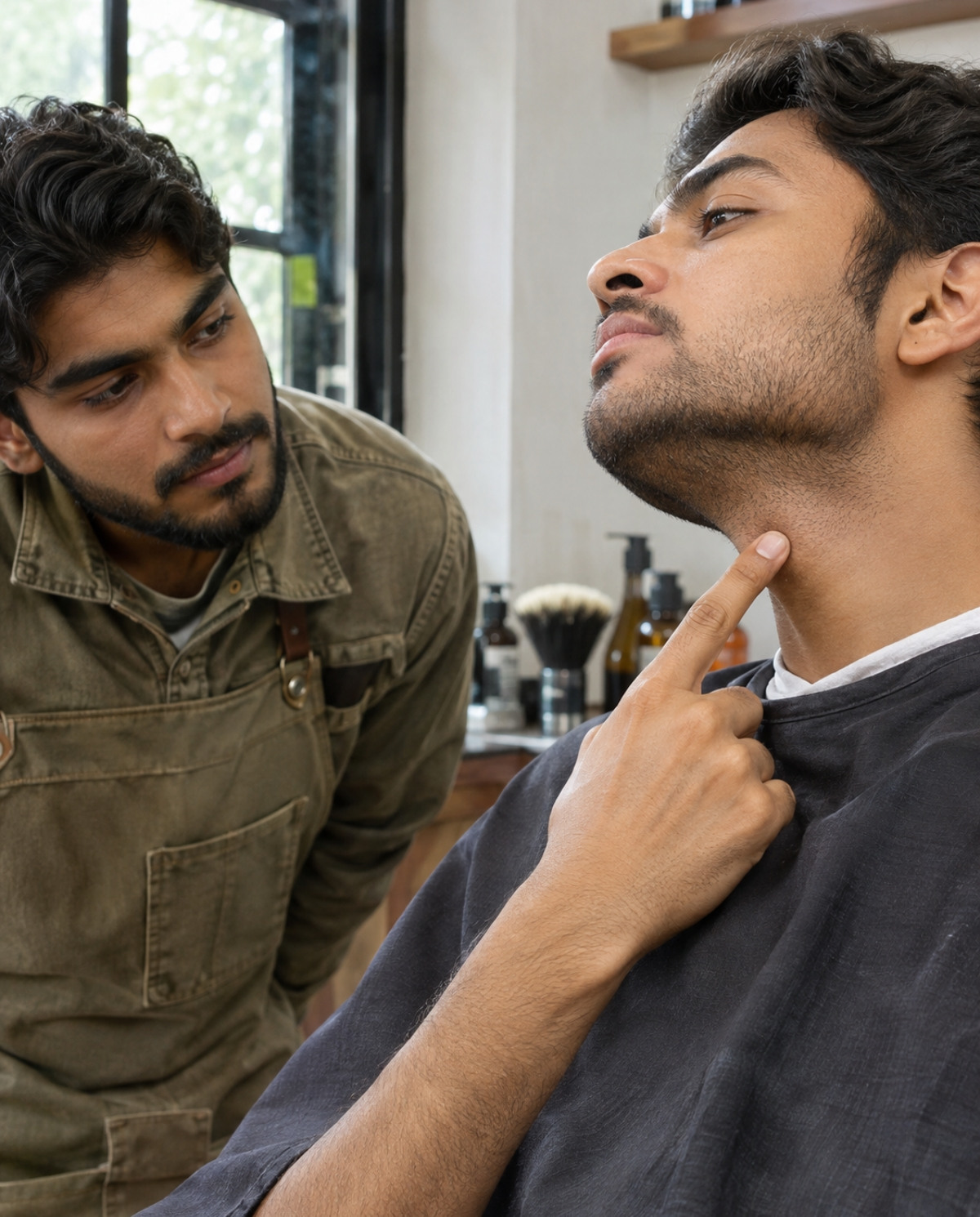
Ask whether the client gets ingrown hairs or irritation after shaving. Check how the beard grows under the jaw and across the neck, where the direction can change within a small area.
- Soften the facial hair with a warm, damp towel.
- Apply shaving cream or gel so the blade can glide more easily.
- Work with the grain in short, controlled strokes. Avoid going over the same area repeatedly, especially if the client gets razor bumps.
- Finish with a cool towel or rinse. Apply a gentle moisturizer if it suits the client’s skin.
For someone who regularly gets razor bumps, discuss whether leaving a little stubble would be more comfortable. Shaving with the grain, limiting passes, and avoiding an especially close shave can reduce the risk of ingrown hairs. See DermNet’s guidance on shaving and razor bumps.
Where Color and Chemical Services Fit In
Aiken’s Master Barber outline includes hair coloring, permanent waving, and relaxing. Course content and professional license scope are separate questions. In South Carolina, a Master Hair Care Specialist license is required to use chemicals to wave, relax, straighten, or bleach hair in a barbershop. If you’re interested in a particular service, ask how much supervised practice the program provides and check the state requirements for that service. See South Carolina Code § 40-7-260 and the state’s barber school regulations.
Comparing What Each Service Brings In
A bigger appointment total can still leave you with less per hour in the chair. For example, a $40 haircut that takes 30 minutes and uses $2 in supplies leaves $38 before overhead, or $76 per booked hour. A $55 haircut and beard service that takes 45 minutes and uses $4 in supplies leaves $51 before overhead, or $68 per booked hour. Use your own prices, service times, and supply costs to compare options, then account for fixed expenses such as booth rent. The SBA’s break-even calculator helps you work through those costs.
For an employee wage benchmark, the U.S. Bureau of Labor Statistics reported a national median of $18.37 per hour for barbers in May 2025. The wage estimate includes tips and excludes self-employed workers. In a separate employment estimate, BLS classified 80% of U.S. barber jobs in 2025 as self-employed. If you’re considering chair rental or shop ownership, our guide to what barbers earn after rent, fees, and taxes explains how business expenses affect what you keep.
Making Safety Part of Every Appointment
A safe service starts with a consultation and ends with a station that’s ready for the next client. Following the same sequence every time helps you keep track of what you’ve already checked, even when appointments run close together.
Checking the Scalp, Skin, and Service History
- Look at the area you’ll work on. Check for broken skin, irritation, or an unusual patch. If you see a scaly area with broken hairs and suspect a contagious condition, pause the service and suggest that the client have it checked. The CDC explains how ringworm spreads through contact and shared items.
- Ask what’s already been done to the hair. Before coloring, bleaching, or relaxing, ask about previous chemical treatments and look for damage or breakage.
- Review past product reactions. Ask about irritation as well as known allergies. For hair dye, follow the product instructions and the FDA guidance on patch testing and gloves.
Resetting Your Station Between Clients
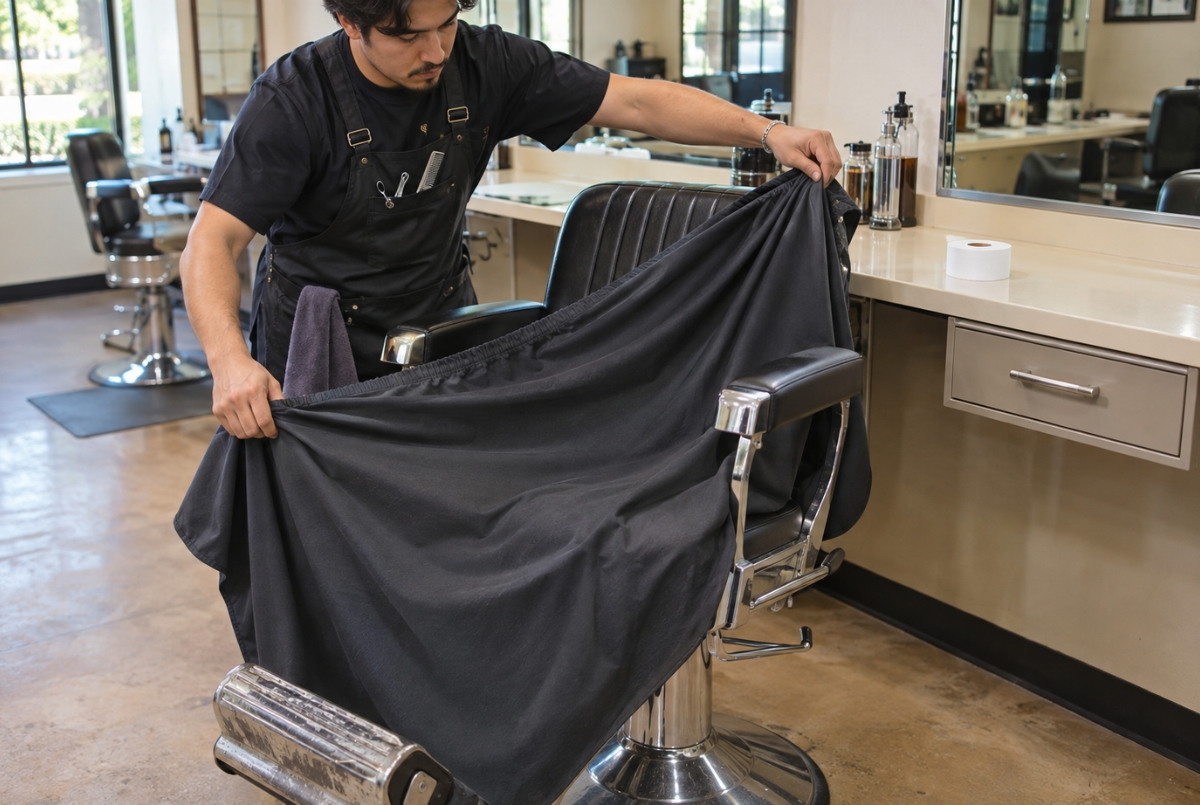
- Clean your hands and set out fresh draping. South Carolina requires barbers to clean their hands immediately before serving each customer. When using a cape, put a fresh paper neck strip or freshly laundered towel around the client’s neck to keep the cape from touching the skin.
- Remove debris before disinfecting. Follow South Carolina’s barber sanitation rules in § 17-50 for instruments that contact the client. Use immersion for implements designed for it. For electric clippers and trimmers, follow the manufacturer’s instructions for cleaning and disinfecting the blades and other client-contact parts. Keep the motor housing out of the solution. Follow the EPA-registered disinfectant’s label for the application method and contact time.
- Change disposable blades between clients. If you use a replaceable-blade straight razor, load a fresh blade for each client and put the used blade directly into a designated sharps container.
Protecting Your Hands, Wrists, and Shoulders
Raise or turn the chair when a section is hard to reach, and move around it as you cut. A lighter grip on your tools and fewer awkward reaches can make repeated motions easier to manage over a long day.
Frequent exposure to water, shampoo, and hair products can irritate your hands. A 2022 review of studies on hairdressers estimated that 38.2% had experienced hand eczema at some point in their lives. DermNet’s guidance for hairdressers and barbers discusses wearing suitable gloves for wet or chemical work, drying your hands thoroughly, and moisturizing regularly.
Keeping Track of What Brings Clients Back
A record card is useful when a returning client asks for the same cut. A note such as “low fade, #0.5 to #2, keep weight at the crown and leave the neckline natural” gives you something specific to confirm before starting.
What to Save After Each Visit
- Cut details. Save guard sizes, lever settings, the starting point of the blend, and any areas where you left more length.
- Color and safety details. For a color service, note the product, formula, date, and any patch-test result or reaction. Record relevant sensitivities so you can review them before a repeat service.
- Client preferences. Keep track of details such as the preferred neckline, how the client styles their hair at home, and which products they liked.
Measuring Return Visits with Your Booking History
If you want to see how often new clients come back, choose a window such as 60 days. Start with first-time clients who have already had the full 60 days to return. Divide the number who completed a second visit within that period by the total number of first-time clients in that group. Use the same method over time to see whether changes to your follow-up routine coincide with changes in repeat visits.
Getting Ready for South Carolina’s Barber Exams
For the approved-school route to exam eligibility, South Carolina’s Board of Barber Examiners lists 1,500 hours of training. The state’s barber school regulation specifies a nine-month course, and the board also lists a separate 1,920-hour supervised on-the-job training route. Applicants taking the Registered Barber or Master Hair Care Specialist exams must pass both the NIC theory and practical portions. The board’s South Carolina licensure guide and exam eligibility page explain the training and application steps.
Practicing for Two Different Tests
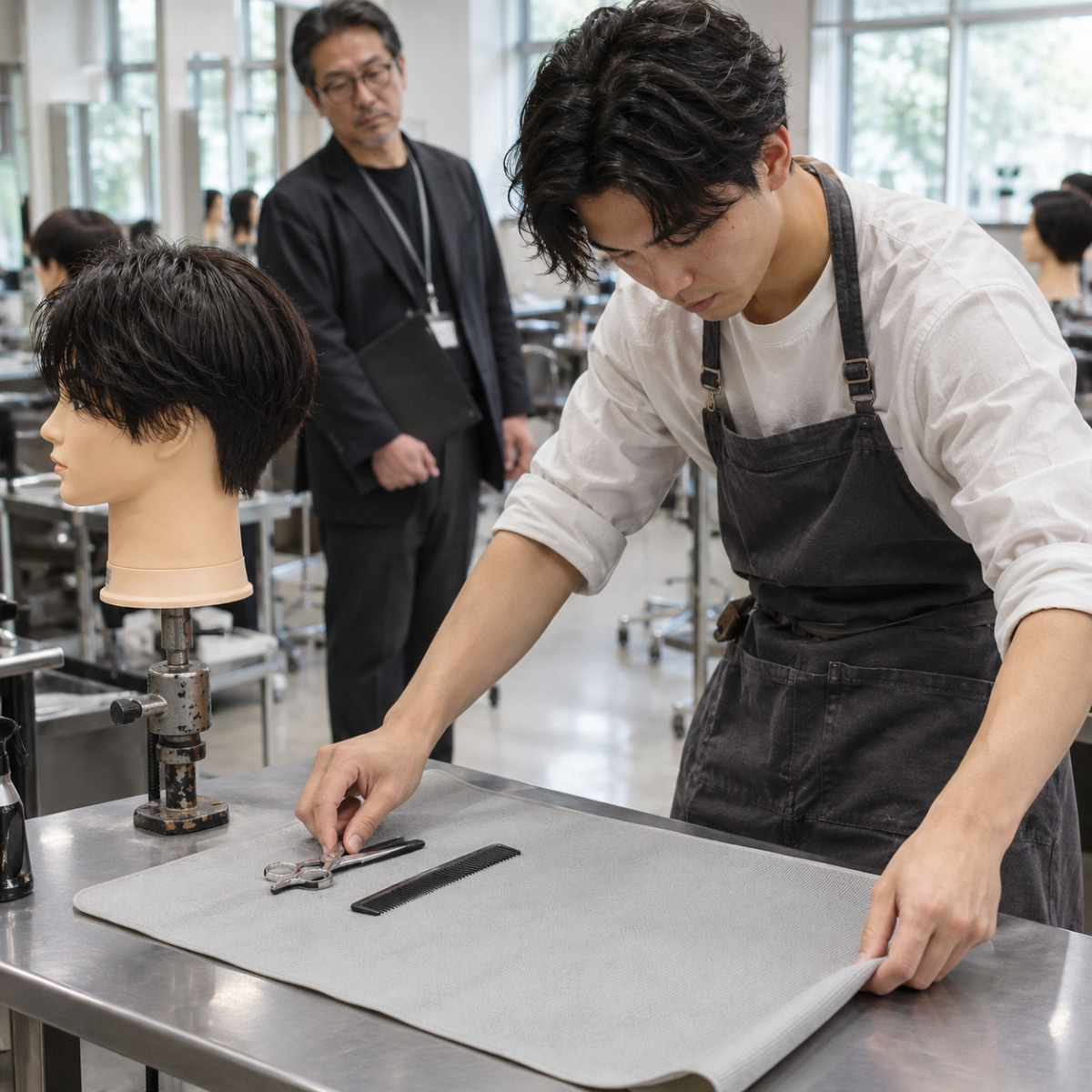
Use the South Carolina board’s PSI candidate bulletins to check the tasks, supplies, and timing for the credential you’re pursuing. For the practical exam, rehearse the full sequence under timed conditions, including setup, client protection, and cleanup. For theory, practice explaining why each safety step matters and review topics such as infection control, blood exposure, and hair and scalp anatomy. The NIC barber styling theory outline is a supplementary review resource.
The Texas Department of Licensing and Regulation recorded a 37.25% written pass rate and an 89.80% practical pass rate for completed Class A Barber exam attempts in fiscal year 2025. These figures describe Texas exam attempts. If you’re comparing schools in South Carolina, ask whether they can share recent graduate results broken down by exam section and, where available, by first-time attempts. This video on looking up exam pass rates is an additional resource.
Visiting the Barbering Program at Aiken
At Aiken School of Cosmetology and Barbering, the Master Barber program combines hands-on work in cutting, shaving, grooming, styling, and coloring with training in infection control, salon business, and client retention. On a campus tour, you can see where students practice, meet the team, and ask how the program prepares students for supervised client services.
Request a free 30-minute campus tour through our Enrollment page. Admissions can confirm your visit and answer questions about available schedules, upcoming starts, and what you’ll need to enroll.
Questions Prospective Barbering Students Ask
Can I apply to Aiken if I’ve never cut hair?
Yes. Aiken’s published admissions requirements list no prior haircutting experience. Applicants must be at least 18 and provide a photo ID, a Social Security card, and a high school diploma or GED. The school considers official transcripts case by case.
How long is the school route for barbering in South Carolina?
The state board lists 1,500 hours for the approved barber school route to exam eligibility, and the barber school regulations specify a nine-month course. Ask admissions how the available schedule and your attendance affect your projected finish date. See the state board’s licensure guide and barber school regulations.
How do barbering and cosmetology differ in South Carolina?
Both paths include haircutting and styling. Barber training emphasizes shaving and beard work, while cosmetology covers hair, skin, and nail services within its own scope. South Carolina has a separate Master Hair Care Specialist credential for specified chemical services in a barbershop. Compare the services you want to offer against South Carolina’s barbering law and its cosmetology law.
What should I budget for books and barbering tools?
Aiken’s 2025 student catalog lists $800 for barbering books and the kit combined. Ask admissions for the current itemized price and what the kit includes before buying clippers, shears, or other tools separately. Our guide to barber school costs explains the broader expenses to ask about.
What makes a client record worth keeping?
It gives you something specific to review before the next visit. Guard settings and neckline preferences help you reproduce a cut. Product formulas and past reactions help you decide what to repeat or adjust before another service.
Why set aside study time for written theory?
Theory covers the decisions behind the service, from preventing cross-contamination to recognizing when a scalp condition calls for pausing an appointment. Reviewing those topics separately gives you practice explaining the rules and reasoning you’ll use alongside your hands-on skills.