Cosmetology License Transfer Between States: Reciprocity, Endorsement, and Training Hours

What You Should Know Before Moving

  • Reciprocity and Endorsement: State boards do not apply these labels uniformly. Both generally provide a way to seek licensure in a new state using an existing out-of-state credential, but the required records, examinations, and professional experience vary.
  • Interstate Licensing Compact: Twelve states have enacted the Cosmetology Licensure Compact. However, the system is not yet available to licensees, and participating states are not currently issuing multistate licenses.
  • Differences in Training Hours: Moving to a state with a higher education requirement does not always require additional schooling. Depending on the board, an active license, previous examinations, or verified professional experience may help an applicant qualify.
  • Official Documentation: Many boards require license certification or other records to come directly from the issuing board, school, or examination provider. The exact submission method and processing timeline depend on the destination state.

Relocating to a new city can be exciting, especially when it gives you the opportunity to start fresh and develop a new clientele. That excitement can quickly fade, however, when unfamiliar state licensing requirements begin delaying your professional plans.

If you have spent hours moving between state board websites and trying to interpret complicated instructions, you are far from alone. Licensed professionals commonly worry that their previous education will not count, that paperwork will take months to process, or that they will be unable to earn income during the transition.

Fortunately, moving your credentials does not ordinarily mean rebuilding your career from the beginning. The process becomes easier to understand once you know how the destination board examines your current license, education, testing history, and professional experience.

How States Handle Out-of-State Beauty Licenses

Cosmetologist speaking on the phone while reviewing an out of state licensing application with her current license and sealed transcript nearby

When looking into a cosmetology license transfer from state to state, you will repeatedly encounter the terms reciprocity and endorsement. Although they are sometimes described as entirely different systems, licensing boards do not use them in a standardized way.

Reciprocity may describe a state recognizing a professional license issued by another jurisdiction. In some occupations, the term refers to a formal mutual agreement between two states. Within cosmetology licensing, however, a board may call its general out-of-state application process reciprocity even when there is no formal two-way agreement.

Endorsement usually allows a destination board to issue a new license based partly on a credential the applicant already holds. The review may include the applicant’s license status, original education, examination record, employment history, disciplinary history, or some combination of these factors.

These differences are visible in official board terminology. The Georgia State Board of Cosmetology and Barbers explains that Georgia does not reciprocate with other states but permits actively licensed professionals to apply by endorsement. In contrast, the Nevada State Board of Cosmetology refers to its process for applicants licensed elsewhere as reciprocity.

Because the terminology differs, pay closer attention to the destination board’s application checklist than to the title attached to the pathway.

Many boards now allow applicants to complete the initial application online. Supporting records may still have to be submitted separately, and official documents may need to come directly from a licensing board, beauty school, examination provider, or former employer.

What the Cosmetology Compact Is Expected to Change

The Cosmetology Licensure Compact is intended to provide an additional licensing option for eligible cosmetologists who want to practice in multiple participating states. A state enacting the compact, however, does not mean that cosmetologists can immediately begin using multistate licenses.

According to the Council of State Governments National Center for Interstate Compacts, twelve states have enacted the compact: Alabama, Arizona, Colorado, Delaware, Kansas, Kentucky, Maryland, Ohio, Pennsylvania, Tennessee, Virginia, and Washington.

The official Cosmetology Licensure Compact website indicates that implementation work is still underway. Participating states are not currently issuing multistate cosmetology licenses, so applicants must continue following the existing endorsement or reciprocity process of the state where they want to work.

After the system becomes available, an eligible cosmetologist will apply for a multistate license through the individual’s home state. Qualification will require residence in a compact member state, an active and unencumbered cosmetology license issued by that home state, and payment of the applicable fees.

An unencumbered license is active and is not currently suspended, revoked, restricted, or subject to conditions that limit the licensee’s ability to practice. A resolved complaint or previous disciplinary matter does not necessarily make a license currently encumbered.

The multistate license will authorize eligible professionals to practice in other participating states. Nevertheless, they will remain subject to the scope-of-practice, health, safety, and professional-conduct rules of the state where each service is performed.

What a Destination Board May Examine

Every licensing board develops its own standards for protecting clients and evaluating professionals licensed in other jurisdictions. When comparing cosmetology license transfer from state to state requirements, expect the board to review some combination of the following:

  • Current License Standing: Many simplified out-of-state pathways require an active license in good standing. If the credential has expired, an applicant may be directed to reinstatement, examination, or another licensing route.
  • License Certification: A board may request an official record containing the license type, current status, issue date, examination history, and any disciplinary information.
  • School and Testing Records: Depending on the jurisdiction, applicants may need to provide transcripts, curriculum details, training-hour records, or evidence of passing an accepted state or national examination.
  • Identification and Required Disclosures: Depending on state law, applicants may have to submit government-issued identification, an accepted Social Security or tax identification number, lawful-presence documentation, and information about criminal convictions or professional discipline.
  • Local Rules Examinations: A destination state may accept an applicant’s previous professional examination but still require a test covering local statutes, sanitation standards, or board regulations.
  • Application-Related Costs: In addition to the principal application fee, possible expenses include license certification, examinations, fingerprints, background checks, document translation, and temporary-permit fees.

Nevada, for example, currently charges a nonrefundable $325 reciprocity application fee. Applicants must also pass a 25-question Nevada State Law Test with a score of at least 75 percent. These requirements appear in the Nevada State Board of Cosmetology’s transfer instructions.

Before filing your application, review our detailed overview of cosmetology license requirements by state to compare education, testing, renewal, and portability rules. Confirm the final requirements with the destination board because licensing procedures, statutes, and fees may change.

Why a License Card May Not Be Enough

A wall license or screenshot rarely contains everything another board needs to evaluate an application. Official certification may show when the credential was issued, whether it remains active, how the applicant originally qualified, and whether the license has been disciplined or restricted.

The submission process depends on the jurisdictions involved. California generally requires certification to be sent directly by the state that issued the license. The California Board of Barbering and Cosmetology reciprocity FAQ specifically states that certifications submitted by applicants are not accepted.

Nevada follows a different system. Its board can confirm licenses online for applicants from many states, while applicants from certain other jurisdictions must arrange for an official certification. Therefore, you should not assume that every board requires the same board-to-board procedure.

Application timelines also vary. Missing records, inconsistent names, incomplete test information, licenses from multiple states, and disciplinary reviews can all cause delays. Request required records early, but use the destination board’s current processing information when planning your move.

How Boards Evaluate Unequal School Hours

Cosmetologist using a calculator and pencil to compare two anonymized transcripts and determine a gap in required training hours

Learning that your original state required fewer training hours than your destination state can be concerning. Nevertheless, the numerical difference does not automatically become an hour-for-hour shortage that must be completed at another school.

New York, for example, requires 1,000 hours under its cosmetology school pathway, while Georgia requires 1,500 hours for students completing a Georgia cosmetology program. This does not mean that every licensed New York cosmetologist moving to Georgia must complete another 500 hours.

The Georgia State Board of Cosmetology and Barbers allows an actively licensed out-of-state professional to apply by endorsement even when the applicant completed fewer school hours than Georgia requires.

This difference matters because initial-license rules explain how a new applicant qualifies through education within a state. Endorsement rules govern how the same board evaluates an applicant who already holds a professional license elsewhere. The two routes do not necessarily use identical standards.

Depending on the destination jurisdiction, a licensee with fewer original school hours may qualify through one or more of the following methods.

1. Acceptance of an Existing Professional License

Some boards focus more heavily on whether the applicant currently holds an active, unrestricted credential than on whether the original school-hour total precisely matches the state’s current education requirement.

California is one example. Its board may grant licensure through reciprocity without requiring the California written examination when an applicant possesses a current out-of-state license that is active, unrestricted, and in good standing. Details are available through the California Board’s reciprocity instructions.

That does not make the applicant’s educational history irrelevant. A destination board may investigate how the original credential was earned, particularly when that license was also obtained through reciprocity.

2. Professional Experience as an Alternative Qualification

Certain states allow documented work experience to compensate for a portion of an education difference or to help an applicant qualify through an examination-based route.

There is no nationwide formula for converting employment into education hours. Each board determines the amount of experience it will recognize, how that experience is calculated, and which records are acceptable.

California, for example, allows every three months of qualifying practice to count as the equivalent of 100 training hours for certain out-of-state examination applicants. This conversion appears in the California Board’s licensing requirements.

When experience credit is available, the board may request documents such as employer affidavits, tax records, payroll statements, business records, or license-history information. Gather and submit only the materials identified in the board’s current instructions.

3. Completing Only the Missing Education

When a destination board requires additional education, an applicant may not have to repeat the entire cosmetology curriculum. A state-approved school may be able to review the previous transcript and apply eligible transfer hours toward the remaining requirement.

Neither the applicant nor the receiving school should assume that every previously completed hour will be accepted. The destination board’s regulations and the school’s approved transfer policy determine how much credit may be awarded.

Before enrolling, ask the board which subjects or hours must be completed and whether the supplemental training must occur through a school approved by that state. Obtain written confirmation whenever possible before signing an enrollment agreement or paying tuition.

4. Local Law Tests and Other Examinations

In some cases, the decisive factor is not the difference in education hours. The destination board may instead need proof that an applicant passed an acceptable professional examination or understands the state’s laws and regulations.

Nevada requires reciprocity applicants to pass its state-law examination. Georgia may require further testing when an applicant cannot document passing an accepted written and practical examination. Other jurisdictions may require a theory test, practical examination, jurisprudence test, or a combination of components.

Because examination requirements are separate from training-hour totals, investigate them early in the relocation process.

Why Comparing Hour Totals Is Not Sufficient

Looking at two education totals can make the portability question seem straightforward. In practice, boards may also consider the applicant’s license status, years of practice, original examinations, license classification, and legally authorized services.

Licenses with similar names do not always provide identical scopes of practice. Nevada, for instance, warns that it does not recognize certain Florida Full Specialist credentials because their training and authorized services are not comparable to Nevada’s separate esthetics and nail-technology licenses.

Applicants should therefore compare license categories and permitted services instead of relying exclusively on training-hour totals.

Examples of Different State Approaches

The following states illustrate how substantially out-of-state licensing policies can differ:

  • Georgia: The Georgia State Board of Cosmetology and Barbers explains that the state does not reciprocate with other jurisdictions. An actively licensed professional in good standing may apply by endorsement, including an applicant who completed fewer hours than Georgia requires. Additional testing is generally unnecessary when the applicant can prove that an accepted national or state-approved written and practical examination was completed in English. Applicants who have been licensed in multiple states must provide verification from each state. Georgia licensees generally complete five continuing education hours for renewal, but exemptions apply to certain groups, including first-time renewals and qualifying professionals licensed for at least 25 years. Under the current Georgia rules, three of the five hours must address approved health and safety education. The other two hours may cover approved professional subjects.
  • Arkansas: Arkansas requires 1,500 hours for its initial cosmetology school route, but licensed professionals moving from another state must follow the separate reciprocity process provided by the Arkansas Department of Health Cosmetology Section. Applicants should use the current reciprocity form instead of treating the 1,500-hour school requirement as an automatic deficit. Current testing information includes a state-law component, as shown in the Arkansas cosmetology candidate bulletin. Because the required documentation and examinations may depend on how the original license was earned, applicants should request an individual review before completing additional education.

Situations That Can Lead to Retesting

The destination board determines whether an applicant must complete another theory, practical, or state-law examination. The answer does not depend solely on the company or organization that created the original test.

Many boards use one or more examinations developed by the National Interstate Council of State Boards of Cosmetology, commonly called NIC. Adoption is not consistent nationwide. A state may use the NIC theory examination, the NIC practical examination, both components, or an entirely different testing system.

Passing an NIC examination in one jurisdiction does not ensure that another board will accept the result. The destination state decides whether the previous testing meets its standards and whether an official score report is required.

The NIC testing maps illustrate the range of examination providers and systems used throughout the country. Before relocating, ask the destination board:

  • Which theory and practical examinations are accepted for out-of-state applicants?
  • Must the original examination have been administered in English?
  • Who must send the official examination record or score report?
  • Does the state require a separate law or jurisprudence test?
  • Will a practical examination be necessary if the original jurisdiction did not require one?

Georgia generally does not require additional testing when an endorsement applicant can document passing an accepted written and practical examination in English. Nevada requires its state-law examination and may request other testing depending on the applicant’s qualifications.

California demonstrates why broad descriptions of “NIC states” and “non-NIC states” can be misleading. The state stopped requiring practical examinations for its license categories on January 1, 2022, according to the California Board of Barbering and Cosmetology. At the same time, eligible out-of-state licensees may obtain a California credential through reciprocity without completing the California written examination.

If another test is required, our cosmetology state board exam checklist can help you review examination formats, preparation methods, and practical-kit considerations. You should also download the current candidate bulletin for the destination state because procedures and tested components may differ.

Preserving Evidence of Your Previous Tests

A wall license generally does not state which examination components the licensee completed. When a destination board requests proof of a theory, practical, national, or state-approved examination, the applicant may need an official score report or a license certification containing examination details.

This issue is particularly important for professionals who were licensed many years ago, completed testing through a provider that has since changed, or obtained their current credential through reciprocity.

Requesting these records before relocating can help determine whether retesting will be necessary while you still have access to the original school, licensing board, and testing organization.

A Practical Transfer Plan From Start to FinishHands placing license verification, examination records, an identification copy, and a work experience statement into a mailing envelope


A structured process can reduce administrative problems and help prevent an unexpected gap in employment:

  1. Match the License Categories: Confirm that the current credential corresponds to the license being requested in the destination state. Compare both the official title and legal scope of practice.
  2. Study the Board’s Instructions: Review the destination board’s current requirements for endorsement, reciprocity, or another out-of-state licensing pathway.
  3. Identify Your Previous Examinations: Determine which theory and practical tests you passed and whether the destination board accepts them.
  4. Arrange Official License Verification: Follow the board’s instructions for online verification or direct certification from every relevant licensing jurisdiction.
  5. Collect Other Records When Requested: Depending on the application, these may include transcripts, curriculum descriptions, score reports, name-change documents, employer affidavits, tax records, disciplinary orders, or certified translations.
  6. Request a Decision About Hour Differences: Do not enroll in additional education until the board confirms whether supplemental hours are required and how previous hours will be evaluated.
  7. File the Application and Pay the Fees: Include every required item and monitor the application portal or correspondence for deficiency notices.
  8. Prevent the Existing License From Expiring: When possible, maintain the current credential until the new license is granted. An active license is required for many simplified out-of-state pathways.
  9. Do Not Work Before Authorization: A submitted application, payment receipt, or examination approval may not provide legal authority to offer services. Wait until the new license or a valid temporary permit has been issued.

Special Portability Rules for Military Households

Active-duty service members and military spouses may qualify for expedited review, temporary recognition, reduced or waived fees, or other occupational-license protections. These options operate separately from ordinary endorsement and reciprocity procedures.

Eligibility may depend on military orders, residency, the status of the existing license, and whether the destination state treats the two professions as substantially similar. Military applicants should examine both the state board’s military guidance and applicable federal portability protections before using the standard transfer process.

Preparing Today for Greater Career Flexibility

Interstate licensing requirements demonstrate why foundational education and careful recordkeeping can affect a beauty professional long after graduation.

Completing a program approved by the proper state licensing authority helps establish that the applicant satisfied the education requirements for the original credential. Institutional accreditation may provide separate educational or financial-aid benefits, but it does not compel another state to accept every hour or issue a license without review.

A strong training program covers more than technical beauty services. Students should also develop knowledge of sanitation, chemical handling, workplace safety, professional conduct, client consultation, and the limits of their authorized scope of practice.

Organized professional records are just as valuable. Retain copies of transcripts, curriculum descriptions, examination results, original license information, legal name-change records, and continuing education certificates. Replacing these documents may become difficult many years after graduation.

Whether you are entering the profession or thinking about your next career move, our guide to starting a beauty career after cosmetology school can help you coordinate your education, licensing responsibilities, and early professional experience.

Common Questions About Moving a Beauty License

How quickly can an out-of-state license application be approved?

There is no standard nationwide timeline. Processing depends on the destination board, the completeness of the application, the method used to verify licenses, examination requirements, and whether additional review is necessary.

Missing documents, inconsistent names, licenses from multiple jurisdictions, and unresolved disciplinary records can extend the process. Review the board’s current processing notice before committing to an employment start date.

Am I allowed to work while the application is pending?

You may perform services only when the destination state has issued a license, temporary permit, or another valid authorization permitting you to work.

An application receipt or pending portal status generally does not provide legal permission to serve clients. Unauthorized practice may lead to fines, disciplinary consequences, or complications with the pending application.

What are my options when my original program had fewer hours?

Do not assume that additional schooling is immediately required. Contact the destination board and ask how it evaluates applicants who already hold active out-of-state licenses.

Possible pathways may include acceptance of the current credential, recognized examinations, documented professional experience, supplemental education, or another form of endorsement. Obtain an official determination before paying for more classes.

Will another state automatically accept my NIC scores?

No. A previous NIC result may satisfy another state’s standards, but acceptance is not automatic. The destination board decides which components it recognizes and whether it requires an official score report or additional testing.

Does every cosmetology license include the same skin and nail services?

No. Cosmetology credentials commonly include certain hair, skin-care, and nail services, but the precise legal scope differs by jurisdiction. A cosmetologist may have a narrower scope than a separately licensed esthetician or nail technician.

Deeper chemical peels, lasers, and certain cosmetic devices may require a separate professional license or medical supervision, or may be limited to medical professionals. A private course certificate alone does not necessarily provide legal authority to perform a regulated service. Follow the scope-of-practice laws of the state where the service takes place.

Can the compact eventually authorize work in all participating states?

Not yet. Twelve states have enacted the Cosmetology Licensure Compact, but multistate cosmetology licenses are not currently being issued. Until implementation is complete, professionals must use the existing licensing process of each destination state.

After multistate licensing becomes available, eligibility will include residence in a compact member state, an active and unencumbered license issued by that home state, and payment of the required fees.

Develop Skills That Travel With Your Career

At Aiken School of Cosmetology and Barbering, our focus extends beyond preparing students for an examination. We help students develop practical abilities, professional confidence, sound safety habits, and an understanding of the standards that shape the beauty industry.

With more than 20 years in business and over 80 years of combined team experience, our hands-on training supports students as they work toward becoming salon-ready professionals. No beauty school can promise that another state will accept a license automatically, but strong foundational preparation and well-maintained records can make future licensing applications easier to manage.

Visit our Enrollment page to learn about the admissions process and available programs. You can also complete the form below to speak with our admissions team, arrange a campus tour, and explore your next step toward a professional beauty career.

What Do You Learn in Cosmetology School Beyond Hair?

What You’ll Actually Learn

  • A Full Beauty Foundation: Cosmetology education covers much more than cutting hair. Students can train in hair design, coloring, chemical texture services, basic skin care, nail services, and other techniques included within their state’s cosmetology scope.
  • Safety Meets Science: Anatomy, chemistry, infection control, sanitation, chemical safety, and practical calculations all support safer salon services. Scientific concepts represent 35% of the NIC Cosmetology Theory Examination.
  • Preparing for the Workplace: Client communication, retailing, inventory awareness, salon operations, and other professional skills can help students prepare for employment, independent work, or future business ownership.
  • Licensing Depends on Location: Education and examination rules differ from state to state. Students should choose a program approved for cosmetology education by the appropriate state licensing authority and confirm the requirements where they plan to work.

Starting beauty school can feel exciting and intimidating at the same time. Maybe you imagine creating dramatic color transformations, developing a loyal clientele, or eventually opening a salon of your own, but you still have questions about what happens during the training itself. Some future students wonder whether school will feel repetitive or whether they will have enough opportunities to explore different areas of beauty. If you are still deciding whether this career fits you, learning what to know before choosing cosmetology school can help you think through the commitment before enrolling.

Cosmetology education combines creativity with technical knowledge, supervised practice, sanitation, science, and professional development. Understanding those different pieces can give you a much clearer picture of what your training may involve.

What Makes Up a Cosmetology Education?

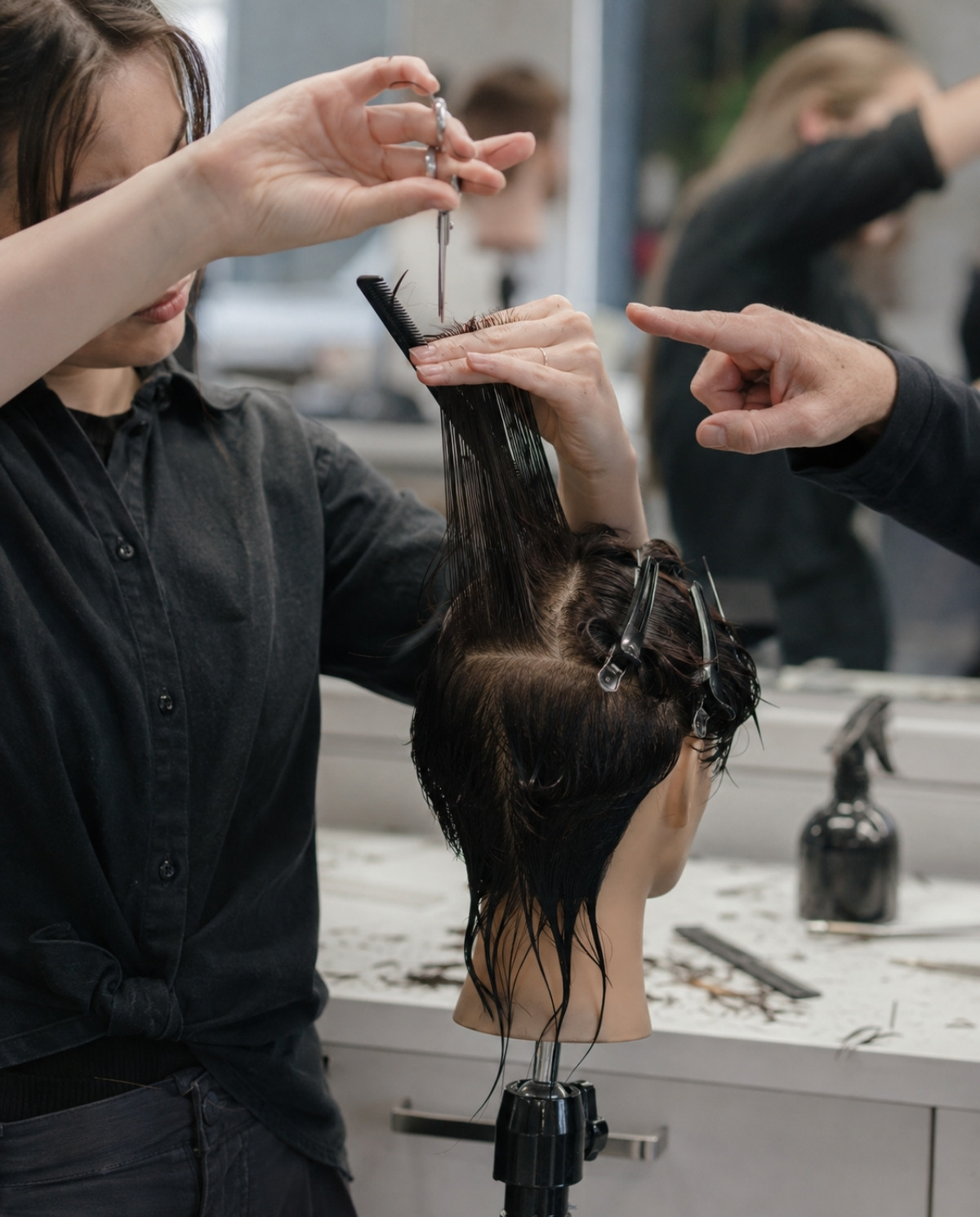
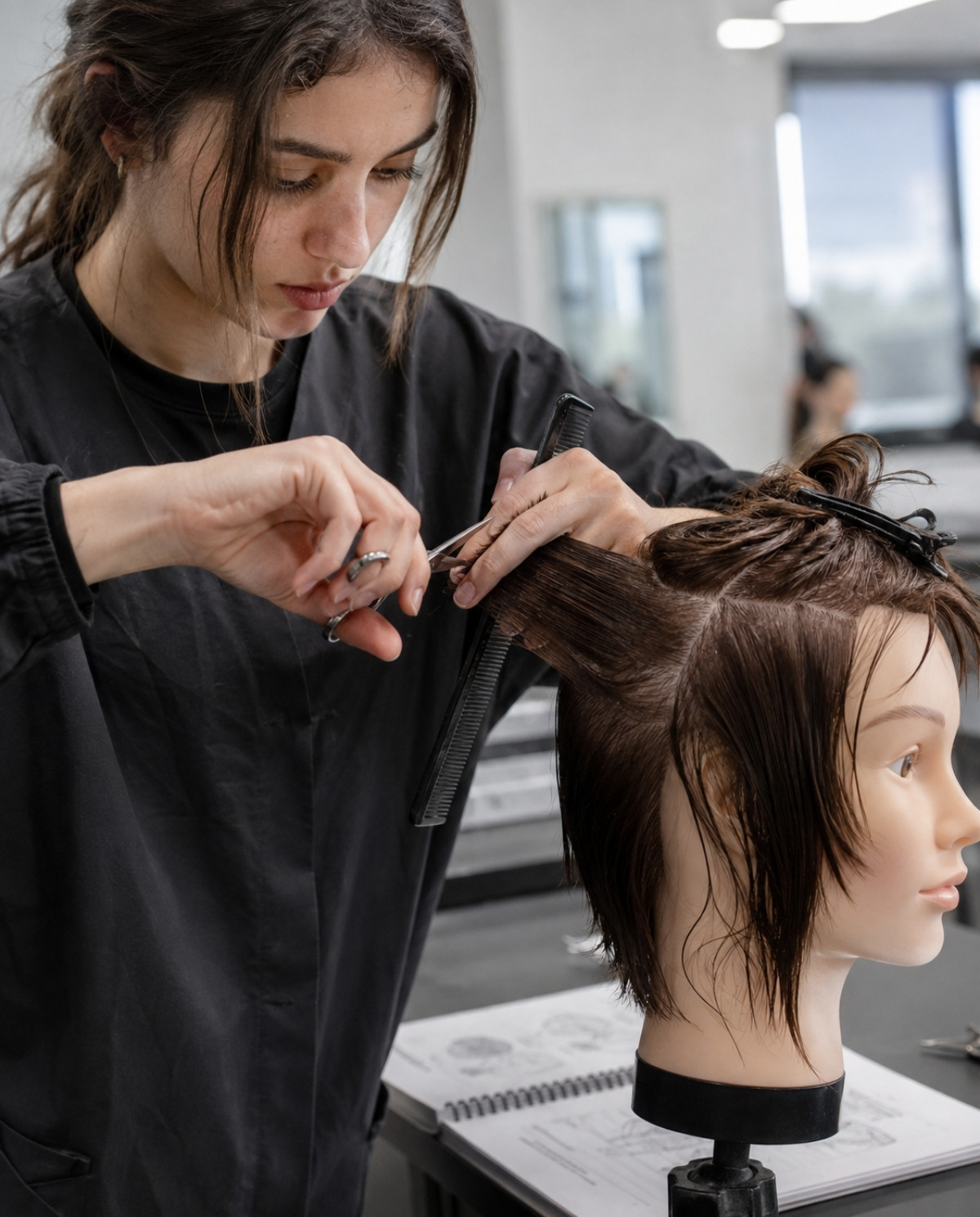
Cosmetology student cutting a damp section of mannequin hair while an instructor points to the correct elevation angle during precision haircutting practice.

Hair is an important part of cosmetology, but it is far from the entire curriculum. Strong training combines theory and hands-on practice so students learn the reasoning behind a technique as well as the steps required to perform it correctly and safely.

At Aiken School of Cosmetology and Barbering, the published Master Cosmetologist course outline totals 1,500 hours and includes subjects such as hair design, haircutting, anatomy and physiology, chemistry, infection-control principles, chemical texture services, hair coloring, facials, hair removal, makeup, nail care, salon business, and other professional training.

Haircutting and design require more than memorizing a few basic shapes. Students learn how elevation, over-direction, texture, density, growth patterns, proportion, and design choices influence the finished result. The NIC Cosmetology Theory Examination covers haircutting and shaping as well as wet styling, thermal styling, natural hair styling, design principles, and procedures for different hair types and textures.

Chemical services add another level of technical knowledge. Permanent waving and chemical relaxing change the hair through chemical processes, so students need to understand both the procedure and the precautions surrounding it. Hair-color education can include color theory, formulation, lightening, application techniques, and correcting unwanted tones. The NIC blueprint also addresses techniques such as foiling, balayage, color formulation, and corrective color within its chemical-services category.

Why Cosmetology Includes Math and Science

Beauty services may look highly artistic from the outside, but many depend on careful measurements and scientific principles. Product manufacturers may specify particular mixing ratios, processing instructions, or application procedures. Following those directions accurately can help produce more consistent results while reducing the risk of unnecessary hair damage, skin irritation, or chemical overexposure.

Haircutting also involves practical geometry. Elevation, angles, over-direction, balance, and proportion influence shape and movement. Once you begin thinking about the business side of the profession, calculations may also appear in service pricing, product costs, inventory, retail margins, and other financial decisions.

Science is equally important for protecting clients and professionals. According to the National Interstate Council of State Boards of Cosmetology, 35% of the NIC Cosmetology Theory Examination is devoted to scientific concepts. Topics within that domain include infection control and safety, anatomy and physiology, hair and scalp conditions, skin and nail conditions, chemistry, chemical interactions, chemical reactions, and the pH scale.

That information has direct salon applications. Students learn why implements and surfaces must be properly disinfected, how contamination can spread, what procedures to follow after blood exposure, and how certain conditions may affect whether a service can be performed safely. Chemical knowledge also helps students recognize why following product instructions and observing a client’s hair, skin, and scalp condition matter before and during a service.

School cannot recreate every situation you will ever encounter professionally, but it can teach you how to assess risks, follow established procedures, and recognize when a service should be modified, postponed, or refused.

Beauty Training That Goes Past Hairstyling

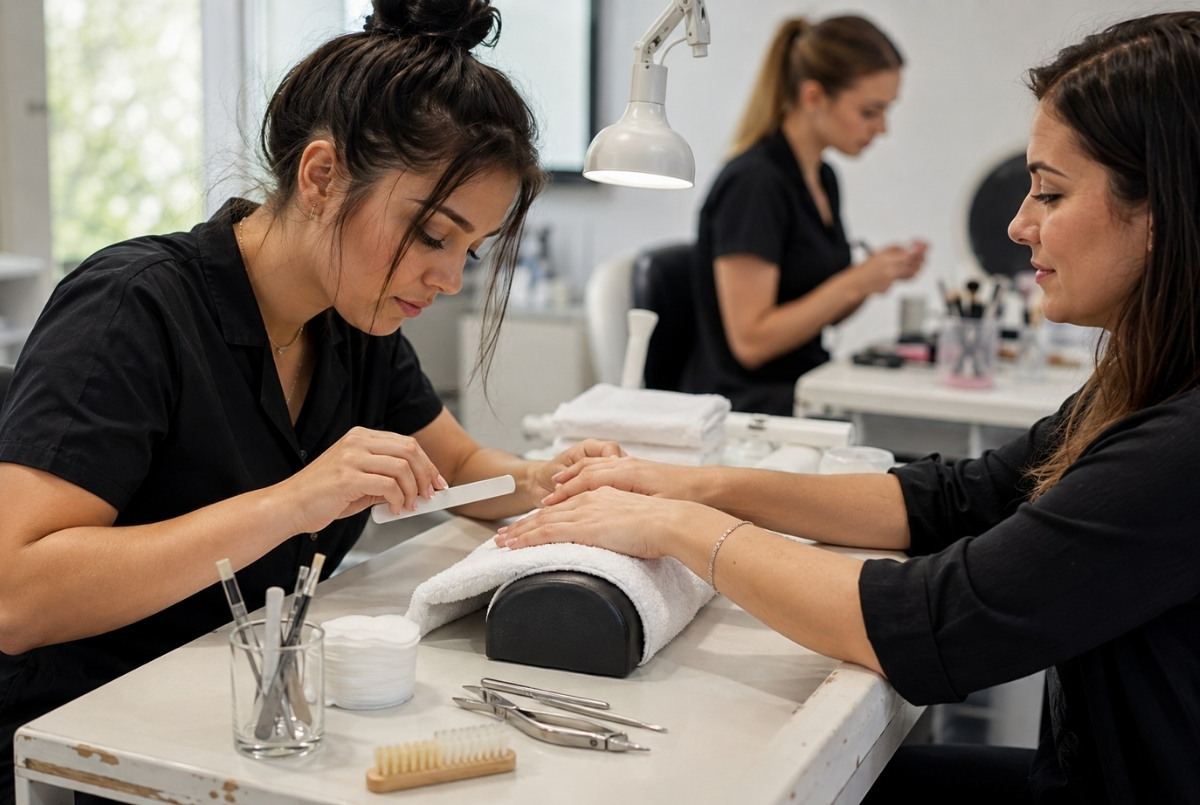
Cosmetology student filing an adult client’s natural nails during manicure training while another student prepares a makeup practice station in the background.

Not every future cosmetologist wants to focus exclusively on cutting and styling. Some students are especially interested in makeup, skin services, nails, or hair removal, which naturally leads to questions about whether those subjects appear in a general cosmetology program.

They often do, although the specific curriculum and services permitted under a cosmetology license vary by state. Aiken School of Cosmetology and Barbering includes training in areas such as facials, hair removal, makeup application, manicures, pedicures, and other nail services alongside its hair-focused instruction.

Exposure to several categories of beauty services gives students an opportunity to discover what interests them most. Depending on the program, hands-on education may include skin analysis, basic facial procedures, makeup application, hair removal, manicuring, pedicuring, and nail enhancement techniques.

Hair-removal instruction can also involve learning appropriate products, procedures, safety precautions, and treatment-area considerations. The exact services a graduate may legally provide, however, are determined by the scope of practice established by the licensing laws in the state where that person works.

A cosmetology license should therefore never be viewed as automatic authorization to perform every beauty or aesthetic procedure. Graduates need to understand where their legal scope begins and ends.

Where Skin Services Fit In

Skin-related training is not simply about applying cosmetics. Students also need basic knowledge of skin structure, common conditions, infection control, contraindications, product safety, and client evaluation.

The NIC Cosmetology Theory Examination assigns 10% of its content to skin care and services. This portion includes skin evaluation, contraindications, infection-control procedures, basic facial services, hair removal, makeup application, and the proper use of skin-care equipment.

Aiken’s cosmetology curriculum also includes facial and skin-related education rather than limiting the program to hair. Students may receive instruction in cleansing, skin analysis, facial procedures, makeup application, and hair removal as part of their broader cosmetology preparation.

At the same time, basic cosmetology training should not be confused with advanced esthetics or medical aesthetics. Certain procedures may require another license, specialized education, medical oversight, or additional credentials. The requirements depend on the service and the laws of the state where you practice.

Professional Skills Behind a Beauty Career

Being technically talented does not automatically make someone successful in the beauty industry. Professionals also have to manage appointments, communicate with clients, recommend products responsibly, maintain records, understand supplies, and build a reputation that encourages people to return.

Aiken’s published curriculum includes salon business and professional-development subjects alongside technical training. These skills become increasingly useful when graduates start building a clientele, working independently, selling retail products, monitoring inventory, or thinking about eventually operating a business.

The U.S. Bureau of Labor Statistics reports that about 84,200 openings for barbers, hairstylists, and cosmetologists are projected each year, on average, from 2024 through 2034. BLS also reports that 48% of hairdressers, hairstylists, and cosmetologists were self-employed in 2024.

For salon and shop owners, professional responsibilities can extend well beyond providing beauty services. BLS notes that owners may keep business and inventory records, order supplies, arrange advertising, and hire or supervise employees.

That is why learning how a salon operates can matter just as much as improving technical ability. Over time, these combined skills can lead toward many different career paths available with cosmetology training, depending on your experience, interests, licensing rules, and long-term goals.

Adapting Your Skills to Today’s Salon Environment

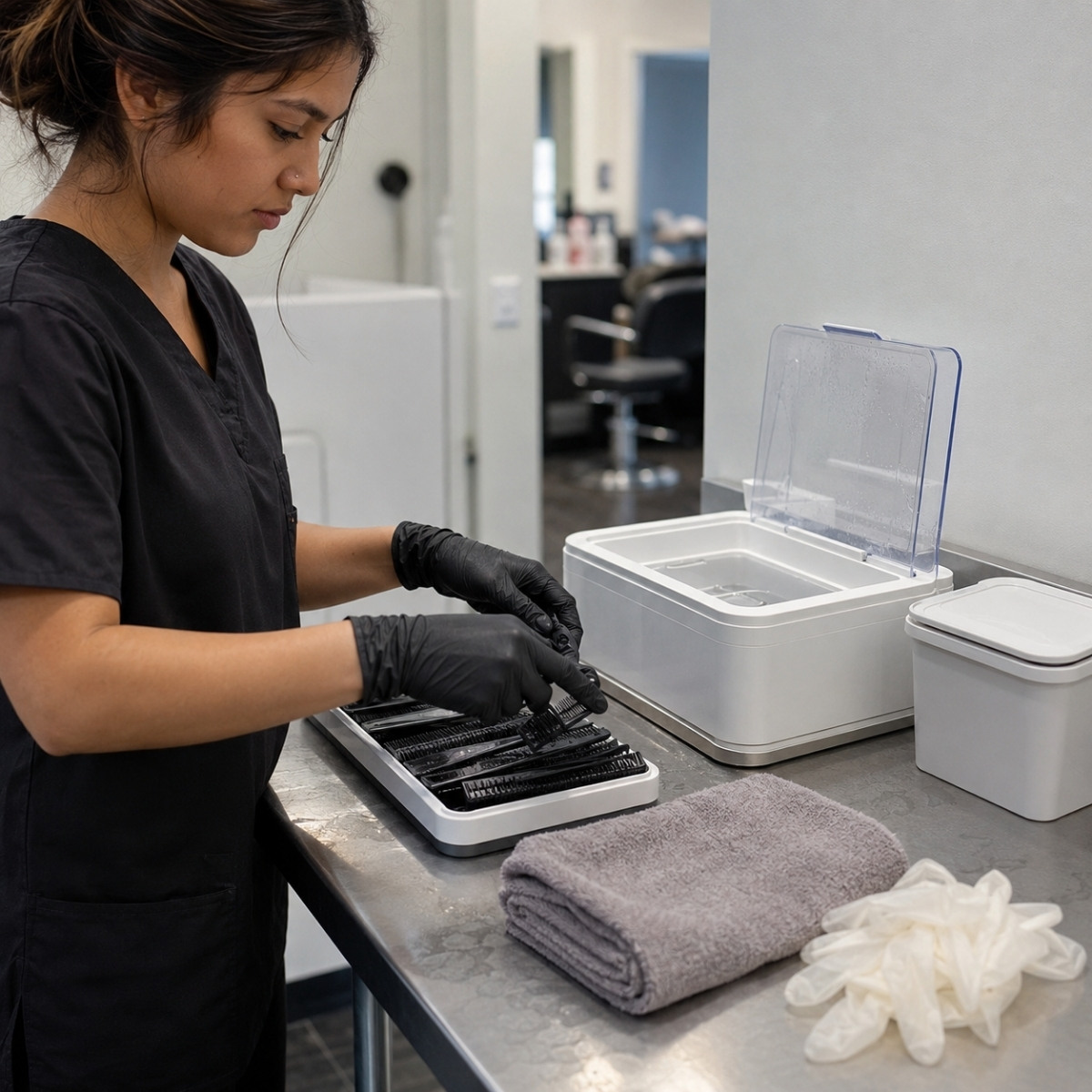
Cosmetology student wearing gloves while organizing and disinfecting reusable combs and salon tools at a dedicated sanitation station.

Trends in beauty change quickly, but a good education focuses on principles that remain useful even when styles evolve. Instead of teaching students to reproduce only one popular haircut or color trend, cosmetology training develops the technical foundation needed to adjust services for different clients.

Texture is one example. The NIC theory blueprint includes hair-care and design procedures for different hair types and textures, along with natural hair styling such as braiding. Students also study hair and scalp evaluation so they can recognize conditions that may influence a service.

Chemical procedures require similar judgment. Permanent waves, relaxers, lighteners, and hair-color products can affect the hair’s structure or condition. Students therefore need to understand product instructions, chemical interactions, processing considerations, and the precautions associated with these services.

Product regulation also affects the broader beauty industry. The Modernization of Cosmetics Regulation Act of 2022, or MoCRA, expanded the FDA’s authority over cosmetics. Its provisions include requirements involving serious adverse-event reporting, facility registration, cosmetic product listing, and safety substantiation.

Many MoCRA obligations apply primarily to cosmetic manufacturers, processors, and responsible persons rather than individual cosmetologists. Even so, professionals who regularly handle cosmetic products benefit from understanding why ingredient awareness, manufacturer directions, and product safety matter.

Workplace regulation is another consideration. The Occupational Safety and Health Administration explains that some hair-smoothing products may contain formaldehyde or release it during use. When salons or beauty schools use products containing or capable of releasing formaldehyde, OSHA requirements involving formaldehyde exposure and hazard communication may apply.

These examples show why chemistry, sanitation, and safety education have value beyond a licensing examination.

Understanding Training Hours and Licensing Rules

Cosmetology licensing is controlled at the state level, so students should pay close attention to the requirements where they intend to work. A school that prepares students for licensure should meet the standards established by the appropriate state authority rather than relying on accreditation alone as proof that a program satisfies licensing requirements.

For students attending Aiken School of Cosmetology and Barbering, South Carolina is especially relevant. The South Carolina Board of Cosmetology requires applicants for cosmetologist licensure to complete 1,500 hours at a Board-approved cosmetology school and pass the required NIC written and practical examinations. Aiken’s published Master Cosmetologist curriculum likewise totals 1,500 hours.

Requirements are not identical across the country. Georgia’s State Board of Cosmetology and Barbers rules, for example, also require 1,500 hours for a complete cosmetology school course. Georgia organizes the curriculum into an initial 250 hours of Level 1 training followed by additional service-application education, and students must complete those first 250 hours before providing clinical services to clients.

Arkansas also uses a 1,500-hour cosmetology education requirement under the Arkansas Department of Health cosmetology rules. Its 2026 Candidate Information Bulletin identifies the NIC Cosmetology Theory Examination as the written examination used for cosmetologist candidates.

These state-to-state differences are why students should confirm current requirements directly with the licensing board where they plan to practice rather than assuming that another state’s education timeline, examination process, or curriculum structure will apply to them.

After completing your education and moving into the licensing process, knowing how to move from cosmetology school into your first beauty career can make the transition from student training to professional work easier to understand.

Common Questions Before Starting School

  • How long does cosmetology training usually take? There is no universal national timeline because each state establishes its own educational requirements. In South Carolina, cosmetologist applicants must complete 1,500 hours at a Board-approved cosmetology school. The amount of calendar time needed to finish those hours depends on the school’s schedule, your attendance, holidays, and whether your training schedule is full time or part time.
  • Should I purchase professional tools before classes begin? Check with your school first. Kit policies are different from one institution to another, and some required equipment may already be included or offered through the school. Confirm what is provided before spending money on shears, mannequins, styling tools, or other supplies.
  • Is cosmetology school difficult if I have no previous experience? Beginners should expect a learning curve because cosmetology combines physical techniques, terminology, science, sanitation rules, and repeated hands-on practice. These skills are taught progressively, allowing students to develop technique and confidence through instruction and supervised practice.
  • Do I have to offer every service after becoming licensed? No. Cosmetology education gives you a broad foundation, but many professionals later focus on a particular area such as color, textured hair, bridal services, styling, makeup, or another specialty permitted by their license. More advanced services can have separate legal requirements. For example, Georgia has distinct laser-practitioner licensing requirements for master cosmetologists who want to qualify as Assistant Laser Practitioners, including approved laser or IPL education.

Turn Your Interest in Beauty Into Practical Skills

Choosing cosmetology school is not simply about learning how to recreate fashionable looks. It is an opportunity to develop technical ability, safer working habits, stronger client communication, and a better understanding of how a professional beauty environment operates.

At Aiken School of Cosmetology and Barbering, the Master Cosmetologist program combines a 1,500-hour curriculum with hands-on education across hair, skin, nail, safety, and salon-business subjects. The goal is to help students develop the foundation needed to pursue licensure and prepare for professional opportunities in the beauty industry.

If you are considering the next step, visit the Aiken School of Cosmetology and Barbering Enrollment page for current enrollment information. You can also use the school’s contact form to ask questions or arrange a campus tour.

Should I Go Into Cosmetology? What to Know Before Beauty School

What to Know Before Choosing Cosmetology

  • Ongoing Career Demand: The U.S. Bureau of Labor Statistics projects about 84,200 openings for barbers, hairstylists, and cosmetologists each year from 2024 through 2034. Employment specifically for hairdressers, hairstylists, and cosmetologists is projected to increase 6% during that period.
  • Room to Build Higher-Value Services: Hair coloring represented approximately 28% of worldwide hair salon service revenue in 2025, while advanced coloring techniques have been associated with higher average service tickets.
  • Multiple Ways to Work: Licensed professionals may pursue employee salon roles, booth or suite rental, business ownership, mobile work where permitted, and beauty-brand education. About 48% of U.S. hairdressers, hairstylists, and cosmetologists were self-employed in 2024.
  • Licensing Rules Are State-Specific: Training requirements differ across the country. Georgia, for example, requires a 1,500-hour Master Cosmetology school curriculum, so students should confirm the rules for the state where they plan to become licensed.
  • Safety Is Part of the Profession: Approved cosmetology education includes topics such as sanitation, infection prevention, chemistry, safe product use, and professional service procedures.

Choosing a new career can be exciting, but it also comes with practical questions. You may like the creativity and independence associated with cosmetology while still wondering whether the training commitment, earning potential, and daily working conditions fit the future you want.

The best way to make that decision is to look beyond promotional claims and understand what the profession actually requires. The sections below examine training, employment prospects, income structures, workplace realities, and career options so you can judge whether cosmetology makes sense for your own goals.

What Cosmetology Training Looks Like in Practice

Cosmetology school is not simply a place to practice hairstyles. Approved programs combine technical theory with structured practical instruction so students can learn how to perform services consistently, work safely, communicate with clients, and operate within professional standards.

If you are unsure whether you need previous salon experience before enrolling, this guide to who can get into beauty school explains why students can begin training without already being experienced beauty professionals.

Skills and Subjects Covered During Training

Required coursework depends on the licensing jurisdiction, but cosmetology programs generally cover several connected areas of theory and practical work. Georgia’s official Master Cosmetology curriculum, for example, includes chemistry, cleansing and disinfection, infection control, hair-color theory, permanent waving, chemical relaxing, haircutting, hair and scalp analysis, physiology, skin care, nail care, and practical services.

Typical areas of study include:

  • Hair Science and Chemistry: Studying hair structure, product chemistry, color processes, permanent waving, chemical relaxing, and how professional services interact with the hair.
  • Relevant Anatomy and Physiology: Learning basic concepts involving the scalp, hair, skin, and body systems that relate to cosmetology work.
  • Disinfection and Infection Control: Following sanitation procedures, blood-spill protocols, safe tool practices, and appropriate product-handling requirements.
  • Supervised Practical Services: Developing technical skills through structured clinical practice with clients after completing the required foundational training.

Georgia divides Master Cosmetology instruction into training levels. Students complete the first 250 hours of Level 1 instruction and must achieve the required passing standard before progressing to Level 2 services involving live subjects. This initial phase includes theory, sanitation, chemistry, mannequin practice, hair-color theory, chemical-service concepts, and foundational hair and scalp study.

How Much Time You May Need to Commit

Training is a substantial time commitment, and there is no universal number of hours that applies nationwide. Under Georgia’s cosmetology rules, the Master Cosmetology school curriculum is a minimum nine-month course totaling 1,500 hours.

Arkansas demonstrates why students should always check current state requirements rather than relying on a single national estimate. Current Arkansas cosmetology law includes at least 1,200 hours of training among the prerequisites for admission to the cosmetologist examination, while another provision requires cosmetology schools to maintain a 1,500-hour school term.

Calendar time depends on more than the state’s hour requirement. Weekly class schedules, attendance, school policies, and reduced-hour enrollment can all affect how long it takes a student to finish.

Professional training also involves learning how to work differently from an at-home hobbyist. Students must develop consistency, time management, client consultation skills, sanitation discipline, product knowledge, and the ability to perform services according to professional standards.

What the Employment Outlook Says About Cosmetology

Career stability is often one of the biggest concerns when someone considers beauty school. Understanding current labor projections can help separate realistic employment prospects from assumptions about the industry.

Cosmetology student using professional shears and a comb to practice controlled haircutting on a sectioned mannequin head.

Demand for Licensed Beauty Professionals

Many core cosmetology services must still be performed directly on a client. Haircutting, coloring, chemical texturizing, styling, and similar services involve hands-on professional work rather than tasks that can be delivered entirely through digital systems.

According to the U.S. Bureau of Labor Statistics, employment of hairdressers, hairstylists, and cosmetologists is projected to increase 6% from 2024 to 2034. That compares with a projected 3% growth rate for all occupations.

For the broader occupational category that includes barbers, hairstylists, and cosmetologists, BLS projects approximately 84,200 openings each year on average during the decade.

Many of those openings are expected to result from workers transferring to other occupations or leaving the labor force rather than from employment growth alone.

BLS also expects continuing demand for basic hair care as well as coloring, straightening, and other advanced hair treatments. These projections do not guarantee immediate success for every graduate, but they indicate that the occupation is expected to continue producing employment opportunities.

For someone entering the field, finding an initial salon opportunity is only the beginning. Long-term progress also depends on improving technical ability, delivering reliable client service, encouraging repeat appointments, and gradually developing a consistent clientele.

Understanding Cosmetology Pay and Income Models

Cosmetology earnings can be difficult to summarize with one salary figure because professionals work under very different business arrangements. Employees, commissioned stylists, booth renters, independent suite operators, and salon owners do not all earn money in the same way.

Why Published Wage Data Tells Only Part of the Story

The U.S. Bureau of Labor Statistics reports that employed hairdressers, hairstylists, and cosmetologists had a median hourly wage of $16.95 in May 2024. The lowest 10% earned less than $11.82 per hour, while the highest 10% earned more than $33.76 per hour. BLS states that reported tips are included in those wage figures.

There is an important limitation to those numbers. Approximately 48% of hairdressers, hairstylists, and cosmetologists were self-employed in 2024, and BLS occupational wage data does not include self-employed workers.

Depending on the business arrangement, a cosmetology professional may earn money through:

  1. Hourly Pay or Service Commission: An employer may pay a fixed hourly wage, a percentage of services performed, or another compensation arrangement.
  2. Client Tips: Some clients provide gratuities in addition to the listed service price.
  3. Retail Incentives: Some salons offer commissions or bonuses tied to sales of professional home-care products.

Independent professionals have a different financial structure because client payments become business revenue before expenses are deducted. Booth or suite rent, supplies, insurance, taxes, card-processing fees, advertising, scheduling software, and other operating costs can reduce the amount ultimately retained as personal income.

Newer professionals also tend to spend considerable time improving speed, consultation ability, technical consistency, and client retention. As experience and repeat business develop, income opportunities may improve, although earnings vary substantially according to pricing, location, work arrangement, demand, hours worked, and business expenses.

Where Specialized Services May Create More Revenue Opportunity

Developing advanced skills can give stylists access to appointments with higher service prices, although higher prices do not automatically mean higher profits. Product expenses, appointment length, overhead, and local pricing all affect actual profitability.

Research from Deep Market Insights estimated the global hair salon service market at approximately $215 billion in 2025. Hair coloring represented about 28% of service revenue in that report.

The same research associates techniques such as balayage, ombré, highlights, and creative color transformations with higher average service tickets. Hair and scalp treatments are analyzed separately rather than being included within the 28% coloring share.

Learning advanced color work, corrective techniques, extensions, texture services, or other specialties can help a professional create a broader service menu. School provides an initial technical foundation, but career development usually continues after graduation. BLS notes that cosmetologists may take advanced courses throughout their careers to stay current with new techniques and trends.

Career Options Beyond One Traditional Salon Job

One attraction of cosmetology is that a license can lead to several different working arrangements rather than one fixed employment model.

Ways Licensed Professionals Can Structure Their Careers

Depending on state regulations, experience, business skills, and professional goals, career options may include:

  • Employee or Commission Salons: Working within an established salon that may provide facilities, products, booking systems, marketing support, or existing customer traffic.
  • Booth and Suite Rental: Renting professional space while taking greater responsibility for pricing, clients, scheduling, supplies, taxes, and operating expenses.
  • On-Location Beauty Services: Providing styling for weddings, events, photography sessions, or other assignments when allowed under applicable licensing rules.
  • Professional Brand Roles: Using product knowledge and technical experience in education, demonstrations, training, sales, or other positions with beauty companies.

Independent work is a significant part of this profession. According to BLS, 48% of hairdressers, hairstylists, and cosmetologists were self-employed in 2024. BLS also notes that some professionals lease booth space, manage salons, or eventually open their own businesses.

Greater independence can provide more control over scheduling and business decisions, but it can also create additional responsibilities involving expenses, records, marketing, inventory, taxes, and customer management.

You can explore additional possibilities in this overview of career options with a cosmetology license, including paths that extend beyond a conventional salon-chair role.

Creative Work and the Growing Interest in Scalp Care

Cosmetology is also appealing to people who enjoy solving visual and practical problems for individual clients. Every appointment may involve a different hair type, previous chemical history, personal style, maintenance routine, or event goal.

Hair and scalp care has also become a more visible area of consumer interest. Some professionals pursue additional education in cosmetic scalp care or related specialties. Georgia’s cosmetology curriculum already includes hair and scalp analysis, scalp conditions, and hair and scalp treatments.

Consumer-market figures point to substantial spending in this broader category. Grand View Research valued the global hair and scalp care product market at $88.2 billion in 2025 and projects growth from $93.6 billion in 2026 to approximately $150.5 billion by 2033.

These figures describe consumer products rather than salon-service revenue, so they should not be treated as evidence of how much a cosmetologist can earn. They do, however, demonstrate substantial market activity around concerns such as dryness, dandruff, hair fall, scalp sensitivity, and thinning.

Professional boundaries remain important. Cosmetologists can provide cosmetic hair and scalp services within the scope allowed by their state license, but they are not medical practitioners. Conditions that appear to require diagnosis or medical treatment should be referred to an appropriate healthcare professional.

Physical and Chemical Risks to Consider Before Enrolling

Cosmetology can be rewarding, but the job also places real demands on the body and requires careful handling of products and equipment.

A cosmetology student concentrates on developing haircutting control with professional shears, a comb, and a mannequin used for technical practice. Slightly imperfect sections and visible training materials communicate the repetition and skill development involved in learning professional haircutting before techniques become consistent enough for salon work.

Standing, Repetition, and Ergonomic Strain

The profession involves substantial time on your feet. The U.S. Bureau of Labor Statistics specifically identifies physical stamina as important because barbers, hairstylists, and cosmetologists spend much of their work shifts standing.

Hair professionals also perform repeated movements involving the fingers, hands, wrists, shoulders, neck, and back. Research published in the Journal of Occupational Health identified factors including prolonged standing, repetitive movement, awkward working positions, and long working periods in relation to musculoskeletal problems among hairdressers.

Good ergonomic practices cannot eliminate every occupational risk, but adjusting body position, chair height, working angles, and equipment setup can help reduce unnecessary strain. Building these habits early may be preferable to waiting until discomfort becomes a recurring problem.

Working Safely Around Salon Chemicals

Cosmetology professionals may routinely work with permanent hair color, lighteners, relaxers, waving products, disinfectants, and other chemical formulations. Proper training therefore includes reading manufacturer instructions, understanding product chemistry, preventing cross-contamination, using appropriate protective measures, and maintaining suitable workplace conditions.

Federal cosmetic regulation has also expanded in recent years. The Modernization of Cosmetics Regulation Act of 2022 (MoCRA) significantly increased FDA oversight of cosmetic products. Its provisions include requirements involving serious adverse-event reporting, facility registration, product listing, safety substantiation records, FDA access to certain records, and mandatory recall authority under specified circumstances.

MoCRA should not be interpreted as meaning that every salon chemical associated with potential hazards has been prohibited. Safe professional use still depends on understanding the products being handled and following applicable workplace requirements.

For example, the FDA warns that some hair-smoothing products may contain or release formaldehyde when heated. Exposure may irritate the eyes, nose, respiratory system, and skin, particularly when ventilation is inadequate.

The Occupational Safety and Health Administration also provides specific guidance concerning hair-smoothing products that contain or release formaldehyde. Employers using these products may need to comply with applicable OSHA Formaldehyde and Hazard Communication requirements.

Safety education therefore has a practical purpose beyond state-board preparation. It helps professionals protect themselves, their coworkers, and their clients throughout day-to-day salon work.

Questions to Ask Yourself Before Starting Beauty School

Before committing to enrollment, consider whether the realities of the profession match your expectations:

  • School and Living Costs: Have you reviewed tuition, available financial aid, equipment expenses, transportation, and the cost of supporting yourself during training?
  • Client Interaction: Are you comfortable listening carefully, communicating clearly, and working closely with many different personalities?
  • Physical Demands: Can you handle spending much of the day standing while repeatedly using your hands and arms?
  • Continuing Education: Are you willing to keep learning about new products, techniques, safety practices, and industry developments after earning your license?
  • Business Responsibilities: Are you prepared for activities such as rebooking, client follow-up, marketing, retail recommendations, and customer service if your career path requires them?
  • Real-World Exposure: Have you toured a school, visited salons, or spoken with working professionals so you understand what their normal workday involves?

It also helps to understand what happens after completing your education. This guide explaining what to do after beauty school walks through licensing and the transition toward finding your first professional opportunity.

Common Questions From Future Cosmetology Students

Prospective cosmetology student reviewing a calendar, laptop, tuition paperwork, transportation plans, and personal budget at home before enrolling.

How Many Months Does Cosmetology School Usually Take?

There is no nationwide completion period because state requirements and individual school schedules differ. Georgia’s Master Cosmetology curriculum, for example, requires at least nine months and 1,500 training hours.

Actual completion time may be longer depending on the student’s weekly schedule, attendance, school calendar, and whether training is completed on a reduced schedule.

How Is Cosmetology Different From Esthetics?

The legal scope of each profession depends on state law. Cosmetology generally provides broad instruction centered on hair services while also including selected skin and nail subjects. Georgia’s curriculum, for example, includes haircutting, hair coloring, chemical services, hair and scalp treatments, skin care, and nail care.

Esthetics follows a more specialized, skin-focused licensing pathway. Training commonly includes facials, skin treatments, hair removal, makeup, brow services, eyelash services, and related esthetic procedures rather than the broad hairstyling and chemical-service curriculum taught in cosmetology.

Can Students Work in a Salon Before They Graduate?

Students may be able to work in non-licensed positions such as reception, scheduling, retail, or administrative support while attending school, depending on the duties involved.

Supervised services performed as part of an approved school program are different from working independently as a licensed cosmetologist. In Georgia, Master Cosmetology students complete 250 hours of Level 1 instruction and must meet the required passing standard before advancing to Level 2 practical services involving live subjects.

Enrollment by itself does not authorize someone to provide cosmetology services independently outside the approved student-training environment.

Can a Cosmetology License Be Used After Moving to Another State?

Moving does not automatically transfer a professional license. Each state establishes its own endorsement, reciprocity, examination, and documentation requirements.

Georgia states that it does not reciprocate with other states. However, an applicant who holds an active license in good standing from another state or U.S. territory may apply for Georgia licensure by endorsement.

Georgia also explains that having fewer school hours than Georgia normally requires does not automatically prevent an actively licensed applicant from seeking endorsement. Whether an applicant must complete additional examinations can depend on the examinations previously passed.

Arkansas uses its own reciprocity process. Current Arkansas requirements include holding the appropriate out-of-state license, satisfying applicable examination requirements, and passing the Arkansas law examination.

Because licensing regulations can change, contact the licensing authority in the state where you plan to work before assuming that your existing education or license will be accepted automatically.

Explore Whether Aiken Beauty & Barber School Fits Your Plans

Researching the profession is only one part of choosing your next step. Seeing an actual training environment can help you understand the classroom setup, practical learning experience, and expectations placed on students.

Aiken Beauty & Barber School provides information for prospective students through its Enrollment page, including the opportunity to learn more about admissions and campus visits.

If you are still deciding whether cosmetology is the right direction for you, use the contact form below to ask questions or arrange a visit and get a closer look at the school’s practical training environment.

Client Consultation Forms and Salon Policies Every Nail Tech Needs

What Nail Professionals Should Know Before Taking Clients

  • Consult Before You Begin: A consistent consultation process can uncover product allergies, previous reactions, health factors:contentReference[oaicite:0]{index=0}re products or tools are used.
  • Put Business Expectations in Writing: Clear rules for deposits, cancellations, lateness, payment, repairs, and communication help protect your schedule and give clients fewer reasons to misunderstand what happens when plans change.
  • Understand Where Your License Stops: Nail technicians provide cosmetic nail services, not medical diagnosis or treatment. State requirements determine when a service cannot proceed, so professionals need to know the rules where they practice.
  • Reduce Preventable Product Exposure: Keeping uncured nail products away from the skin, curing products correctly, following manufacturer instructions, and understanding state restrictions involving products such as Methyl Methacrylate (MMA) can help reduce avoidable risks.

Learning to create clean extensions and polished gel sets is only part of becoming a nail professional. Once real clients enter the picture, you also have to manage appointments, set boundaries, evaluate whether a requested service is appropriate, and keep useful records of what happened during each visit.

That is why client consultation forms and salon policies deserve attention early in your career. They give you a repeatable process instead of forcing you to make decisions from scratch every time a client arrives late, reports a previous product reaction, presents with a damaged nail, or disputes a booking condition.

Build the Rules Before the Problems Happen

Nail technician reviewing an appointment policy sheet beside a tablet booking calendar, notebook, payment terminal, and prepared manicure station.

A salon policy works best when clients can understand it before booking. Instead of deciding what to do only after a cancellation, no-show, late arrival, payment problem, or repair request occurs, create the rules in advance and make them available consistently.

Common policy areas include cancellation notice, deposits, late-arrival limits, accepted payment methods, rescheduling, refunds, repairs, guest expectations, and communication channels. The purpose is not to make the appointment experience rigid. It is to make expectations predictable for both the client and the technician.

Clear policies can also make client communication more efficient. A new client may need to know how to submit an inspiration photo, whether a deposit is required, approximately how long detailed nail art may take, what happens if they arrive late, or how to request a repair. When those answers are already established, fewer appointment details need to be negotiated through individual messages.

Consistency is just as important as having the policy itself. Applying one cancellation rule to one client and a completely different standard to another can quickly create confusion. A written process gives you something objective to follow when an appointment does not go as planned.

Professional organization should develop alongside technical ability. Learning about professional nail procedures, essential tools, and starter-kit preparation can help new technicians think beyond individual nail sets and begin building a more complete professional workflow.

Professional standards are also becoming increasingly visible to consumers. According to a Research and Markets industry report, the global nail salon market is estimated at $14.08 billion in 2026, compared with $12.98 billion in 2025. The report also identifies greater attention to hygiene and safety standards as a developing market trend.

A separate Grand View Research analysis discusses increasing consumer awareness of ingredient safety, sustainability, and clean-beauty nail products. These trends do not turn a nail appointment into a medical service, but they do show why visible hygiene practices, responsible product use, organized consultations, and transparent salon rules can contribute to client confidence.

Use Consultation Records to Catch Service Risks Early

Nail technician examining a client’s slightly worn natural nail plate during a consultation before applying any manicure products.

A consultation form gives you a structured way to collect information that may affect the service before you begin. Written intake forms are not universally required for nail appointments across every U.S. state, but they can still be valuable business and safety tools.

For a new client, the consultation can establish an initial record. Relevant information should then be updated when something changes, such as a new product reaction, medication, health condition, injury, nail concern, or previous service problem.

Useful areas to cover include:

  • Previous Product Reactions: Ask whether the client has experienced irritation or allergic reactions after using gel products, acrylic systems, nail adhesives, primers, solvents, or similar products. Acrylate and methacrylate monomers are present in many nail systems, and repeated exposure or contact between uncured product and the skin can contribute to sensitization.
  • Health Information That May Affect the Service: Some disclosed conditions may justify additional caution. Diabetes, peripheral neuropathy, and circulation problems are particularly relevant when working on the feet. The Centers for Disease Control and Prevention explains that diabetes can damage nerves and reduce blood flow to the feet, which can make injuries harder to notice and some wounds more difficult to heal. Nail technicians should not diagnose these complications, but relevant health information can help them make more conservative service decisions when necessary.
  • Previous Damage or Trauma: Ask about recent enhancement removal, injuries, painful nail services, excessive filing, or enhancements that were pulled or ripped away. A thin, sore, or visibly compromised natural nail may require a different service plan or additional recovery time before another enhancement is appropriate.
  • Appointment Documentation: Client records can identify products or systems used, changes noticed during the appointment, unexpected reactions, service adjustments, and whether the client was advised to seek evaluation from a healthcare professional. Record observable facts rather than attempting to name a medical condition.

Acrylate allergy is one reason accurate consultation and product technique matter. Research published in Nursing for Women’s Health and indexed by PubMed discusses Acrylate Allergic Contact Dermatitis among both manicure consumers and professionals. The research identifies repeated acrylate exposure and improper curing as important risk factors.

Possible reactions can include itching, redness, swelling, dermatitis near the nails, and nail changes such as onycholysis. Once a person becomes sensitized, later contact with the same or related acrylates may cause another reaction. A confirmed acrylate allergy should therefore be treated as meaningful health information rather than dismissed as temporary irritation.

Acrylates are also found beyond the nail industry. A medical review of acrylate exposure discusses their use in dentistry and other medical applications. Medical literature has also identified acrylate allergens in certain adhesives and wearable glucose-monitoring systems.

That does not mean someone with an acrylate allergy automatically cannot receive dental treatment, surgery, or use a medical device. It means a person with a confirmed allergy should disclose it to relevant healthcare providers so they can evaluate the specific allergen and determine whether alternative materials are appropriate.

Product labels and marketing claims also need to be interpreted carefully. A product advertised as HEMA-free should not automatically be considered allergy-free. HEMA is only one member of a larger group of methacrylates capable of causing sensitization.

A laboratory study published in Contact Dermatitis and indexed by PubMed examined 31 gel nail products and six acrylic products. Thirty-two of the 37 tested products contained methacrylates. Every one of those 32 products showed a discrepancy between methacrylates identified during testing and those declared on the packaging, while HEMA was detected in 20 of the 37 products.

For nail professionals, the practical takeaway is to avoid treating marketing terminology as permission for skin contact. Keep uncured material off the client’s skin, use products that are intended to work together, and follow the manufacturer’s directions for application and curing.

Stay Inside Your License and Know When to Stop

Professional judgment includes recognizing the point where a cosmetic nail service should not continue. A nail technician is trained and licensed for nail services, not for diagnosing infections, diseases, or other medical conditions.

In South Carolina, state law defines a nail technician as a person licensed to practice manicuring, pedicuring, or similar nail work. You can review the definition in the South Carolina Code of Laws, Title 40, Chapter 13.

South Carolina also has specific rules addressing infectious and communicable conditions. Under South Carolina State Board of Cosmetology Regulation 35-15, a salon or school may not knowingly require or permit a licensee or student to perform a service on a person known to have an infectious or communicable disease that may be transmitted during the service. The regulation also prohibits providing services to a patron with a known parasite infestation.

That is different from attempting to diagnose what you see. A nail technician can identify an observable concern and decide that proceeding would be inappropriate without deciding what disease or infection caused it.

Situations that may justify stopping, modifying, or postponing a service include:

  • Nails with unexplained discoloration, unusual thickening, crumbling, significant lifting, or substantial distortion
  • Skin around a nail that is unusually swollen, hot, painful, intensely red, or draining fluid
  • Open wounds, active bleeding, broken skin, severe irritation, or a spreading rash in the area where the service would be performed
  • Green discoloration visible beneath a separated natural nail or lifted enhancement, which should not simply be covered with another nail product without considering whether the service should proceed

Your documentation should remain observational. Instead of recording a medical conclusion such as fungus, paronychia, or a specific bacterial diagnosis, write what you can actually see, such as green discoloration beneath lifted product or red, swollen skin with visible drainage.

If what you observe raises concerns that fall outside cosmetic nail care, explain why you are uncomfortable proceeding and recommend that the client seek appropriate medical evaluation. Dermatologists, podiatrists, physicians, and other qualified healthcare professionals are the people who can diagnose medical conditions.

Rules also differ considerably across states, which is why technicians should rely on the board responsible for the jurisdiction where they practice rather than assuming that a regulation from another state applies to them. South Carolina professionals can review the state’s Board of Cosmetology regulations for requirements involving salons, schools, infectious disease, personal cleanliness, supplies, and disinfection.

Technicians who are interested in serving clients with more complicated health considerations may also decide to pursue additional education. Learning about medical nail technician training, certification, and scope can help you understand how advanced private education relates to risk awareness and professional referral.

However, additional private certification does not independently enlarge the legal scope of a state-issued nail technician license. Advanced training should not be interpreted as authorization to diagnose disease, perform wound care, or provide medical treatment when those activities fall outside the person’s professional license.

Refusing a service does not have to become an argument. Tell the client what you observed, explain that you do not feel the requested cosmetic procedure should be performed on that area at the moment, and avoid speculating about the medical cause. A calm recommendation to obtain professional medical advice protects the client while keeping you inside your role.

Other states can still provide useful examples of how salon safety rules are structured, as long as they are not misrepresented as South Carolina requirements. For example, the Connecticut Department of Public Health salon infection-control guidance prohibits skin-cutting devices such as razor-style callus shavers and Credo blades. It also states that UV light boxes are not approved infection-control devices and permits UV cabinets only for dry storage of items that have already been disinfected.

Disinfectants also should not be treated as though they all work on the same timetable. Follow both applicable state requirements and the product label. The U.S. Environmental Protection Agency explains that contact time refers to how long a treated surface must remain visibly wet for the disinfectant to work as indicated on its label. Required contact times can differ between products and organisms.

If a registered disinfectant requires a 10-minute contact time, for example, the surface needs to remain visibly wet for that period. Another properly registered disinfectant may have a different labeled requirement.

Managing Client Problems, Complaints, and Product Red Flags

Nail technician discussing a service concern with a client while reviewing appointment records, receipts, payment information, and documented notes.

Not every challenging client situation involves the nails themselves. As you gain experience, you may deal with unhappy clients, people changing salons, disputed expectations, questionable sanitation practices, or possible unlicensed activity.

A client may decide to leave a salon because of cleanliness concerns, unexpected charges, repeated scheduling problems, poor communication, or an unsatisfactory service. Clear policies make those transitions easier because both sides have a reference point for appointments, payments, repairs, cancellations, and other common disagreements.

Good client retention also depends on what happens after the appointment. Teaching clients appropriate nail hygiene and essential aftercare practices can reinforce your safety standards while helping clients care for their nails between salon visits.

There may also be circumstances in which a technician, client, or other member of the public needs to report possible licensing violations.

In South Carolina, the Department of Labor, Licensing and Regulation complaint process accepts complaints involving licensed professionals and also investigates allegations of unlicensed practice. Complaints should provide relevant facts and supporting information rather than relying on speculation.

The agency explains that professional boards may take disciplinary action when violations are established, but they do not have legal authority to award monetary restitution to a complainant. Someone seeking financial compensation may therefore need to explore other remedies rather than assuming the licensing complaint process will produce a refund or monetary settlement.

Another regulatory issue worth understanding is Methyl Methacrylate, commonly abbreviated as MMA.

MMA should not simply be described as universally illegal under U.S. federal cosmetic law. The U.S. Food and Drug Administration states that there is no federal regulation specifically prohibiting methyl methacrylate monomer in cosmetic products.

However, FDA received reports of injuries associated with artificial-nail products containing 100% MMA monomer in the early 1970s and subsequently pursued court actions, seizures, and recalls. States can also establish their own rules or restrictions, so nail professionals should verify the requirements that apply where they work.

The Arizona Barbering and Cosmetology Board provides one example of regulatory guidance concerning MMA. The Board states that MMA can cost approximately one-third as much as other acrylic nail products and explains that enhancements made with it can become extremely hard, making them more difficult to file and remove.

Price alone should not be used to determine whether a salon or technician is using MMA. Professionals should purchase products through traceable suppliers, retain access to product information, follow the requirements of their own state, and use the appropriate regulatory complaint process when they have a legitimate reason to suspect a violation.

Common Questions About Consultation Records and Salon Policies

Is there one required length of time for keeping nail-client consultation records? No single nationwide retention period applies to every nail salon’s client intake forms. Check applicable state rules, the terms of your professional liability insurance, and your own business record-retention requirements. Health and consultation information should be stored securely for whatever period your business is required or chooses to maintain it.

Can different nail services use different consultation questions? Yes. A general intake form can collect basic information about allergies, previous reactions, health considerations, and nail history. Additional sections can then address issues that are more relevant to pedicures, gel systems, extensions, acrylic services, or other procedures. Recording the products used at each visit can also make future consultations more useful.

What if someone does not want to complete my consultation form? Explain why the information is part of your consultation and safety procedure. If your salon policy, insurer, or applicable regulations require particular information or documentation, follow those requirements before beginning. Even when no law specifically mandates a written nail-client form, you should not perform a service when you lack information necessary to make a reasonable decision about whether the service can be provided within your professional scope.

Turn Good Technique Into Professional Practice

Technical ability is only one part of building a sustainable career behind the nail table. Reliable client communication, thoughtful consultations, good sanitation habits, appropriate documentation, awareness of licensing boundaries, and consistent business policies all contribute to how you operate as a professional.

At Aiken School of Cosmetology and Barbering in Aiken, South Carolina, the Nail Technician program includes nail training along with areas such as client relations to help students prepare for work in the beauty industry.

If you are considering nail training, visit the school’s Enrollment page to learn more about the enrollment process, schedule a campus tour, or submit the contact form to connect with the admissions team.